
Series
Move to Learn
48 episodes
Free five-minute movement breaks from Mississippi's Move to Learn program (The Bower Foundation + the state Department of Education). Coach leads the class through easy follow-along choreography, each routine themed to a K-6 topic -- phonics, shapes, the metric system, geography, the body -- so kids burn off energy and refocus. Press play and move along.
What Move to Learn covers
48 episodes in the library, tagged for Pre-K–6th. Heaviest coverage: Brain Breaks, Physical Education and Math. Between them they line up with 48 distinct standards across 7 frameworks.
Episodes per grade
- Pre-K
- 10
- K
- 26
- 1st
- 16
- 2nd
- 16
- 3rd
- 16
- 4th
- 22
- 5th
- 22
- 6th
- 22
Episodes per subject
- Brain Breaks
- 48
- Physical Education
- 11
- Math
- 10
- Reading & Writing (ELA)
- 9
- Health
- 4
- Science
- 4
- Social-Emotional Learning
- 3
- Social Studies
- 3
NGSS (Science) 1
- 4-LS1-1Construct an argument that plants and animals have internal and external structures that function to support survival, growth, behavior, and reproduction.
Common Core — Math 17
- K.G.A.2Correctly name shapes regardless of their orientations or overall size.
- 1.G.A.1Distinguish between defining attributes versus non-defining attributes; build and draw shapes to possess defining attributes.
- 2.MD.A.3Estimate lengths using units of inches, feet, centimeters, and meters.
- 3.MD.A.2Measure and estimate liquid volumes and masses of objects using standard units of grams, kilograms, and liters; solve one-step problems involving these quantities.
- 3.NF.A.1Understand a fraction 1/b as the quantity formed by 1 part when a whole is partitioned into b equal parts; understand a fraction a/b as the quantity formed by a parts of size 1/b.
- 3.OA.A.1Interpret products of whole numbers, e.g., interpret 5 × 7 as the total number of objects in 5 groups of 7 objects each.
+ 11 more
- 3.OA.C.7Fluently multiply and divide within 100. By the end of Grade 3, know from memory all products of two one-digit numbers.
- 4.G.A.1Draw points, lines, line segments, rays, angles (right, acute, obtuse), and perpendicular and parallel lines; identify these in two-dimensional figures.
- 4.G.A.2Classify two-dimensional figures based on the presence or absence of parallel or perpendicular lines, or the presence or absence of angles of a specified size; recognize right triangles.
- 4.MD.A.1Know relative sizes of measurement units within one system of units; express measurements in a larger unit in terms of a smaller unit.
- 4.MD.C.5Recognize angles as geometric shapes formed wherever two rays share a common endpoint, and understand concepts of angle measurement.
- 4.NF.A.2Compare two fractions with different numerators and different denominators by creating common denominators or numerators, or by comparing to a benchmark fraction.
- 5.G.B.4Classify two-dimensional figures in a hierarchy based on properties.
- 5.MD.A.1Convert among different-sized standard measurement units within a given measurement system, and use these conversions in solving multi-step, real-world problems.
- K.CC.A.1Count to 100 by ones and by tens.
- K.CC.B.5Count to answer "how many?" questions about as many as 20 things arranged in a line, array, or circle, or as many as 10 things in a scattered configuration.
- K.G.A.1Describe objects in the environment using names of shapes, and describe the relative positions of these objects using terms such as above, below, beside, in front of, behind, and next to.
Common Core — ELA 8
- RF.K.2Demonstrate understanding of spoken words, syllables, and sounds (phonemes).
- L.1.1Demonstrate command of the conventions of standard English grammar and usage when writing or speaking.
- L.4.1Demonstrate command of the conventions of standard English grammar and usage when writing or speaking.
- L.4.5Demonstrate understanding of figurative language, word relationships, and nuances in word meanings.
- L.5.5Demonstrate understanding of figurative language, word relationships, and nuances in word meanings.
- RF.K.1Demonstrate understanding of the organization and basic features of print.
+ 2 more
- RF.K.3Know and apply grade-level phonics and word analysis skills in decoding words.
- RI.3.5Use text features and search tools (e.g., key words, sidebars, hyperlinks) to locate information relevant to a given topic efficiently.
Social Studies (C3 / NCSS) 6
- D2.Civ.1.3-5Distinguish the responsibilities and powers of government officials at various levels and branches of government and in different times and places.
- D2.Civ.4.3-5Explain how groups of people make rules to create responsibilities and protect freedoms.
- D2.Geo.2.3-5Use maps, satellite images, photographs, and other representations to explain relationships between the locations of places and regions and their environmental characteristics.
- D2.Geo.2.K-2Use maps, graphs, photographs, and other representations to describe places and the relationships and interactions that shape them.
- D2.Geo.6.3-5Describe how environmental and cultural characteristics influence population distribution in specific places or regions.
- D2.Geo.6.K-2Identify some cultural and environmental characteristics of specific places.
CASEL (Social-Emotional) 3
- CASEL.SM.2Use calming and stress-management strategies (deep breaths, a break, asking for space).
- CASEL.SM.1Manage strong emotions and impulses instead of acting on them right away.
- CASEL.SOA.7Recognize what a setting calls for — behavior that fits recess may not fit a library or a lab.
National Health Education 5
- NHES.1Standard 1: Students comprehend functional health knowledge to enhance health.
- NHES.1.2.6List ways to take part in healthy practices, such as brushing teeth daily.
- NHES.1.5.6Explain ways to take part in healthy practices and behaviors, such as daily moderate-to-vigorous physical activity.
- NHES.7.2.1Demonstrate age-appropriate observable health and safety practices.
- NHES.7.5.1Demonstrate age-appropriate observable health and safety practices.
SHAPE America (PE) 8
- 1.5.5Combines locomotor, non- locomotor, and manipulative movements based on a variety of dance forms.
- 1.2.15Demonstrates locomotor, non-locomotor, and manipulative movements based on a variety of dance forms.
- 2.2.9Recognizes that regular physical activity is good for their health.
- 2.2.5Demonstrates knowledge of non-locomotor, locomotor and movement concepts used in dance and rhythms.
- 2.5.13Explains the benefits of physical activity.
- 1.2.1Demonstrates a variety of locomotor skills with the concepts of space, effort, and relationship awareness.
+ 2 more
- 2.2.6Identifies physical activities that contribute to fitness.
- 2.5.6Applies movement concepts to different types of dances, gymnastics, rhythms, and individual performance activities.
Every episode is vetted and tagged before it goes in. Pick your state in the filters above to see your own state’s codes alongside these.
24 of 48 results
Shape Shifting
Move to Learn · 2015
5 minPre-KK
Patterns (Move to Learn)
Move to Learn · 2015
5 minPre-KKColors (Move to Learn)
Move to Learn · 2015
5 minPre-KKHow to Act
Move to Learn · 2015
5 minPre-KKA Mississippi Trip
Move to Learn · 2015
5 minPre-KKLet's Make a Change
Move to Learn · 2015
5 minPre-KKSyllable Stomp
Move to Learn · 2015
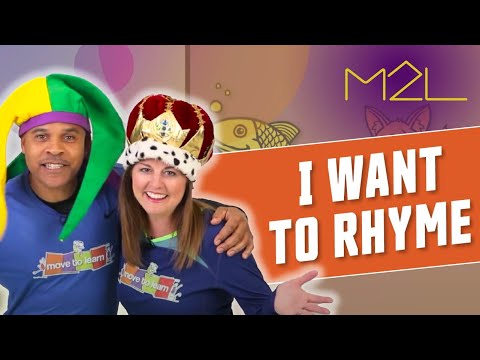
5 minPre-KKI Want to Rhyme
Move to Learn · 2015
6 minPre-KKAlphabet Sounds
Move to Learn · 2015
5 minPre-KKAll I Want to Do Is Count
Move to Learn · 2015
6 minPre-KKLet's Get to Work
Move to Learn · 2015
5 minK1st2nd3rdWork That Body
Move to Learn · 2015
5 minK1st2nd3rdLet's Move (Move to Learn)
Move to Learn · 2015
6 minK1st2nd3rdLet's Go
Move to Learn · 2015
5 minK1st2nd3rdGiddy Up
Move to Learn · 2015
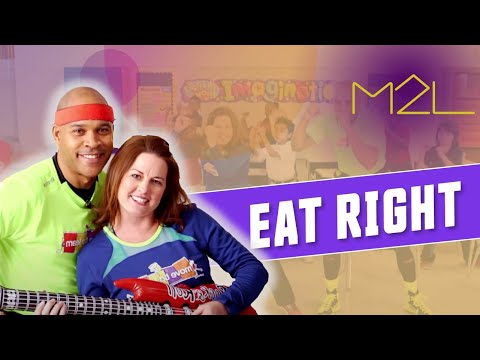
5 minK1st2nd3rdEat Right
Move to Learn · 2015
5 minK1st2nd3rdMississippi Is the Best
Move to Learn · 2015
5 minK1st2nd3rdStrong Man
Move to Learn · 2015
5 minK1st2nd3rdShout It Out
Move to Learn · 2015
5 minK1st2nd3rdSolar System (Move to Learn)
Move to Learn · 2015
5 minK1st2nd3rdBe a Scientist
Move to Learn · 2015
5 minK1st2nd3rdListos
Move to Learn · 2015
5 minK1st2nd3rdGuitar
Move to Learn · 2015
5 minK1st2nd3rdKing Shapes
Move to Learn · 2015
6 minK1st2nd3rd












Or use the filters above to narrow this down.