Series
TED-Ed
18 episodes
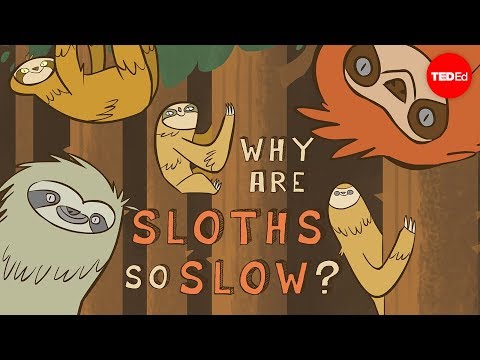
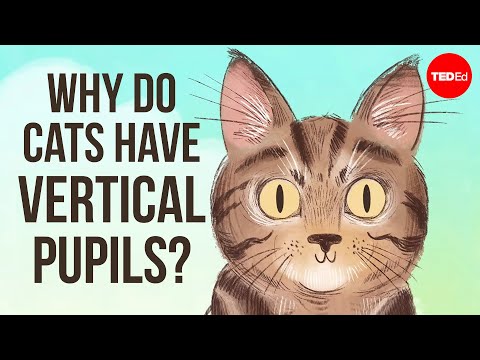
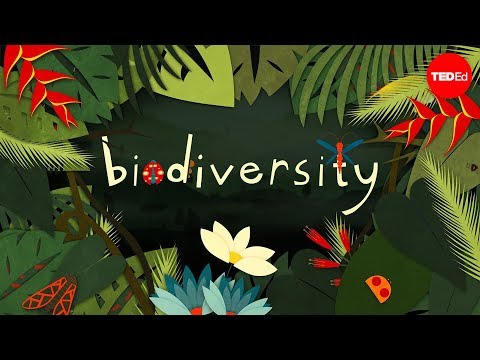
Animated explainers built around a single question and a named expert, usually four to six minutes long. What we carry leans hard toward life and earth science: how animals see in the dark, how a dog reads the world in smells, why sloths move so slowly, what a pupil shape reveals about predator or prey, where Earth water came from, why biodiversity makes an ecosystem resilient. A few sit outside that, like where new words come from, or why the Leaning Tower of Pisa has not fallen. Short enough to open a unit, dense enough that fourth through sixth graders will argue afterward.
What TED-Ed covers
19 episodes in the library, tagged for 4th–6th. Heaviest coverage: Science, Dance and Reading & Writing (ELA). Between them they line up with 17 distinct standards across 4 frameworks.
Episodes per grade
- 4th
- 5
- 5th
- 17
- 6th
- 19
Episodes per subject
- Science
- 16
- Dance
- 1
- Reading & Writing (ELA)
- 1
- Social Studies
- 1
- Technology
- 1
NGSS (Science) 11
- 4-LS1-1Construct an argument that plants and animals have internal and external structures that function to support survival, growth, behavior, and reproduction.
- 4-PS4-2Develop a model to describe that light reflecting from objects and entering the eye allows objects to be seen.
- 3-ESS2-1Represent data in tables and graphical displays to describe typical weather conditions expected during a particular season.
- 3-LS4-1Analyze and interpret data from fossils to provide evidence of the organisms and the environments in which they lived long ago.
- 3-LS4-4Make a claim about the merit of a solution to a problem caused when the environment changes and the types of plants and animals that live there may change.
- 3-PS2-1Plan and conduct an investigation to provide evidence of the effects of balanced and unbalanced forces on the motion of an object.
+ 5 more
- 4-LS1-2Use a model to describe that animals receive different types of information through their senses, process the information in their brain, and respond to the information in different ways.
- 4-PS3-2Make observations to provide evidence that energy can be transferred from place to place by sound, light, heat, and electric currents.
- 5-ESS2-2Describe and graph the amounts of salt water and fresh water in various reservoirs to provide evidence about the distribution of water on Earth.
- 5-LS2-1Develop a model to describe the movement of matter among plants, animals, decomposers, and the environment.
- 5-PS3-1Use models to describe that energy in animals' food was once energy from the sun.
Common Core — ELA 2
- L.4.4Determine or clarify the meaning of unknown and multiple-meaning words and phrases based on grade 4 reading and content.
- L.5.4Determine or clarify the meaning of unknown and multiple-meaning words and phrases based on grade 5 reading and content.
National Core Arts 1
- DA:Cn11.1.6aInterpret and show how the movement and qualities of a dance communicate its cultural, historical, and/or community purpose or meaning.
ITEEA STEL (Technology & Engineering) 3
- STEL-1IExplain how solutions to problems are shaped by economic, political, and cultural forces.
- STEL-3EAnalyze how different technological systems often interact with economic, environmental, and social systems.
- STEL-4KExamine the ways that technology can have both positive and negative effects at the same time.
Every episode is vetted and tagged before it goes in. Pick your state in the filters above to see your own state’s codes alongside these.
19 results
The case of the vanishing honeybees
TED-Ed · 2014
4 min5th6th
The history of African-American social dance
TED-Ed · 2016
5 min5th6thHow big is the ocean?
TED-Ed · 2013
5 min4th5th6thHow did clouds get their names?
TED-Ed · 2015
5 min5th6thHow do animals see in the dark?
TED-Ed · 2016
4 min5th6thHow do dogs "see" with their noses?
TED-Ed · 2016
4 min4th5th6thHow do fish make electricity?
TED-Ed · 2017
5 min5th6thHow do we know what color dinosaurs were?
TED-Ed · 2016
4 min5th6thHow inventions change history (for better and for worse)
TED-Ed · 2012
5 min5th6thThe secret life of plankton
TED-Ed · 2012
6 min5th6thThe surprising reason birds sing
TED-Ed · 2018
6 min5th6thWhere did Earth's water come from?
TED-Ed · 2015
4 min6thWhere do new words come from?
TED-Ed · 2017
6 min5th6thWhy are sloths so slow?
TED-Ed · 2019
5 min4th5th6thWhy do cats have vertical pupils?
TED-Ed · 2022
5 min5th6thWhy do your knuckles pop?
TED-Ed · 2015
4 min4th5th6thWhy doesn't the Leaning Tower of Pisa fall over?
TED-Ed · 2019
5 min5th6thWhy is biodiversity so important?
TED-Ed · 2019
4 min6thThe wild world of carnivorous plants
TED-Ed · 2019
5 min4th5th6th