
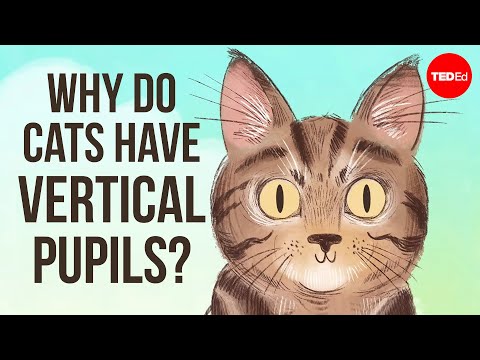

Summary
Peer into the eyes of house cats, goats, foxes, and other animals and you'll spot slit, rectangular, and round pupils. Emma Bryce explains how an animal's pupil shape is a clue to how it lives — predator or prey, day-active or night-hunter — and how eyes are built to gather light.
Viewer safety
Ages 7+
TED-Ed lessons move quickly and use rich vocabulary — best for grades 5–6 (some grade 4 with support). No content concerns; preview once for pace.
Our rating is a quick teacher-to-teacher guide — preview before showing.
Teaching resources
Discussion questions
Discussion
This lesson connects the shape of an animal's pupils to how it hunts, hides, and sees.
- What kind of pupils do animals that hunt at night, like cats, tend to have?
- How can a pupil's shape tell you whether an animal is usually predator or prey?
- What is one way your own eyes help you every day?
Quick work-a-long
Vocabulary: pupil, predator, prey, adaptation.
Try it: Look at photos of three animals' eyes. For each, guess whether it hunts or hides, and say why.