

Summary
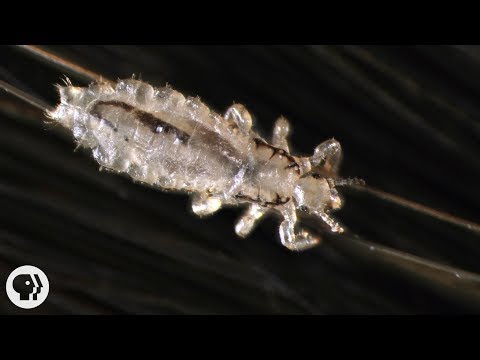
Head lice have curved claws made to grip a single strand of hair, so they can climb around a scalp all day. Deep Look shows the clingy feet and glued eggs that make lice so good at holding on.
Viewer safety
This episode is about tiny creatures that live on people -- friendly and factual, but preview if your class might find it a little itchy to watch.
Our rating is a quick teacher-to-teacher guide — preview before showing.
Teaching resources
Discussion questions
Talk about it
A louse has claws curved to the exact width of a human hair, so it can clamp on and never fall off. It glues its eggs (nits) tightly to hairs near the warm scalp. These structures make hair the perfect home -- which is why lice spread when heads touch.
- What is special about the shape of a louse's claws?
- How does gluing eggs to hair help lice survive?
- Why do lice spread most easily when kids' heads are close together?
Quick work-a-long
Vocabulary: louse, claw, nit, scalp.
Try it: Draw a single hair with a louse gripping it. Write how its claws are shaped to fit a hair exactly.