

Summary
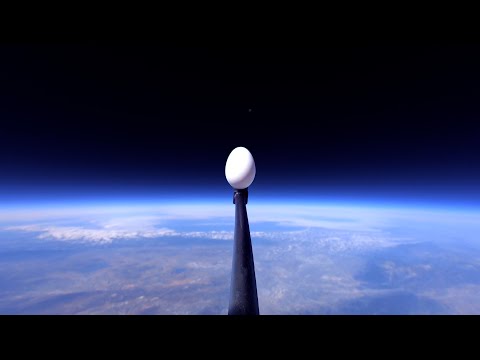
Mark and a team try to drop a raw egg from the edge of space — about 100,000 feet up — and land it unbroken. They engineer, test, and re-test a capsule and parachute system through failure after failure.
Viewer safety
Made for a general YouTube audience — an occasional mild or bleeped word can slip in, so preview if your classroom bar is strict.
Our rating is a quick teacher-to-teacher guide — preview before showing.
Teaching resources
Discussion questions
Talk about it
A falling object gains energy of motion; the faster it hits, the bigger the crash. Engineers slow it down and spread the impact out to protect what's inside.
- Where does the egg's energy of motion come from as it falls, and what happens to that energy when it lands?
- Mark's early designs failed. Why is testing and re-testing a normal, useful part of engineering?
- What features of the capsule were meant to slow the fall, and which were meant to cushion the landing?
Quick work-a-long
Vocabulary: gravity, energy of motion, impact, prototype.
Try it: Drop a crumpled paper ball and a flat sheet from the same height. Which lands slower, and why? Sketch one change you'd make to a capsule to protect an egg.