

Summary
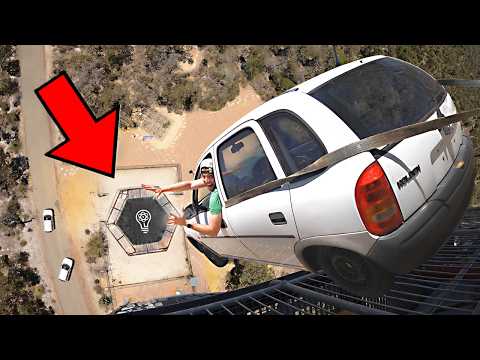
Mark engineers an enormous trampoline strong enough to bounce a falling car, then drops a car onto it from 150 feet. The test shows how a trampoline stores and returns energy.
Viewer safety
A car is dropped from a crane onto a trampoline (no people); nothing graphic. Made for a general YouTube audience — an occasional mild or bleeped word can slip in, so preview if your classroom bar is strict.
Our rating is a quick teacher-to-teacher guide — preview before showing.
Teaching resources
Discussion questions
Talk about it
A falling car gains lots of motion energy. A trampoline stretches to catch that energy and springs some of it back, softening the stop.
- Where does the car's energy of motion come from before it lands?
- How does the trampoline store energy, and what does it do with that energy?
- Why doesn't the car bounce back up as high as it was dropped?
Quick work-a-long
Vocabulary: energy of motion, elastic, stored energy, impact.
Try it: Drop a bouncy ball and note how high it returns. It never reaches the start height — where did that energy go?