

Summary
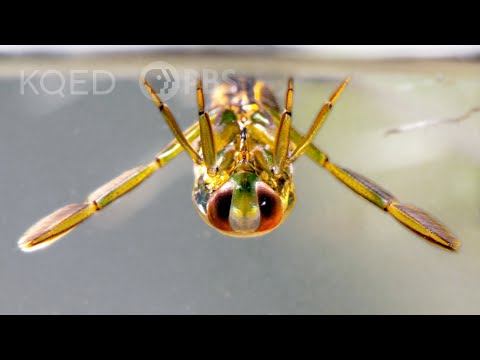
Backswimmers row upside down just under the water's surface, waiting to ambush prey. Deep Look shows how their oar-like legs and grabbing front limbs make them fast, deadly hunters of the pond.
Viewer safety
This episode shows a predator eating real prey (a normal part of nature science) -- preview if that might unsettle your class.
Our rating is a quick teacher-to-teacher guide — preview before showing.
Teaching resources
Discussion questions
Talk about it
A backswimmer's long back legs act like oars for speed, while its front legs grab prey. Swimming upside down keeps its eyes aimed toward the surface, where meals fall in. Body shape matched to how it hunts.
- How do a backswimmer's back legs help it move?
- Why does swimming upside down help it find food?
- What do the front legs do that the back legs don't?
Quick work-a-long
Vocabulary: oar, ambush, structure, predator.
Try it: Row your arms like paddles across a desk. Write how a backswimmer's oar-legs push it fast through the water.