Series
Smile and Learn
116 episodes
Animated explainers from Smile and Learn, an educational-technology company in Spain whose library is built for roughly ages three to twelve. The range here is the widest of anything we carry: ancient Egypt and ancient Greece, angles and changes in the states of matter, antonyms and capitalization rules, the basic rules of baseball, block-based coding taken one instruction at a time, and a substantial social-emotional set that helps a child name a feeling like anger and find something to do with it before acting. Videos run three to eight minutes and hold to one idea each.
What Smile and Learn covers
116 episodes in the library, tagged for Pre-K–6th. Heaviest coverage: Science, Reading & Writing (ELA) and Math. Between them they line up with 118 distinct standards across 11 frameworks.
Episodes per grade
- Pre-K
- 4
- K
- 25
- 1st
- 37
- 2nd
- 44
- 3rd
- 51
- 4th
- 49
- 5th
- 36
- 6th
- 4
Episodes per subject
- Science
- 22
- Reading & Writing (ELA)
- 19
- Math
- 19
- Social-Emotional Learning
- 16
- Social Studies
- 12
- Health
- 7
- Technology
- 7
- Physical Education
- 6
- Brain Breaks
- 5
- Art
- 4
- Music
- 3
NGSS (Science) 22
- 4-LS1-1Construct an argument that plants and animals have internal and external structures that function to support survival, growth, behavior, and reproduction.
- 1-ESS1-1Use observations of the sun, moon, and stars to describe patterns that can be predicted.
- 3-LS1-1Develop models to describe that organisms have unique and diverse life cycles but all have in common birth, growth, reproduction, and death.
- 3-PS2-3Ask questions to determine cause-and-effect relationships of electric or magnetic interactions between two objects not in contact with each other.
- 5-LS2-1Develop a model to describe the movement of matter among plants, animals, decomposers, and the environment.
- 1-ESS1-2Make observations at different times of year to relate the amount of daylight to the time of year.
+ 16 more
- 1-PS4-1Plan and conduct investigations to provide evidence that vibrating materials can make sound and that sound can make materials vibrate.
- 1-PS4-2Make observations to construct an evidence-based account that objects can be seen only when illuminated.
- 2-ESS2-3Obtain information to identify where water is found on Earth and that it can be solid or liquid.
- 2-LS2-2Develop a simple model that mimics the function of an animal in dispersing seeds or pollinating plants.
- 2-LS4-1Make observations of plants and animals to compare the diversity of life in different habitats.
- 2-PS1-1Plan and conduct an investigation to describe and classify different kinds of materials by their observable properties.
- 2-PS1-4Construct an argument with evidence that some changes caused by heating or cooling can be reversed and some cannot.
- 3-ESS3-1Make a claim about the merit of a design solution that reduces the impacts of a weather-related hazard.
- 3-PS2-4Define a simple design problem that can be solved by applying scientific ideas about magnets.
- 4-ESS3-1Obtain and combine information to describe that energy and fuels are derived from natural resources and their uses affect the environment.
- 4-ESS3-2Generate and compare multiple solutions to reduce the impacts of natural Earth processes on humans.
- 4-LS1-2Use a model to describe that animals receive different types of information through their senses, process the information in their brain, and respond to the information in different ways.
- 4-PS4-1Develop a model of waves to describe patterns in terms of amplitude and wavelength and that waves can cause objects to move.
- 4-PS4-2Develop a model to describe that light reflecting from objects and entering the eye allows objects to be seen.
- 5-LS1-1Support an argument that plants get the materials they need for growth chiefly from air and water.
- 5-PS3-1Use models to describe that energy in animals' food was once energy from the sun.
Common Core — Math 22
- 1.OA.A.1Use addition and subtraction within 20 to solve word problems involving situations of adding to, taking from, putting together, taking apart, and comparing.
- K.OA.A.2Solve addition and subtraction word problems, and add and subtract within 10, using objects or drawings to represent the problem.
- 1.MD.B.3Tell and write time in hours and half-hours using analog and digital clocks.
- 1.NBT.B.2Understand that the two digits of a two-digit number represent amounts of tens and ones.
- 2.MD.C.7Tell and write time from analog and digital clocks to the nearest five minutes, using a.m. and p.m.
- 2.NBT.A.1Understand that the three digits of a three-digit number represent amounts of hundreds, tens, and ones.
+ 16 more
- 2.OA.C.3Determine whether a group of objects (up to 20) has an odd or even number of members.
- 3.MD.D.8Solve real-world and mathematical problems involving perimeters of polygons, including finding an unknown side length.
- 3.NF.A.1Understand a fraction 1/b as the quantity formed by 1 part when a whole is partitioned into b equal parts; understand a fraction a/b as the quantity formed by a parts of size 1/b.
- 3.OA.A.1Interpret products of whole numbers, e.g., interpret 5 × 7 as the total number of objects in 5 groups of 7 objects each.
- 3.OA.A.2Interpret whole-number quotients of whole numbers, e.g., interpret 56 ÷ 8 as the number of objects in each share when 56 objects are partitioned equally into 8 shares.
- 4.G.A.1Draw points, lines, line segments, rays, angles (right, acute, obtuse), and perpendicular and parallel lines; identify these in two-dimensional figures.
- 4.G.A.2Classify two-dimensional figures based on the presence or absence of parallel or perpendicular lines, or the presence or absence of angles of a specified size; recognize right triangles.
- 4.MD.C.5Recognize angles as geometric shapes formed wherever two rays share a common endpoint, and understand concepts of angle measurement.
- 4.NF.B.3Understand a fraction a/b with a > 1 as a sum of fractions 1/b; decompose a fraction into a sum of fractions with the same denominator; add and subtract mixed numbers.
- 4.OA.B.4Find all factor pairs for a whole number in the range 1–100; recognize that a whole number is a multiple of each of its factors; determine whether a number is prime or composite.
- 5.NBT.A.3Read, write, and compare decimals to thousandths using base-ten numerals, number names, expanded form, and >, =, < symbols.
- 5.NBT.B.6Find whole-number quotients of whole numbers with up to four-digit dividends and two-digit divisors, using strategies based on place value and the relationship between operations.
- 6.RP.A.3Use ratio and rate reasoning to solve real-world and mathematical problems, e.g., by reasoning about tables of equivalent ratios, tape diagrams, double number lines, or equations.
- K.CC.A.1Count to 100 by ones and by tens.
- K.CC.A.3Write numbers from 0 to 20. Represent a number of objects with a written numeral 0–20 (with 0 representing a count of no objects).
- K.CC.B.4Understand the relationship between numbers and quantities; connect counting to cardinality.
Common Core — ELA 15
- RF.K.2Demonstrate understanding of spoken words, syllables, and sounds (phonemes).
- RF.K.3Know and apply grade-level phonics and word analysis skills in decoding words.
- L.1.1Demonstrate command of the conventions of standard English grammar and usage when writing or speaking.
- RF.1.3Know and apply grade-level phonics and word analysis skills in decoding words.
- L.2.5Demonstrate understanding of word relationships and nuances in word meanings.
- L.1.2Demonstrate command of the conventions of standard English capitalization, punctuation, and spelling when writing.
+ 9 more
- L.2.1Demonstrate command of the conventions of standard English grammar and usage when writing or speaking.
- L.3.2Demonstrate command of the conventions of standard English capitalization, punctuation, and spelling when writing.
- L.3.5Demonstrate understanding of word relationships and nuances in word meanings.
- L.5.5Demonstrate understanding of figurative language, word relationships, and nuances in word meanings.
- L.K.5With guidance and support from adults, explore word relationships and nuances in word meanings.
- RF.K.1Demonstrate understanding of the organization and basic features of print.
- RL.3.3Describe characters in a story and explain how their actions contribute to the sequence of events.
- RL.4.3Describe in depth a character, setting, or event in a story or drama, drawing on specific details in the text.
- RL.4.4Determine the meaning of words and phrases as they are used in a text, including those that allude to significant characters found in mythology.
Social Studies (C3 / NCSS) 10
- D2.His.2.3-5Compare life in specific historical time periods to life today.
- D2.Geo.2.3-5Use maps, satellite images, photographs, and other representations to explain relationships between the locations of places and regions and their environmental characteristics.
- D2.Geo.1.K-2Construct maps, graphs, and other representations of familiar places.
- D2.Civ.14.3-5Illustrate historical and contemporary means of changing society.
- D2.Civ.3.K-2Explain the need for and purposes of rules in various settings inside and outside of school.
- D2.Civ.4.3-5Explain how groups of people make rules to create responsibilities and protect freedoms.
+ 4 more
- D2.Eco.3.3-5Identify examples of the variety of resources (human capital, physical capital, and natural resources) that are used to produce goods and services.
- D2.Eco.4.3-5Explain why individuals and businesses specialize and trade.
- D2.Geo.1.3-5Construct maps and other graphic representations of both familiar and unfamiliar places.
- D2.His.1.3-5Create and use a chronological sequence of related events to compare developments that happened at the same time.
National Core Arts 7
- MU:Re7.2.4aDemonstrate and explain how responses to music are informed by the structure, the use of the elements of music, and context (such as social and cultural).
- VA:Cr2.1.3Create personally satisfying artwork using a variety of artistic processes and materials.
- MU:Cn11.0.4aDemonstrate understanding of relationships between music and the other arts, other disciplines, varied contexts, and daily life.
- MU:Pr4.2.4bWhen analyzing selected music, read and perform using iconic and/or standard notation.
- VA:Cn11.1.4Through observation, infer information about time, place, and culture in which a work of art was created.
- VA:Cn11.1.5Identify how art is used to inform or change beliefs, values, or behaviors of an individual or society.
+ 1 more
- VA:Cr2.1.1Explore uses of materials and tools to create works of art or design.
CASEL (Social-Emotional) 15
- CASEL.RS.1Communicate clearly and listen actively.
- CASEL.RS.4Resolve conflicts constructively — talk it out, repair, compromise.
- CASEL.SA.1Name your own feelings and notice how they change during the day.
- CASEL.SM.1Manage strong emotions and impulses instead of acting on them right away.
- CASEL.RDM.4Anticipate and evaluate the consequences of your actions before you act.
- CASEL.RDM.3Make a reasoned judgment after looking at the information, facts, and evidence.
+ 9 more
- CASEL.RS.2Build and keep positive relationships and friendships.
- CASEL.RS.7Seek help when you need it and offer help when someone else does.
- CASEL.RS.8Stand up for the rights of others.
- CASEL.SA.6Hold a growth mindset: treat effort, practice, and mistakes as how ability grows.
- CASEL.SM.2Use calming and stress-management strategies (deep breaths, a break, asking for space).
- CASEL.SM.3Show self-discipline and self-motivation — keep working when a task gets hard or boring.
- CASEL.SOA.2Demonstrate empathy and compassion for others.
- CASEL.SOA.5Understand and express gratitude.
- CASEL.SOA.7Recognize what a setting calls for — behavior that fits recess may not fit a library or a lab.
National Health Education 9
- NHES.1.2.6List ways to take part in healthy practices, such as brushing teeth daily.
- NHES.4Standard 4: Students demonstrate effective interpersonal communication skills to enhance health.
- NHES.4.5.2Demonstrate verbal and nonverbal interpersonal communication skills.
- NHES.4.5.9Demonstrate healthy ways to manage and resolve conflict.
- NHES.1.2.5Identify practices that prevent or reduce health risks, such as handwashing.
- NHES.1.5.5Describe practices and behaviors that prevent or reduce health risks, such as eating vegetables and fruit daily.
+ 3 more
- NHES.1.5.6Explain ways to take part in healthy practices and behaviors, such as daily moderate-to-vigorous physical activity.
- NHES.4.5.1Explain how effective communication benefits personal health and well-being.
- NHES.4.5.6Communicate kindness, empathy, compassion, and care toward others.
ISTE (Technology) 6
- ISTE.1.2.bOnline interactions: treat people online with empathy and contribute responsibly to shared spaces.
- ISTE.1.5.dAlgorithmic thinking: put steps in order to solve a problem, and recognize what can be automated.
- ISTE.1.1.dTechnology fundamentals: understand how the technology you use works, and try out new tools confidently.
- ISTE.1.2.dDigital privacy: protect personal data and keep your accounts and devices secure.
- ISTE.1.3.bEvaluate information: judge digital content for accuracy, credibility, bias, and relevance.
- ISTE.1.5.cDecompose problems: break a complex system or task into smaller parts.
SHAPE America (PE) 5
- 3.2.6Describes why following rules is important for safety and fairness.
- 2.2.9Recognizes that regular physical activity is good for their health.
- 2.2.6Identifies physical activities that contribute to fitness.
- 2.5.2Demonstrates knowledge of offensive strategies in small-sided invasion practice tasks.
- 2.5.5Demonstrates problem solving strategies in a variety of games/activities.
CSTA (Computer Science) 6
- 1A-AP-08Model daily processes by creating and following algorithms (sets of step-by-step instructions) to complete tasks
- 1A-AP-10Develop programs with sequences and simple loops, to express ideas or address a problem.
- 1A-IC-17Work respectfully and responsibly with others online.
- 1B-AP-10Create programs that include sequences, events, loops, and conditionals
- 1B-IC-18Discuss computing technologies that have changed the world, and express how those technologies influence, and are influenced by, cultural practices.
- 1B-NI-05Discuss real-world cybersecurity problems and how personal information can be protected.
ITEEA STEL (Technology & Engineering) 1
- STEL-4HClassify resources used to create technologies as either renewable or non-renewable.
Every episode is vetted and tagged before it goes in. Pick your state in the filters above to see your own state’s codes alongside these.
24 of 116 results
The alphabet song: letters, sounds, and words
Smile and Learn
5 minPre-KK
Ancient Egypt for kids (Smile and Learn)
Smile and Learn
6 min4th5thAncient Greece: 5 things you should know
Smile and Learn
5 min4th5thAnger: what is anger?
Smile and Learn
4 minK1st2ndAngles: types and definition
Smile and Learn
4 min4thAntonyms for kids (Smile and Learn)
Smile and Learn
4 min2nd3rdAssertive communication and conflict resolution
Smile and Learn · 2024
7 min3rd4th5thBaseball for kids: basic rules
Smile and Learn
8 min3rd4th5thBlock programming for kids: go forward
Smile and Learn
3 min2nd3rdThe brain for kids
Smile and Learn
5 min4thCapitalization rules
Smile and Learn
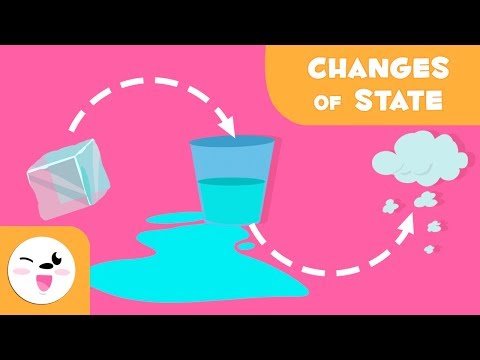
6 min1st2ndChanges in the states of matter
Smile and Learn
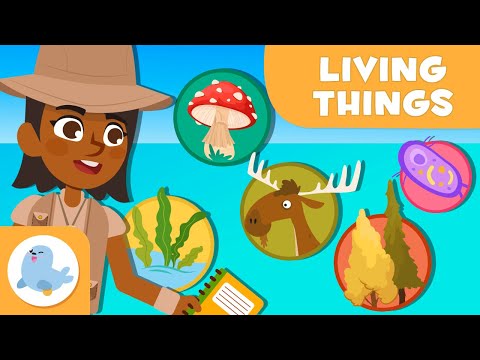
4 min2nd5thThe classification of living things
Smile and Learn
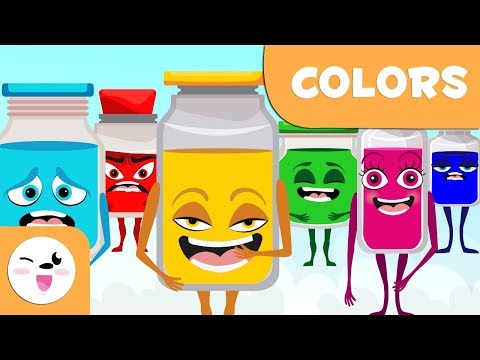
8 min5th6thColors for kids: primary and secondary
Smile and Learn
3 minK1st2ndThe comma
Smile and Learn
5 min3rd4thCommunication and assertive communication (Smile and Learn)
Smile and Learn · 2026
11 min2nd3rd4th5thCommunication: verbal and nonverbal
Smile and Learn · 2025
5 min3rd4th5thThe continents for kids
Smile and Learn
5 min1st3rdCyberbullying: what it is and what to do (Smile and Learn)
Smile and Learn · 2026
6 min3rd4th5th6thDecimal numbers for kids
Smile and Learn
6 min4th5thDecision making for kids
Smile and Learn
9 min4th5thEmotion management: self-regulation for kids
Smile and Learn
5 min3rd4thEmotions for kids: the basic feelings
Smile and Learn
5 minK1st2ndEven and odd numbers
Smile and Learn
5 min2nd3rd





Or use the filters above to narrow this down.