
Series
Crash Course Kids
102 episodes
The upper-elementary arm of Crash Course, produced by Complexly with PBS Digital Studios and hosted by Sabrina Cruz. Episodes run four to six minutes, move quickly, and sit at roughly a fifth-grade science scope: plate tectonics and how landscapes change over millions of years, urban heat islands and deforestation, freshwater scarcity and the engineering responses to it, controlling variables so an experiment can be trusted, brainstorming with what-if questions. A smaller set turns to reading, examining character traits in a novel. Dense enough that most classes will want to pause partway and talk, which is the best way to use it.
What Crash Course Kids covers
102 episodes in the library, tagged for 3rd–6th. Heaviest coverage: Science and Reading & Writing (ELA). Between them they line up with 48 distinct standards across 3 frameworks.
Episodes per grade
- 3rd
- 75
- 4th
- 102
- 5th
- 102
- 6th
- 27
Episodes per subject
- Science
- 96
- Reading & Writing (ELA)
- 6
NGSS (Science) 38
- 5-ESS3-1Obtain and combine information about ways individual communities use science ideas to protect the Earth's resources and environment.
- 5-ESS1-2Represent data in graphical displays to reveal patterns of daily changes in length and direction of shadows, day and night, and the seasonal appearance of some stars in the night sky.
- 5-ESS2-1Develop a model using an example to describe ways the geosphere, biosphere, hydrosphere, and/or atmosphere interact.
- 5-PS1-3Make observations and measurements to identify materials based on their properties.
- 2-PS1-1Plan and conduct an investigation to describe and classify different kinds of materials by their observable properties.
- 5-ESS1-1Support an argument that differences in the apparent brightness of the sun compared to other stars is due to their relative distances from Earth.
+ 32 more
- 5-PS1-1Develop a model to describe that matter is made of particles too small to be seen.
- 5-PS2-1Support an argument that the gravitational force exerted by Earth on objects is directed down.
- 1-ESS1-1Use observations of the sun, moon, and stars to describe patterns that can be predicted.
- 3-ESS2-2Obtain and combine information to describe climates in different regions of the world.
- 5-ESS2-2Describe and graph the amounts of salt water and fresh water in various reservoirs to provide evidence about the distribution of water on Earth.
- 5-LS2-1Develop a model to describe the movement of matter among plants, animals, decomposers, and the environment.
- 5-PS3-1Use models to describe that energy in animals' food was once energy from the sun.
- K-ESS3-1Use a model to represent the relationship between the needs of different plants and animals and the places they live.
- 2-ESS2-3Obtain information to identify where water is found on Earth and that it can be solid or liquid.
- 3-LS4-3Construct an argument with evidence that in a particular habitat some organisms can survive well, some survive less well, and some cannot survive at all.
- 3-PS2-1Plan and conduct an investigation to provide evidence of the effects of balanced and unbalanced forces on the motion of an object.
- 4-ESS3-1Obtain and combine information to describe that energy and fuels are derived from natural resources and their uses affect the environment.
- 5-LS1-1Support an argument that plants get the materials they need for growth chiefly from air and water.
- 5-PS1-4Conduct an investigation to determine whether the mixing of two or more substances results in new substances.
- K-LS1-1Use observations to describe patterns of what plants and animals (including humans) need to survive.
- 1-ESS1-2Make observations at different times of year to relate the amount of daylight to the time of year.
- 2-ESS2-1Compare multiple solutions designed to slow or prevent wind or water from changing the shape of the land.
- 2-PS1-2Analyze data obtained from testing different materials to determine which materials have the properties that are best suited for an intended purpose.
- 2-PS1-4Construct an argument with evidence that some changes caused by heating or cooling can be reversed and some cannot.
- 3-ESS2-1Represent data in tables and graphical displays to describe typical weather conditions expected during a particular season.
- 3-LS4-4Make a claim about the merit of a solution to a problem caused when the environment changes and the types of plants and animals that live there may change.
- 4-ESS2-1Make observations and/or measurements to provide evidence of the effects of weathering or the rate of erosion by water, ice, wind, or vegetation.
- 4-ESS2-2Analyze and interpret data from maps to describe patterns of Earth's features.
- 5-PS1-2Measure and graph quantities to provide evidence that regardless of the type of change that occurs when heating, cooling, or mixing substances, the total weight of matter is conserved.
- K-ESS2-1Use and share observations of local weather conditions to describe patterns over time.
- K-PS2-1Plan and conduct an investigation to compare the effects of different strengths or different directions of pushes and pulls on the motion of an object.
- K-PS3-1Make observations to determine the effect of sunlight on Earth's surface.
- 1-PS4-2Make observations to construct an evidence-based account that objects can be seen only when illuminated.
- 3-ESS3-1Make a claim about the merit of a design solution that reduces the impacts of a weather-related hazard.
- 3-LS4-2Use evidence to construct an explanation for how the variations in characteristics among individuals of the same species may provide advantages in surviving, finding mates, and reproducing.
- 4-ESS3-2Generate and compare multiple solutions to reduce the impacts of natural Earth processes on humans.
- MS-PS1-5Develop and use a model to describe how the total number of atoms does not change in a chemical reaction and thus mass is conserved.
Common Core — ELA 9
- RL.5.2Determine a theme of a story, drama, or poem from details in the text, including how characters respond to challenges; summarize the text.
- RI.3.2Determine the main idea of a text; recount the key details and explain how they support the main idea.
- RI.3.7Use information gained from illustrations and the words in a text to demonstrate understanding of the text.
- RI.4.7Interpret information presented visually, orally, or quantitatively and explain how the information contributes to an understanding of the text.
- RL.3.1Ask and answer questions to demonstrate understanding of a text, referring explicitly to the text as the basis for the answers.
- RL.3.9Compare and contrast the themes, settings, and plots of stories written by the same author about the same or similar characters.
+ 3 more
- RL.5.1Quote accurately from a text when explaining what the text says explicitly and when drawing inferences from the text.
- RL.5.3Compare and contrast two or more characters, settings, or events in a story or drama, drawing on specific details in the text.
- RL.5.4Determine the meaning of words and phrases as they are used in a text, including figurative language such as metaphors and similes.
ITEEA STEL (Technology & Engineering) 1
- STEL-1GDifferentiate between the roles of scientists, engineers, technologists, and others in creating and maintaining technological systems.
Every episode is vetted and tagged before it goes in. Pick your state in the filters above to see your own state’s codes alongside these.
24 of 102 results
Gotta Eat!
Crash Course Kids · 2015
3 min3rd4th5th
Feed Me: Classifying Organisms
Crash Course Kids · 2015
3 min3rd4th5thResources: Welcome to the Neighborhood
Crash Course Kids · 2015
3 min3rd4th5thHow to Get Resources — Picky Pineapples
Crash Course Kids · 2015
3 min3rd4th5thWhat's Matter?
Crash Course Kids · 2015
4 min3rd4th5thParticles of Your World
Crash Course Kids · 2015
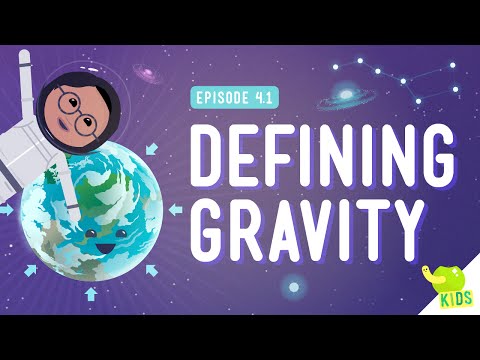
4 min3rd4th5thDefining Gravity
Crash Course Kids · 2015
3 min3rd4th5thDown to Earth
Crash Course Kids · 2015
3 min3rd4th5thHere Comes the Sun
Crash Course Kids · 2015
3 min3rd4th5thVegetation Transformation
Crash Course Kids · 2015
3 min3rd4th5thFour Spheres Part 1: Geo and Bio
Crash Course Kids · 2015
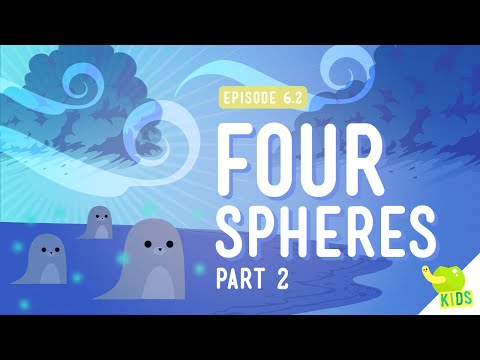
4 min3rd4th5thFour Spheres Part 2: Hydro and Atmo
Crash Course Kids · 2015
4 min3rd4th5thFabulous Food Chains
Crash Course Kids · 2015
3 min3rd4th5thThe Dirt on Decomposers
Crash Course Kids · 2015
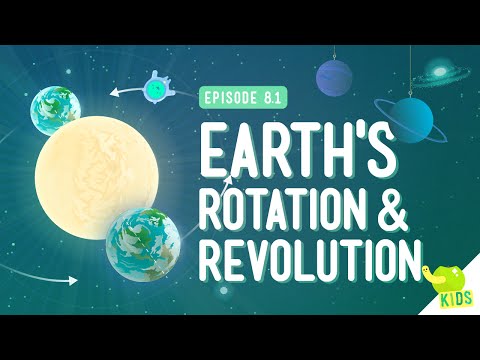
3 min3rd4th5thEarth's Rotation and Revolution
Crash Course Kids · 2015
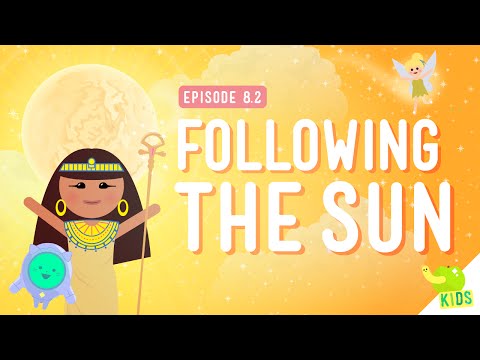
4 min3rd4th5thFollowing the Sun
Crash Course Kids · 2015
5 min3rd4th5thHunting for Properties
Crash Course Kids · 2015
4 min3rd4th5thMeasurement Mystery
Crash Course Kids · 2015
4 min3rd4th5thWhat On Earth?
Crash Course Kids · 2015
4 min3rd4th5thWeathering and Erosion
Crash Course Kids · 2015
4 min3rd4th5thSeasons and the Sun
Crash Course Kids · 2015
4 min3rd4th5thWhy No Polar Pineapples?
Crash Course Kids · 2015
4 min3rd4th5thWhat's an Engineer?
Crash Course Kids · 2015
5 min3rd4th5thThe Engineering Process
Crash Course Kids · 2015
5 min3rd4th5th










Or use the filters above to narrow this down.