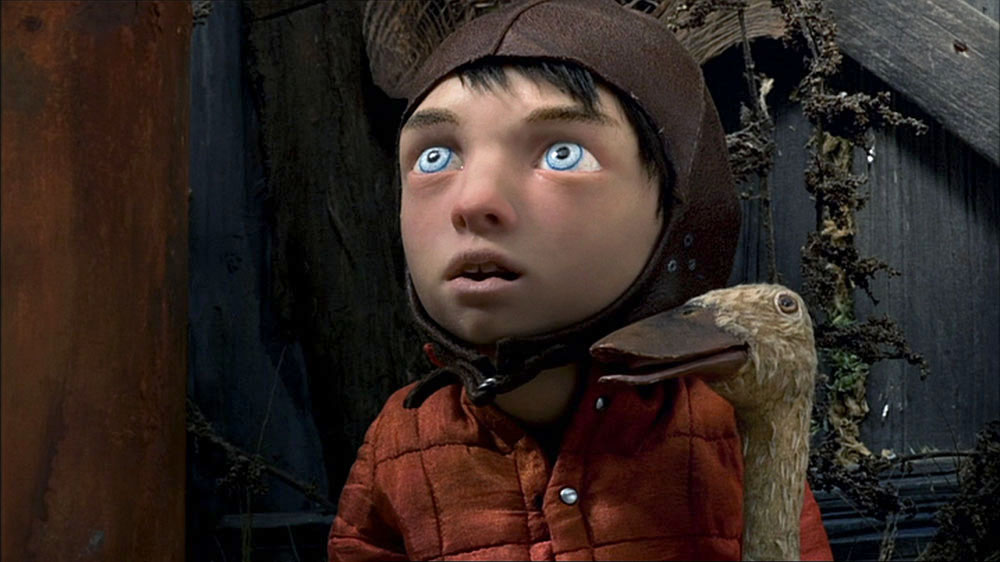


Summary
This wordless, Academy Award-winning stop-motion film tells Prokofiev's classic story entirely through music: a boy named Peter, his animal friends, and the wolf that prowls the woods. Every character has its own instrument — the bird a flute, the wolf the French horns, Peter the strings — which makes it the definitive way to teach how music can tell a story. Darker and slower than the cartoon versions, it rewards close listening.
Viewer safety
A darker, slower, dialogue-free retelling than the cartoon versions — the wolf is genuinely menacing (it swallows the duck, shown alive again later), a bully torments Peter, and the wintry village feels bleak. Powerful, but preview for younger or sensitive classes.
Our rating is a quick teacher-to-teacher guide — preview before showing.
Teaching resources
Discussion questions
In this wordless film, Prokofiev's music tells the whole story — and every character has its own instrument.
- Each character is played by a different instrument — the bird, the duck, the cat, the wolf, Peter, the grandfather. Which instrument went with which, and why do you think they were matched that way?
- The film has no words. How did the music let you know when to feel worried, brave, or sad?
- How did the music sound when the wolf appeared, compared to when Peter was playing?
- At the end, what do you think Peter decides to do about the wolf — and how did the music hint at it?
Quick work-a-long
Words to know: timbre, orchestra, theme, strings, woodwinds, brass
- Pick one character and hum or describe its instrument's sound. Why does it fit that character?
- Listen to the wolf's music (French horns) and Peter's music (strings). Describe how they sound different.