Series
Ubongo Kids
20 episodes
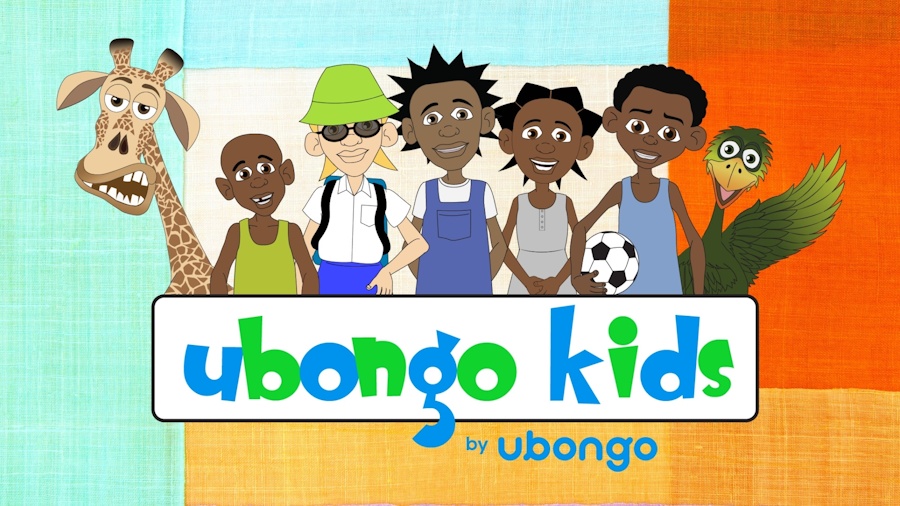
Ubongo Kids is an animated STEM and life-skills series from Ubongo, a Tanzanian social enterprise, set in the fictional Kokotoa Village. Four friends solve everyday problems alongside talking animal mentors, and every episode wraps a single concept in a story and an original song. Across its seasons it teaches upper-elementary math (decimals, time, statistics, basic algebra), science (circuits, nutrition), civics and economics (voting, saving), and social-emotional skills like goal-setting, empathy, and digital citizenship. Free on the official English YouTube channel and pitched at grades three to six, it gives teachers a warm, music-driven way to introduce a concept through story before building on it.
What Ubongo Kids covers
20 episodes in the library, tagged for 3rd–6th. Heaviest coverage: Social-Emotional Learning, Math and Social Studies. Between them they line up with 29 distinct standards across 7 frameworks.
Episodes per grade
- 3rd
- 16
- 4th
- 19
- 5th
- 20
- 6th
- 17
Episodes per subject
- Social-Emotional Learning
- 8
- Math
- 6
- Social Studies
- 3
- Health
- 2
- Science
- 1
- Technology
- 1
NGSS (Science) 2
- 4-PS3-2Make observations to provide evidence that energy can be transferred from place to place by sound, light, heat, and electric currents.
- 4-PS3-4Apply scientific ideas to design, test, and refine a device that converts energy from one form to another.
Common Core — Math 5
- 3.MD.A.1Tell and write time to the nearest minute and measure time intervals in minutes; solve word problems involving addition and subtraction of time intervals.
- 3.MD.B.3Draw a scaled picture graph and a scaled bar graph to represent a data set with several categories; solve one- and two-step "how many more" and "how many less" problems.
- 5.NBT.A.3Read, write, and compare decimals to thousandths using base-ten numerals, number names, expanded form, and >, =, < symbols.
- 5.NBT.B.7Add, subtract, multiply, and divide decimals to hundredths, using concrete models or drawings and strategies based on place value.
- 6.EE.B.6Use variables to represent numbers and write expressions when solving a real-world or mathematical problem.
Social Studies (C3 / NCSS) 4
- D2.Civ.11.3-5Compare procedures for making decisions in a variety of settings, including classroom, school, government, and/or society.
- D2.Civ.2.3-5Explain how a democracy relies on people's responsible participation, and draw implications for how individuals should participate.
- D2.Civ.8.3-5Identify core civic virtues and democratic principles that guide government, society, and communities.
- D2.Eco.1.3-5Compare the benefits and costs of individual choices.
CASEL (Social-Emotional) 12
- CASEL.SOASocial awareness: understand and empathize with other people, including those different from you.
- CASEL.RDM.2Identify solutions to personal and social problems.
- CASEL.RDM.3Make a reasoned judgment after looking at the information, facts, and evidence.
- CASEL.RDM.6Reflect on your role in the well-being of your family, classroom, and community.
- CASEL.RS.6Show leadership in a group — organize, include, and share the work.
- CASEL.RS.9Show respect and cultural competency across differences in background, language, and ability.
+ 6 more
- CASEL.SA.5Show self-confidence — believe you can do hard things and take on a challenge.
- CASEL.SA.6Hold a growth mindset: treat effort, practice, and mistakes as how ability grows.
- CASEL.SM.3Show self-discipline and self-motivation — keep working when a task gets hard or boring.
- CASEL.SM.4Set personal and group goals and track progress toward them.
- CASEL.SM.5Use planning and organizational skills to break a task into steps and manage time and materials.
- CASEL.SM.6Show the courage to take initiative — start something, try, or speak up first.
National Health Education 3
- NHES.1.5.5Describe practices and behaviors that prevent or reduce health risks, such as eating vegetables and fruit daily.
- NHES.1.5.2Describe benefits of practicing health-promoting behaviors.
- NHES.1.5.7Explain ways to prevent common childhood injuries and health problems, such as swimming safety or managing emotions.
ISTE (Technology) 2
- ISTE.1.2.aDigital footprint: manage your digital identity and make safe, legal, and ethical choices online.
- ISTE.1.2.cSafeguard well-being: be intentional about what you do online and how much time you spend there.
CSTA (Computer Science) 1
- 1B-NI-05Discuss real-world cybersecurity problems and how personal information can be protected.
Every episode is vetted and tagged before it goes in. Pick your state in the filters above to see your own state’s codes alongside these.
20 results
Ubongo Kids #10: Decimals on the Radio
Ubongo Kids · 2019
23 min4th5th6th
Ubongo Kids #11: Decimals Down the Well
Ubongo Kids · 2019
24 min4th5th6thUbongo Kids #12: The Big Vote
Ubongo Kids · 2019
13 min3rd4th5th6thUbongo Kids #13: Save for a Rainy Day
Ubongo Kids · 2019
9 min3rd4th5th6thUbongo Kids #14: Animal Race
Ubongo Kids · 2019
25 min3rd4th5thUbongo Kids #15: The Mosquito Army
Ubongo Kids · 2019
25 min3rd4th5th6thUbongo Kids #16: Math Music
Ubongo Kids · 2019
24 min5th6thUbongo Kids #17: Animal Graphs
Ubongo Kids · 2019
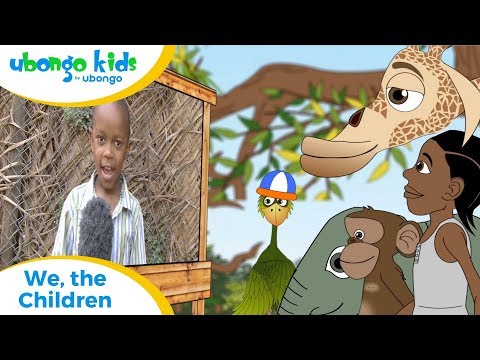
23 min3rd4th5thUbongo Kids #18: We, the Children
Ubongo Kids · 2019
26 min3rd4th5th6thUbongo Kids #19: I Want to Grow Tall!
Ubongo Kids · 2019
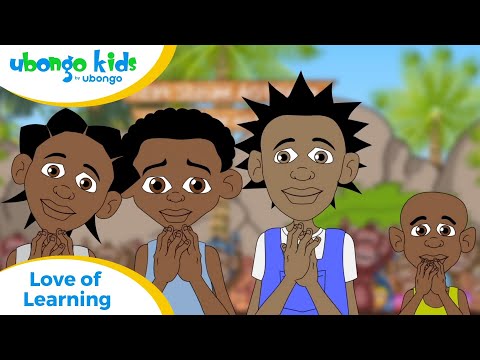
24 min3rd4th5thUbongo Kids #30: Love of Learning
Ubongo Kids · 2019
24 min3rd4th5th6thUbongo Kids #44: Digital Footprint
Ubongo Kids · 2020
22 min3rd4th5th6thUbongo Kids #45: We Are Role Models
Ubongo Kids · 2020
23 min3rd4th5th6thUbongo Kids #46: Circuits and Electricity
Ubongo Kids · 2020
21 min4th5th6thUbongo Kids #50: Animal Welfare
Ubongo Kids · 2020
30 min3rd4th5th6thUbongo Kids #54: I See the Light
Ubongo Kids · 2020
30 min3rd4th5th6thUbongo Kids #69: SMART Goals
Ubongo Kids · 2023
23 min3rd4th5th6thUbongo Kids #70: A Day at the Mall
Ubongo Kids · 2022
23 min3rd4th5th6thUbongo Kids #71: Standing in the Gap (Equity vs Equality)
Ubongo Kids · 2022
21 min3rd4th5th6thUbongo Kids #72: Today for Tomorrow (Self Confidence)
Ubongo Kids · 2023
22 min3rd4th5th6th