Series
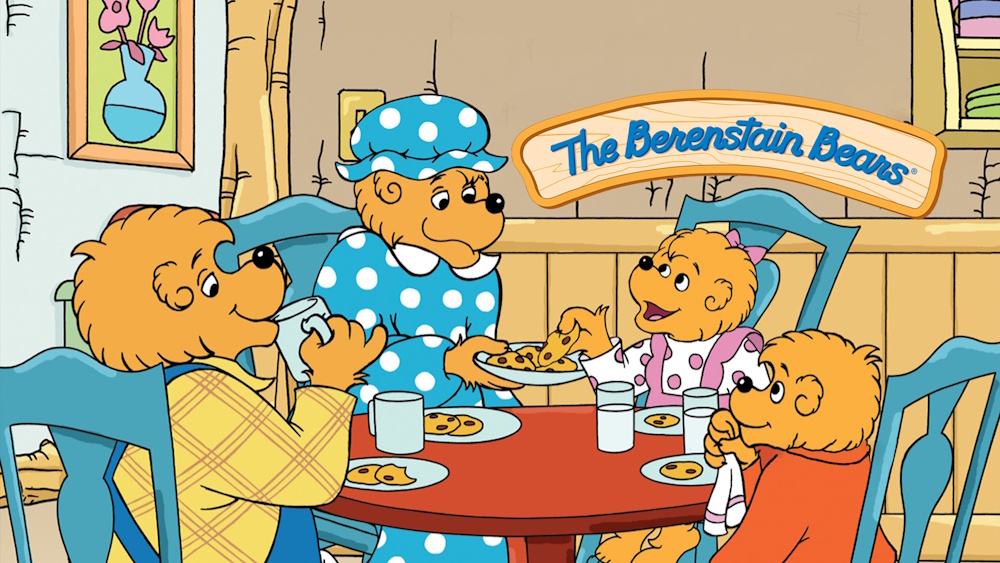
The Berenstain Bears
37 episodes
Eleven- and twelve-minute Bear Country stories, 37 of them, and they come in two flavors. Some are the family ones the books are known for: Brother and Sister break a lamp and tell one small lie that grows, Sister's birthday gets so big she ends up in tears, the cubs decide they will hate the substitute before she says a word. The rest are detective capers and seasonal romps, like a missing pumpkin, a stolen dinosaur bone, a spooky mansion, or a supposed ice monster. Those are filed as fun, with a mystery to solve and no moral attached.
What The Berenstain Bears covers
37 episodes in the library, tagged for Pre-K–4th. Heaviest coverage: Social-Emotional Learning, For Fun and Science. Between them they line up with 29 distinct standards across 4 frameworks.
Episodes per grade
- Pre-K
- 33
- K
- 36
- 1st
- 37
- 2nd
- 37
- 3rd
- 4
- 4th
- 1
Episodes per subject
- Social-Emotional Learning
- 18
- For Fun
- 14
- Science
- 3
- Health
- 1
- Social Studies
- 1
NGSS (Science) 3
- K-ESS3-3Communicate solutions that will reduce the impact of humans on the land, water, air, and/or other living things in the local environment.
- 2-LS2-2Develop a simple model that mimics the function of an animal in dispersing seeds or pollinating plants.
- K-LS1-1Use observations to describe patterns of what plants and animals (including humans) need to survive.
Social Studies (C3 / NCSS) 2
- D2.Civ.5.K-2Explain what governments are and some of their functions.
- D2.Civ.7.K-2Apply civic virtues when participating in school settings.
CASEL (Social-Emotional) 21
- CASEL.SA.4Show honesty and integrity, including admitting mistakes.
- CASEL.SOA.1Take another person's perspective — describe a situation as they would see it.
- CASEL.RS.2Build and keep positive relationships and friendships.
- CASEL.RS.3Practice teamwork and solve problems collaboratively.
- CASEL.RS.4Resolve conflicts constructively — talk it out, repair, compromise.
- CASEL.RS.9Show respect and cultural competency across differences in background, language, and ability.
+ 15 more
- CASEL.SA.1Name your own feelings and notice how they change during the day.
- CASEL.SM.1Manage strong emotions and impulses instead of acting on them right away.
- CASEL.SM.2Use calming and stress-management strategies (deep breaths, a break, asking for space).
- CASEL.SM.3Show self-discipline and self-motivation — keep working when a task gets hard or boring.
- CASEL.SOA.2Demonstrate empathy and compassion for others.
- CASEL.RDM.1Demonstrate curiosity and open-mindedness.
- CASEL.RDM.3Make a reasoned judgment after looking at the information, facts, and evidence.
- CASEL.RDM.4Anticipate and evaluate the consequences of your actions before you act.
- CASEL.RS.1Communicate clearly and listen actively.
- CASEL.RS.7Seek help when you need it and offer help when someone else does.
- CASEL.SA.5Show self-confidence — believe you can do hard things and take on a challenge.
- CASEL.SA.6Hold a growth mindset: treat effort, practice, and mistakes as how ability grows.
- CASEL.SM.5Use planning and organizational skills to break a task into steps and manage time and materials.
- CASEL.SOA.3Show concern for other people's feelings and respond to them with care.
- CASEL.SOA.4Recognize strengths in others and say what you appreciate about them.
National Health Education 3
- NHES.1.2.4Identify safe and unsafe situations, people, and events.
- NHES.4.2.4Tell a trusted adult when feeling threatened, harmed, or unsafe.
- NHES.4.2.5Use refusal skills — say no firmly and move away from unsafe people or situations.
Every episode is vetted and tagged before it goes in. Pick your state in the filters above to see your own state’s codes alongside these.
24 of 37 results
The Berenstain Bears and the Bigpaw Problem
The Berenstain Bears · 2003
11 minPre-KK1st2nd
The Berenstain Bears and the Cat's Meow
The Berenstain Bears · 2003
11 minPre-KK1st2ndThe Berenstain Bears and the Coughing Catfish
The Berenstain Bears · 2003
12 minK1st2nd3rdThe Berenstain Bears and the Disappearing Honey
The Berenstain Bears · 2003
11 minPre-KK1st2ndThe Berenstain Bears and the Forbidden Cave
The Berenstain Bears · 2003
11 minPre-KK1st2ndThe Berenstain Bears and the Giant Bat Cave
The Berenstain Bears · 2003
12 minPre-KK1st2ndThe Berenstain Bears and the Ice Monster
The Berenstain Bears · 2003
11 minPre-KK1st2ndThe Berenstain Bears and the Missing Dinosaur Bone
The Berenstain Bears · 2003
11 minPre-KK1st2ndThe Berenstain Bears and the Missing Pumpkin
The Berenstain Bears · 2003
12 minPre-KK1st2ndThe Berenstain Bears and the Spookiest Pumpkin
The Berenstain Bears · 2003
12 minPre-KK1st2ndThe Berenstain Bears and the Spooky Old Mansion
The Berenstain Bears · 2003
12 minPre-KK1st2ndThe Berenstain Bears and the Substitute Teacher
The Berenstain Bears · 2003
11 minPre-KK1st2ndThe Berenstain Bears and the Super Duper Bowl
The Berenstain Bears · 2003
11 minPre-KK1st2ndThe Berenstain Bears and the Terrible Termite
The Berenstain Bears · 2003
11 minPre-KK1st2ndThe Berenstain Bears and the Trojan Pumpkin
The Berenstain Bears · 2003
12 minPre-KK1st2ndThe Berenstain Bears and the Trouble with Friends
The Berenstain Bears · 2003
12 minPre-KK1st2ndThe Berenstain Bears and the Truth
The Berenstain Bears · 2003
11 minPre-KK1st2ndThe Berenstain Bears and the Wicked Weasel Spell
The Berenstain Bears · 2003
12 minPre-KK1st2ndThe Berenstain Bears and Too Much Birthday
The Berenstain Bears · 2003
11 minPre-KK1st2ndThe Berenstain Bears Bust a Ghost
The Berenstain Bears · 2003
12 minPre-KK1st2ndThe Berenstain Bears Get in a Fight
The Berenstain Bears · 2003
11 minPre-KK1st2ndThe Berenstain Bears Get Stage Fright
The Berenstain Bears · 2003
11 minPre-KK1st2ndThe Berenstain Bears Go Bonkers Over Honkers
The Berenstain Bears · 2003
11 minK1st2nd3rdThe Berenstain Bears Go Fly a Kite
The Berenstain Bears · 2003
11 minPre-KK1st2nd








Or use the filters above to narrow this down.