Series
Teaching Without Frills
81 episodes
Two- to four-minute mini-lessons written and narrated by a teacher, each taking one skill and explaining it the way you would at the board. Reading comprehension gets asking and answering who, what, where, when, why, and how about a story. Writing gets story maps, outlines, and an editing checklist covering grammar, punctuation, capitalization, and spelling. Research gets the difference between a source being reliable and a source being relevant. The economics set walks through goods and services, needs and wants, producers and consumers, saving and spending. Plain visuals and no music bed. Useful for introducing a skill or handing one student a second explanation.
What Teaching Without Frills covers
81 episodes in the library, tagged for K–5th. Heaviest coverage: Reading & Writing (ELA), Math and Social Studies. Between them they line up with 49 distinct standards across 3 frameworks.
Episodes per grade
- K
- 8
- 1st
- 47
- 2nd
- 60
- 3rd
- 64
- 4th
- 30
- 5th
- 15
Episodes per subject
- Reading & Writing (ELA)
- 70
- Math
- 7
- Social Studies
- 4
Common Core — Math 8
- K.OA.A.1Represent addition and subtraction with objects, fingers, mental images, drawings, sounds, acting out situations, verbal explanations, expressions, or equations.
- K.OA.A.3Decompose numbers less than or equal to 10 into pairs in more than one way, and record each decomposition by a drawing or equation.
- 1.MD.A.2Express the length of an object as a whole number of length units, by laying multiple copies of a shorter object end to end.
- 1.OA.B.4Understand subtraction as an unknown-addend problem.
- 1.OA.D.8Determine the unknown whole number in an addition or subtraction equation relating three whole numbers.
- 2.MD.A.1Measure the length of an object by selecting and using appropriate tools such as rulers, yardsticks, meter sticks, and measuring tapes.
+ 2 more
- K.MD.A.1Describe measurable attributes of objects, such as length or weight; describe several measurable attributes of a single object.
- K.OA.A.5Fluently add and subtract within 5.
Common Core — ELA 35
- W.2.2Write informative/explanatory texts that introduce a topic, use facts and definitions to develop points, and provide a concluding statement.
- W.3.3Write narratives to develop real or imagined experiences or events using descriptive details and clear event sequences.
- W.3.5With guidance and support from peers and adults, develop and strengthen writing as needed by planning, revising, and editing.
- W.2.1Write opinion pieces that introduce the topic, state an opinion, supply reasons that support the opinion, and provide a concluding statement.
- W.4.1Write opinion pieces on topics or texts, supporting a point of view with reasons and information.
- W.4.5With guidance and support from peers and adults, develop and strengthen writing as needed by planning, revising, and editing.
+ 29 more
- W.2.3Write narratives recounting a well-elaborated event or short sequence of events, including details and a sense of closure.
- L.2.2Demonstrate command of the conventions of standard English capitalization, punctuation, and spelling when writing.
- W.4.7Conduct short research projects that build knowledge through investigation of different aspects of a topic.
- RF.1.3Know and apply grade-level phonics and word analysis skills in decoding words.
- RF.2.3Know and apply grade-level phonics and word analysis skills in decoding words.
- L.2.1Demonstrate command of the conventions of standard English grammar and usage when writing or speaking.
- RL.1.3Describe characters, settings, and major events in a story, using key details.
- RL.K.3With prompting and support, identify characters, settings, and major events in a story.
- W.1.2Write informative/explanatory texts that name a topic, supply some facts about the topic, and provide some sense of closure.
- W.2.5With guidance and support from adults and peers, focus on a topic and strengthen writing as needed by revising and editing.
- W.4.3Write narratives to develop real or imagined experiences or events using effective technique, descriptive details, and clear event sequences.
- W.4.4Produce clear and coherent writing in which the development and organization are appropriate to task, purpose, and audience.
- W.5.1Write opinion pieces on topics or texts, supporting a point of view with reasons and information.
- W.5.8Recall relevant information from experiences or gather relevant information from print and digital sources; summarize or paraphrase information in notes and finished work, and provide a list of sources.
- L.1.1Demonstrate command of the conventions of standard English grammar and usage when writing or speaking.
- L.1.2Demonstrate command of the conventions of standard English capitalization, punctuation, and spelling when writing.
- L.3.1Demonstrate command of the conventions of standard English grammar and usage when writing or speaking.
- L.3.2Demonstrate command of the conventions of standard English capitalization, punctuation, and spelling when writing.
- RL.1.1Ask and answer questions about key details in a text.
- RL.1.2Retell stories, including key details, and demonstrate understanding of their central message or lesson.
- RL.2.1Ask and answer such questions as who, what, where, when, why, and how to demonstrate understanding of key details in a text.
- RL.2.2Recount stories, including fables and folktales from diverse cultures, and determine their central message, lesson, or moral.
- W.1.1Write opinion pieces in which they introduce the topic, state an opinion, supply a reason, and provide some sense of closure.
- W.3.1Write opinion pieces on topics or texts, supporting a point of view with reasons.
- W.3.2Write informative/explanatory texts to examine a topic and convey ideas and information clearly.
- W.3.6With guidance and support from adults, use technology to produce and publish writing (using keyboarding skills) as well as to interact and collaborate with others.
- W.4.2Write informative/explanatory texts to examine a topic and convey ideas and information clearly.
- W.4.8Recall relevant information from experiences or gather relevant information from print and digital sources; take notes and categorize information, and provide a list of sources.
- W.5.4Produce clear and coherent writing in which the development and organization are appropriate to task, purpose, and audience.
Social Studies (C3 / NCSS) 6
- D2.Eco.2.K-2Identify the benefits and costs of making various personal decisions.
- D2.Eco.3.K-2Describe the skills and knowledge required to produce certain goods and services.
- D2.Eco.4.K-2Describe the goods and services that people in the local community produce and those that are produced in other communities.
- D1.4.3-5Explain how supporting questions help answer compelling questions in an inquiry.
- D2.Eco.1.K-2Explain how scarcity necessitates decision making.
- D2.Eco.10.K-2Explain why people save.
Every episode is vetted and tagged before it goes in. Pick your state in the filters above to see your own state’s codes alongside these.
81 results
Asking and Answering Questions About a Story: Reading Literature
Teaching Without Frills
2 min1st2nd
Economics for Kids: Goods and Services
Teaching Without Frills
3 min1st2nd3rdEconomics for Kids: Needs and Wants
Teaching Without Frills
3 min1st2nd3rdEconomics for Kids: Producers and Consumers
Teaching Without Frills
3 min1st2nd3rdEconomics for Kids: Saving and Spending
Teaching Without Frills
3 min1st2nd3rdEditing Writing for Kids! |First and Second Grade|
Teaching Without Frills
3 min1st2ndEditing Your Writing For Kids - Grammar, Punctuation, Capitalization, Spelling
Teaching Without Frills
3 min2nd3rd4thFact or Opinion for Kids
Teaching Without Frills
2 min1st2nd3rdHow to Create a Story Map for Kids - Planning Your Narrative Writing
Teaching Without Frills
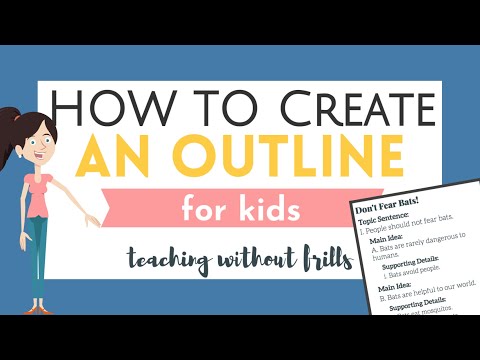
2 min1st2nd3rdHow to Create an Outline for Kids - Planning Your Writing
Teaching Without Frills
3 min3rd4th5thHow to Evaluate Sources for Relevance - Writing for Kids
Teaching Without Frills
3 min4th5thHow to Evaluate Sources for Reliability - Writing for Kids
Teaching Without Frills
4 min4th5thHow To Retell a Story For Kids
Teaching Without Frills
2 min1st2ndHow to Write a Research Paper for Kids - Episode 3: Researching
Teaching Without Frills
4 min3rd4th5thHow to Write a Research Paper for Kids - Episode 4: Writing a Draft
Teaching Without Frills
4 min3rd4th5thHow to Write a Research Paper for Kids - Episode 5: Revising
Teaching Without Frills
4 min3rd4th5thHow to Write a Research Paper for Kids | Episode 2 | Making a Plan
Teaching Without Frills
2 min3rd4th5thHow to Write a Research Paper for Kids Episode 1: Brainstorming Topics
Teaching Without Frills
2 min3rd4th5thHow to Write an Imaginative Narrative for Kids |Episode 2: Brainstorming|
Teaching Without Frills
3 min2nd3rd4thHow to Write an Imaginative Narrative for Kids |Episode 6: Writing a Closing|
Teaching Without Frills
2 min2nd3rd4thHow to Write an Imaginative Narrative for Kids Episode 1: What is it?
Teaching Without Frills
2 min2nd3rd4thHow to Write an Imaginative Narrative for Kids Episode 3: Planning Your Story
Teaching Without Frills
3 min2nd3rd4thHow to Write an Imaginative Narrative for Kids Episode 4: Writing an Introduction
Teaching Without Frills
3 min2nd3rd4thHow to Write an Imaginative Narrative for Kids Episode 5: Events
Teaching Without Frills
2 min2nd3rd4thHow to Write an Imaginative Narrative for Kids Episode 7: Revising Your Story
Teaching Without Frills
3 min2nd3rd4thHow to Write for Your Audience - Writing Video For Kids
Teaching Without Frills
3 min3rd4th5thHow-To Writing For Kids - Procedural Writing - Episode 1: Brainstorming
Teaching Without Frills
1 min1st2nd3rdHow-To Writing For Kids - Procedural Writing - Episode 2: Writing an Introduction
Teaching Without Frills
2 min1st2nd3rdHow-To Writing For Kids - Procedural Writing - Episode 3: Writing Steps
Teaching Without Frills
2 min1st2nd3rdHow-To Writing For Kids - Procedural Writing - Episode 4: Revising Steps
Teaching Without Frills
2 min1st2nd3rdHow-To Writing For Kids - Procedural Writing - Episode 5: Writing a Closing
Teaching Without Frills
2 min1st2nd3rdInformational Writing for Kids - Episode 1: What Is It?
Teaching Without Frills
1 min1st2nd3rdInformational Writing for Kids - Episode 2: Brainstorming & Choosing a Topic
Teaching Without Frills
2 min1st2nd3rdInformational Writing for Kids - Episode 3: Making a Plan
Teaching Without Frills
2 min1st2nd3rdInformational Writing for Kids - Episode 5: Writing a Draft
Teaching Without Frills
2 min1st2nd3rdInformational Writing for Kids - Episode 6: Writing a Closing
Teaching Without Frills
1 min1st2nd3rdInformational Writing for Kids - Episode 7: Making a Table of Contents
Teaching Without Frills
2 min1st2nd3rdInformational Writing for Kids - Episode 8: Making a Glossary
Teaching Without Frills
2 min1st2nd3rdInformational Writing for Kids- Episode 4: Writing an Introduction
Teaching Without Frills
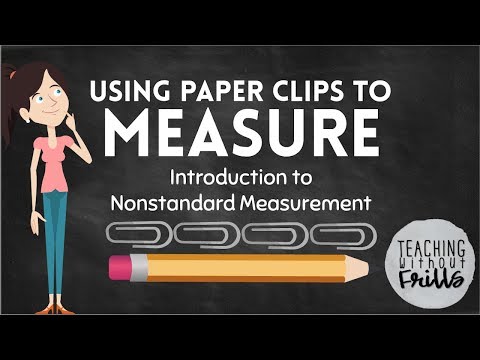
2 min1st2nd3rdIntroduction to Nonstandard Measurement for Kids: Using Paper Clips to Measure
Teaching Without Frills
2 minK1stIntroduction to Standard Measurement for Kids: Measuring Length in Inches with a Ruler
Teaching Without Frills
2 min1st2ndMissing Addends: Finding a Missing Part for Kids
Teaching Without Frills
3 minK1stOpinion Writing for Kids | Episode 1 | What Is It?
Teaching Without Frills
1 min1st2nd3rdOpinion Writing for Kids | Episode 2 | Choosing a Topic
Teaching Without Frills
1 min1st2nd3rdOpinion Writing for Kids | Episode 3 | Making a Plan
Teaching Without Frills
2 min1st2nd3rdOpinion Writing for Kids | Episode 4 | Writing a Draft: Introduction
Teaching Without Frills
1 min1st2nd3rdOpinion Writing for Kids | Episode 5 | Writing a Draft: Reasons & Examples
Teaching Without Frills
2 min1st2nd3rdOpinion Writing for Kids | Episode 6 | Writing a Draft: Conclusion
Teaching Without Frills
2 min1st2nd3rdOpinion Writing for Kids | Episode 7 | Revising Your Writing
Teaching Without Frills
3 min1st2nd3rdOpinion Writing for Kids | Episode 8 | Editing Your Writing
Teaching Without Frills
2 min1st2nd3rdParts of Speech for Kids: What is an Adjective?
Teaching Without Frills
3 min1st2nd3rdParts of Speech for Kids: What is an Adverb?
Teaching Without Frills
5 min2nd3rd4thPersuasive Writing for Kids - Episode 1: What is It?
Teaching Without Frills
2 min3rd4th5thPersuasive Writing for Kids - Episode 2: Brainstorming Topics
Teaching Without Frills
2 min3rd4th5thPersuasive Writing for Kids - Episode 3: Making a Plan
Teaching Without Frills
2 min3rd4th5thPersuasive Writing for Kids - Episode 4: Developing Reasons
Teaching Without Frills
2 min3rd4th5thPersuasive Writing for Kids - Episode 5: Writing an Introduction
Teaching Without Frills
2 min3rd4th5thPersuasive Writing for Kids - Episode 6: Writing a Rough Draft and Closing
Teaching Without Frills
2 min3rd4th5thPhonics Mystery Words Mission: AI Vowel Team - Long A Sound
Teaching Without Frills
3 min1st2ndPhonics Mystery Words Mission: AR sound - Bossy R
Teaching Without Frills
3 min1st2ndPhonics Mystery Words Mission: OR sound
Teaching Without Frills
3 min1st2ndRealistic Fiction Writing for Kids Episode 1: What Is It?
Teaching Without Frills
2 min2nd3rd4thRealistic Fiction Writing for Kids Episode 2: Brainstorming
Teaching Without Frills
2 min2nd3rd4thRealistic Fiction Writing for Kids Episode 3: Writing an Introduction
Teaching Without Frills
2 min2nd3rd4thRealistic Fiction Writing for Kids Episode 4: Writing a Draft
Teaching Without Frills
2 min2nd3rd4thRealistic Fiction Writing for Kids Episode 5: Writing a Closing
Teaching Without Frills
2 min2nd3rd4thRealistic Fiction Writing for Kids Episode 6: Revising Your Story
Teaching Without Frills
4 min2nd3rd4thStory Elements For Kids: What Is a Character?
Teaching Without Frills
3 minK1st2ndStory Elements for Kids: What Is a Setting?
Teaching Without Frills
2 minK1st2ndWays to Make 5 Using Addition Equations - Kindergarten Math - "Making 5"
Teaching Without Frills
4 minKWays to Make 5 Using Drawings - Kindergarten Math - "Making 5"
Teaching Without Frills
4 minKWays to Make 5 Using Objects - Kindergarten Math - "Making 5"
Teaching Without Frills
3 minKWays to Make 5 Using Your Fingers - Kindergarten Math - "Making 5"
Teaching Without Frills
3 minKWriting a Personal Narrative - Episode 1: Brainstorming a Story for Kids
Teaching Without Frills
3 min1st2nd3rdWriting a Personal Narrative for Kids - Episode 2: Making a Plan
Teaching Without Frills
2 min1st2nd3rdWriting a Personal Narrative for Kids - Episode 3: Writing an Introduction
Teaching Without Frills
3 min1st2nd3rdWriting a Personal Narrative for Kids - Episode 4: Writing a Draft
Teaching Without Frills
5 min1st2nd3rdWriting a Personal Narrative for Kids - Episode 5: Writing a Closing or Conclusion
Teaching Without Frills
5 min1st2nd3rdWriting a Personal Narrative for Kids - Episode 6: Revising
Teaching Without Frills
4 min1st2nd3rdWriting a Personal Narrative for Kids - Episode 7: Editing
Teaching Without Frills
6 min1st2nd3rdWriting a Personal Narrative for Kids - Episode 8: Publishing for Kids
Teaching Without Frills
3 min1st2nd3rd