
Series
Rock 'N Learn
369 episodes
Rock N Learn has been making sing-along teaching videos for decades and the catalog shows it. Phonics songs for every letter and ending sound, sight-word practice for kindergarten, alphabet videos pairing each letter with two example words, and math sets that put addition and subtraction facts to country music or rap. Lengths swing hard: some clips run two minutes while the complete facts programs pass fifty. Alongside these sit classic children songs with on-screen lyrics and action songs for shaking out the wiggles. Best used the way the old classroom tapes were, with one skill played all the way through, then practiced off screen.
What Rock 'N Learn covers
369 episodes in the library, tagged for Pre-K–5th. Heaviest coverage: Reading & Writing (ELA), For Fun and Math. Between them they line up with 53 distinct standards across 5 frameworks.
Episodes per grade
- Pre-K
- 203
- K
- 303
- 1st
- 199
- 2nd
- 132
- 3rd
- 49
- 4th
- 40
- 5th
- 12
Episodes per subject
- Reading & Writing (ELA)
- 178
- For Fun
- 97
- Math
- 63
- Brain Breaks
- 15
- Science
- 15
- Social Studies
- 4
NGSS (Science) 8
- 4-LS1-1Construct an argument that plants and animals have internal and external structures that function to support survival, growth, behavior, and reproduction.
- 4-ESS1-1Identify evidence from patterns in rock formations and fossils in rock layers to support an explanation for changes in a landscape over time.
- 5-LS1-1Support an argument that plants get the materials they need for growth chiefly from air and water.
- 5-PS1-1Develop a model to describe that matter is made of particles too small to be seen.
- 2-LS4-1Make observations of plants and animals to compare the diversity of life in different habitats.
- 3-LS1-1Develop models to describe that organisms have unique and diverse life cycles but all have in common birth, growth, reproduction, and death.
+ 2 more
- 3-LS4-2Use evidence to construct an explanation for how the variations in characteristics among individuals of the same species may provide advantages in surviving, finding mates, and reproducing.
- 4-LS1-2Use a model to describe that animals receive different types of information through their senses, process the information in their brain, and respond to the information in different ways.
Common Core — Math 20
- 3.OA.C.7Fluently multiply and divide within 100. By the end of Grade 3, know from memory all products of two one-digit numbers.
- 3.OA.A.1Interpret products of whole numbers, e.g., interpret 5 × 7 as the total number of objects in 5 groups of 7 objects each.
- K.CC.B.4Understand the relationship between numbers and quantities; connect counting to cardinality.
- K.CC.A.1Count to 100 by ones and by tens.
- 1.G.A.1Distinguish between defining attributes versus non-defining attributes; build and draw shapes to possess defining attributes.
- K.G.A.2Correctly name shapes regardless of their orientations or overall size.
+ 14 more
- K.CC.B.5Count to answer "how many?" questions about as many as 20 things arranged in a line, array, or circle, or as many as 10 things in a scattered configuration.
- K.OA.A.1Represent addition and subtraction with objects, fingers, mental images, drawings, sounds, acting out situations, verbal explanations, expressions, or equations.
- 1.OA.C.6Add and subtract within 20, demonstrating fluency for addition and subtraction within 10.
- 2.OA.B.2Fluently add and subtract within 20 using mental strategies. Know from memory all sums of two one-digit numbers.
- 2.G.A.1Recognize and draw shapes having specified attributes, such as a given number of angles or a given number of equal faces; identify triangles, quadrilaterals, pentagons, hexagons, and cubes.
- K.G.B.4Analyze and compare two- and three-dimensional shapes, in different sizes and orientations, using informal language to describe their similarities, differences, and parts.
- 2.MD.C.7Tell and write time from analog and digital clocks to the nearest five minutes, using a.m. and p.m.
- 2.MD.C.8Solve word problems involving dollar bills, quarters, dimes, nickels, and pennies, using $ and ¢ symbols appropriately.
- 3.NF.A.1Understand a fraction 1/b as the quantity formed by 1 part when a whole is partitioned into b equal parts; understand a fraction a/b as the quantity formed by a parts of size 1/b.
- 1.MD.B.3Tell and write time in hours and half-hours using analog and digital clocks.
- 2.NBT.A.2Count within 1000; skip-count by 5s, 10s, and 100s.
- 3.OA.A.2Interpret whole-number quotients of whole numbers, e.g., interpret 56 ÷ 8 as the number of objects in each share when 56 objects are partitioned equally into 8 shares.
- 3.OA.A.3Use multiplication and division within 100 to solve word problems in situations involving equal groups, arrays, and measurement quantities.
- 4.NF.C.6Use decimal notation for fractions with denominators 10 or 100.
Common Core — ELA 18
- RF.1.3Know and apply grade-level phonics and word analysis skills in decoding words.
- RF.2.3Know and apply grade-level phonics and word analysis skills in decoding words.
- RF.K.3Know and apply grade-level phonics and word analysis skills in decoding words.
- L.1.6Use words and phrases acquired through conversations, reading and being read to, and responding to texts.
- L.K.6Use words and phrases acquired through conversations, reading and being read to, and responding to texts.
- RF.K.1Demonstrate understanding of the organization and basic features of print.
+ 12 more
- RF.1.4Read with sufficient accuracy and fluency to support comprehension.
- RF.K.2Demonstrate understanding of spoken words, syllables, and sounds (phonemes).
- L.2.2Demonstrate command of the conventions of standard English capitalization, punctuation, and spelling when writing.
- L.3.2Demonstrate command of the conventions of standard English capitalization, punctuation, and spelling when writing.
- L.K.1Demonstrate command of the conventions of standard English grammar and usage when writing or speaking.
- RF.2.4Read with sufficient accuracy and fluency to support comprehension.
- RI.2.1Ask and answer such questions as who, what, where, when, why, and how to demonstrate understanding of key details in a text.
- RI.3.1Ask and answer questions to demonstrate understanding of a text, referring explicitly to the text as the basis for the answers.
- RI.4.1Refer to details and examples in a text when explaining what the text says explicitly and when drawing inferences from the text.
- RL.2.1Ask and answer such questions as who, what, where, when, why, and how to demonstrate understanding of key details in a text.
- W.3.2Write informative/explanatory texts to examine a topic and convey ideas and information clearly.
- W.3.5With guidance and support from peers and adults, develop and strengthen writing as needed by planning, revising, and editing.
CASEL (Social-Emotional) 4
- CASEL.RS.2Build and keep positive relationships and friendships.
- CASEL.RS.3Practice teamwork and solve problems collaboratively.
- CASEL.SOA.2Demonstrate empathy and compassion for others.
- CASEL.SOA.3Show concern for other people's feelings and respond to them with care.
National Health Education 3
- NHES.7.2.1Demonstrate age-appropriate observable health and safety practices.
- NHES.1.2.5Identify practices that prevent or reduce health risks, such as handwashing.
- NHES.1.2.6List ways to take part in healthy practices, such as brushing teeth daily.
Every episode is vetted and tagged before it goes in. Pick your state in the filters above to see your own state’s codes alongside these.
24 of 369 results
Learn to Read with Phonics | Complete Program
Rock 'N Learn
137 minK1st2nd
Ending Sounds | Learn to Read Words With ANG, ING, ONG, UNG, ANK, INK, DGE | Phonics Lessons
Rock 'N Learn
9 minK1st2ndThree-Letter Consonant Blends | Phonics Songs
Rock 'N Learn
7 minK1st2ndDigraphs and Trigraphs | Fun Phonics Songs
Rock 'N Learn
15 minK1st2ndEnding Blends | Learn to Read
Rock 'N Learn
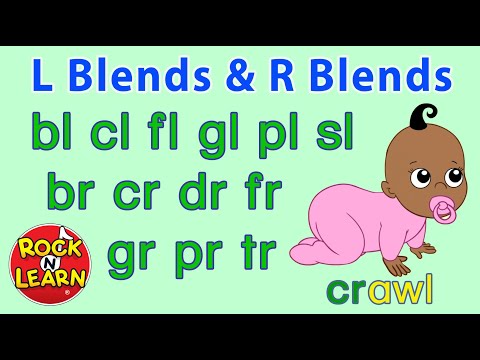
12 minK1st2ndPhonics Songs | Beginning L Blends and R Blends
Rock 'N Learn
18 minK1st2ndPhonics Songs | Beginning S Blends and T Blends
Rock 'N Learn
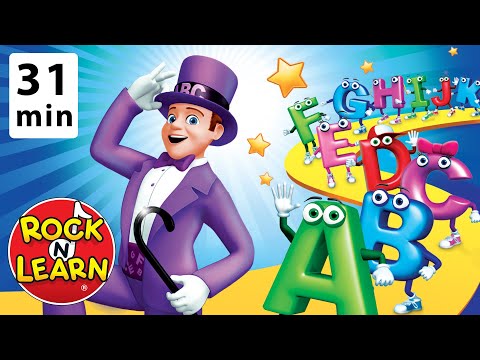
13 minK1st2ndAlphabet | Learn ABC Letters
Rock 'N Learn
31 minK1st2ndEnding Sounds Phonics Songs | ang, ing, ong, ung, ank, ink, dge
Rock 'N Learn
19 minK1st2ndPreschool Phonics
Rock 'N Learn
39 minK1st2ndTrigraph Songs | shr, squ, tch
Rock 'N Learn
9 minK1st2ndThree-Letter Consonant Blends | scr spl spr str
Rock 'N Learn
14 minK1st2ndDigraphs | ch, sh, th, ck, ph, gh, wh
Rock 'N Learn
23 minK1st2ndEnding Consonant Blends with S | Learn to Read: sk, st
Rock 'N Learn
6 minK1st2ndEnding Consonant Blends with N | Learn to Read: nd, nk, nt
Rock 'N Learn
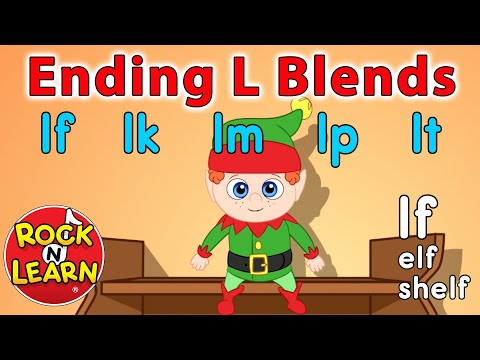
10 minK1st2ndEnding Consonant Blends with L | Learn to Read: lf, lk, lm, lp, lt
Rock 'N Learn
12 minK1st2ndBeginning Consonant Blends with T | Learn to Read: tr, tw
Rock 'N Learn
6 minK1st2ndBeginning Consonant Blends with S | Learn to Read: sc, sk, sl, sm, sn, sp, st, sw
Rock 'N Learn
25 minK1st2ndBeginning Consonant Blends with R | Learn to Read: br, cr, dr, fr, gr, pr, tr
Rock 'N Learn
23 minK1st2ndBeginning Consonant Blends with L | Learn to Read Words with: bl, cl, fl, gl, pl, sl
Rock 'N Learn
20 minK1st2ndBossy R | Learn to Read Words With R-Controlled Vowels | R Changes a Vowel
Rock 'N Learn
16 min1st2ndThe OR Sound - Bossy R Song and Practice | ABC Phonics Song with Sounds for Children
Rock 'N Learn
3 min1st2ndThe UR Sound - Bossy R Song and Practice | ABC Phonics Song with Sounds for Children
Rock 'N Learn
3 min1st2ndThe IR Sound - Bossy R Song and Practice | ABC Phonics Song with Sounds for Children
Rock 'N Learn
3 min1st2nd









Or use the filters above to narrow this down.