Series
Pursuit of History
36 episodes
Pursuit of History is a channel of short animated explainers, most three to seven minutes, that take on one social-studies topic at a time for upper-elementary and middle-grade students. A friendly narrator and a recurring cartoon guide walk kids through the story with clean title cards, illustrated scenes, maps, and period images. The episodes here span the road to the American Revolution and the founding documents, westward expansion, ancient Mesopotamia and Egypt, the branches and duties of government, elections and voting rights, map and geography skills, and the basics of economics, plus a how-to on reading primary and secondary sources. A quick, self-contained way to open a civics, U.S. history, geography, or economics lesson.
What Pursuit of History covers
36 episodes in the library, tagged for 3rd–6th. Heaviest coverage: Social Studies, Reading & Writing (ELA) and For Fun. Between them they line up with 31 distinct standards across 2 frameworks.
Episodes per grade
- 3rd
- 9
- 4th
- 24
- 5th
- 36
- 6th
- 36
Episodes per subject
- Social Studies
- 35
- Reading & Writing (ELA)
- 1
- For Fun
- 1
Common Core — ELA 2
- RH.6-8.2Determine the central ideas or information of a primary or secondary source; provide an accurate summary of the source distinct from prior knowledge or opinions.
- RH.6-8.6Identify aspects of a text that reveal an author's point of view or purpose (e.g., loaded language, inclusion or avoidance of particular facts).
Social Studies (C3 / NCSS) 29
- D2.His.14.3-5Explain probable causes and effects of events and developments.
- D2.Geo.7.3-5Explain how cultural and environmental characteristics affect the distribution and movement of people, goods, and ideas.
- D2.Civ.2.3-5Explain how a democracy relies on people's responsible participation, and draw implications for how individuals should participate.
- D2.His.1.3-5Create and use a chronological sequence of related events to compare developments that happened at the same time.
- D2.Civ.2.6-8Explain specific roles played by citizens (such as voters, jurors, taxpayers, members of the armed forces, petitioners, protesters, and office-holders).
- D2.Civ.8.6-8Analyze ideas and principles contained in the founding documents of the United States, and explain how they influence the social and political system.
+ 23 more
- D2.Geo.2.3-5Use maps, satellite images, photographs, and other representations to explain relationships between the locations of places and regions and their environmental characteristics.
- D2.His.2.3-5Compare life in specific historical time periods to life today.
- D2.His.6.3-5Describe how people's perspectives shaped the historical sources they created.
- D2.Civ.1.3-5Distinguish the responsibilities and powers of government officials at various levels and branches of government and in different times and places.
- D2.Civ.14.3-5Illustrate historical and contemporary means of changing society.
- D2.Civ.3.3-5Examine the origins and purposes of rules, laws, and key U.S. constitutional provisions.
- D2.Civ.4.3-5Explain how groups of people make rules to create responsibilities and protect freedoms.
- D2.Civ.4.6-8Explain the powers and limits of the three branches of government, public officials, and bureaucracies at different levels in the United States and in other countries.
- D2.Civ.5.6-8Explain the origins, functions, and structure of government with reference to the U.S. Constitution, state constitutions, and selected other systems of government.
- D2.Geo.1.3-5Construct maps and other graphic representations of both familiar and unfamiliar places.
- D2.Geo.4.3-5Explain how culture influences the way people modify and adapt to their environments.
- D2.Civ.11.6-8Differentiate among procedures for making decisions in the classroom, school, civil society, and local, state, and national government in terms of how civic purposes are intended.
- D2.Civ.3.6-8Examine the origins, purposes, and impact of constitutions, laws, treaties, and international agreements.
- D2.Civ.5.3-5Explain the origins, functions, and structure of different systems of government, including those created by the U.S. and state constitutions.
- D2.Civ.7.3-5Apply civic virtues and democratic principles in school settings.
- D2.Civ.8.3-5Identify core civic virtues and democratic principles that guide government, society, and communities.
- D2.Eco.1.3-5Compare the benefits and costs of individual choices.
- D2.Eco.3.3-5Identify examples of the variety of resources (human capital, physical capital, and natural resources) that are used to produce goods and services.
- D2.Eco.3.6-8Explain the roles of buyers and sellers in product, labor, and financial markets.
- D2.Eco.6.6-8Explain how changes in supply and demand cause changes in prices and quantities of goods and services, labor, credit, and foreign currencies.
- D2.Geo.8.3-5Explain how human settlements and movements relate to the locations and use of various natural resources.
- D2.His.11.3-5Infer the intended audience and purpose of a historical source from information within the source itself.
- D2.His.9.3-5Summarize how different kinds of historical sources are used to explain events in the past.
Every episode is vetted and tagged before it goes in. Pick your state in the filters above to see your own state’s codes alongside these.
24 of 36 results
Why Study History?
Pursuit of History · 2016
3 min3rd4th5th6th
How to Analyze Primary Sources and Secondary Sources
Pursuit of History · 2021
5 min5th6thTypes of Maps
Pursuit of History · 2023
4 min3rd4th5th6thMap Skills: Geography, Latitude and Longitude
Pursuit of History · 2017
3 min4th5th6thThe Five Themes of Geography
Pursuit of History · 2021
5 min4th5th6thHammurabi's Code
Pursuit of History · 2025
3 min4th5th6thThe Impact of the Nile River in Ancient Egypt
Pursuit of History · 2021
5 min4th5th6thThe Columbian Exchange
Pursuit of History · 2023
5 min4th5th6thThe Pilgrims and the Mayflower Compact
Pursuit of History · 2021
6 min3rd4th5th6thThe Boston Massacre | Road to the Revolution
Pursuit of History · 2021
4 min5th6thThe Boston Tea Party | Road to the Revolution
Pursuit of History · 2021
4 min4th5th6thThe First Continental Congress | Road to the Revolution
Pursuit of History · 2021
4 min5th6thBattles of Lexington and Concord | Road to the Revolution
Pursuit of History · 2021
4 min4th5th6thThe Second Continental Congress | Road to the Revolution
Pursuit of History · 2021
5 min5th6thCommon Sense by Thomas Paine
Pursuit of History · 2021
4 min5th6thThe Declaration of Independence | Road to the Revolution
Pursuit of History · 2021
5 min4th5th6thThe Articles of Confederation (Pursuit of History)
Pursuit of History · 2022
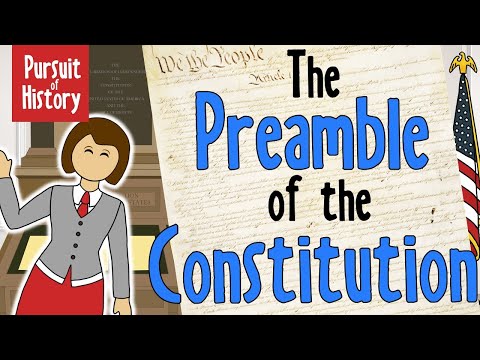
7 min5th6thThe Preamble of the Constitution Explained for Beginners
Pursuit of History · 2022
6 min4th5th6thPrinciples of the United States Constitution
Pursuit of History · 2022
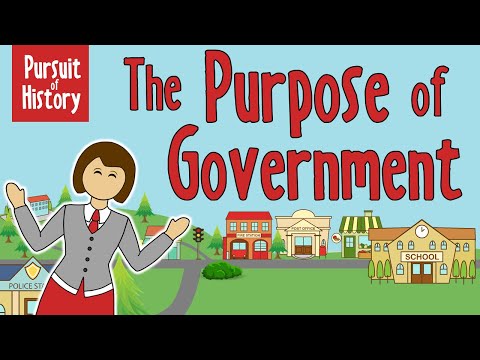
6 min5th6thThe Purpose of Government
Pursuit of History · 2021
3 min3rd4th5th6thThe Three Branches of Government Explained for Beginners
Pursuit of History · 2025
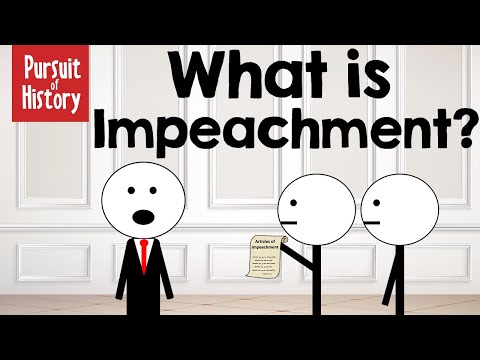
3 min3rd4th5th6thWhat is Impeachment?
Pursuit of History · 2019
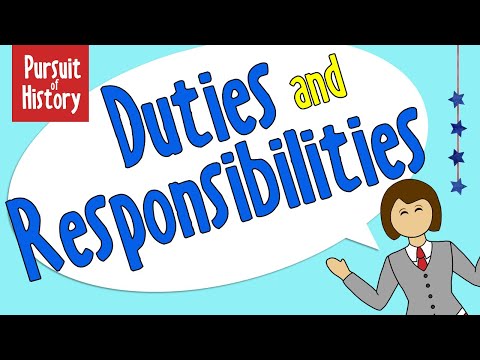
4 min5th6thThe Duties and Responsibilities of Citizens
Pursuit of History · 2019
5 min3rd4th5th6thThe History of Voting Rights in the United States
Pursuit of History · 2020
6 min5th6th







Or use the filters above to narrow this down.