Series
Mystery Doug
210 episodes
Every episode opens with a question a real child asked, and Doug spends four to eight minutes chasing the answer with evidence. Are mermaids real? No, but sailors long ago probably spotted manatees and let imagination finish the job. Can animals get sunburned? Yes, though fur, feathers, and mud work as sunscreen. Can a mountain become a volcano, can animals laugh, do animals really predict the weather. The answer is often no, which is half the value. Kids watch how you find out rather than collecting a fact. Made to open a science block or start an argument the class can settle later.
What Mystery Doug covers
210 episodes in the library, tagged for K–5th. Heaviest coverage: Science, Health and Social Studies. Between them they line up with 63 distinct standards across 7 frameworks.
Episodes per grade
- K
- 210
- 1st
- 210
- 2nd
- 210
- 3rd
- 210
- 4th
- 210
- 5th
- 210
Episodes per subject
- Science
- 210
- Health
- 34
- Social Studies
- 24
- Technology
- 10
- Math
- 2
- Music
- 2
- Social-Emotional Learning
- 2
- Art
- 1
NGSS (Science) 37
- 4-LS1-1Construct an argument that plants and animals have internal and external structures that function to support survival, growth, behavior, and reproduction.
- 5-ESS2-1Develop a model using an example to describe ways the geosphere, biosphere, hydrosphere, and/or atmosphere interact.
- K-LS1-1Use observations to describe patterns of what plants and animals (including humans) need to survive.
- 1-ESS1-1Use observations of the sun, moon, and stars to describe patterns that can be predicted.
- 2-LS2-1Plan and conduct an investigation to determine if plants need sunlight and water to grow.
- 2-LS4-1Make observations of plants and animals to compare the diversity of life in different habitats.
+ 31 more
- 2-PS1-4Construct an argument with evidence that some changes caused by heating or cooling can be reversed and some cannot.
- 4-PS3-2Make observations to provide evidence that energy can be transferred from place to place by sound, light, heat, and electric currents.
- 5-LS2-1Develop a model to describe the movement of matter among plants, animals, decomposers, and the environment.
- 5-PS1-3Make observations and measurements to identify materials based on their properties.
- 3-LS4-1Analyze and interpret data from fossils to provide evidence of the organisms and the environments in which they lived long ago.
- 4-ESS2-1Make observations and/or measurements to provide evidence of the effects of weathering or the rate of erosion by water, ice, wind, or vegetation.
- 5-ESS1-2Represent data in graphical displays to reveal patterns of daily changes in length and direction of shadows, day and night, and the seasonal appearance of some stars in the night sky.
- 1-PS4-2Make observations to construct an evidence-based account that objects can be seen only when illuminated.
- 1-PS4-3Plan and conduct an investigation to determine the effect of placing objects made with different materials in the path of a beam of light.
- 3-LS4-4Make a claim about the merit of a solution to a problem caused when the environment changes and the types of plants and animals that live there may change.
- 4-ESS1-1Identify evidence from patterns in rock formations and fossils in rock layers to support an explanation for changes in a landscape over time.
- 5-ESS1-1Support an argument that differences in the apparent brightness of the sun compared to other stars is due to their relative distances from Earth.
- 1-LS1-2Read texts and use media to determine patterns in behavior of parents and offspring that help offspring survive.
- 1-PS4-1Plan and conduct investigations to provide evidence that vibrating materials can make sound and that sound can make materials vibrate.
- 2-ESS1-1Use information from several sources to provide evidence that Earth events can occur quickly or slowly.
- 2-ESS2-2Develop a model to represent the shapes and kinds of land and bodies of water in an area.
- 2-PS1-3Make observations to construct an evidence-based account of how an object made of a small set of pieces can be disassembled and made into a new object.
- 3-LS2-1Construct an argument that some animals form groups that help members survive.
- 3-PS2-2Make observations and/or measurements of an object's motion to provide evidence that a pattern can be used to predict future motion.
- 3-PS2-3Ask questions to determine cause-and-effect relationships of electric or magnetic interactions between two objects not in contact with each other.
- 4-ESS3-1Obtain and combine information to describe that energy and fuels are derived from natural resources and their uses affect the environment.
- 4-PS3-1Use evidence to construct an explanation relating the speed of an object to the energy of that object.
- 4-PS4-2Develop a model to describe that light reflecting from objects and entering the eye allows objects to be seen.
- 5-ESS2-2Describe and graph the amounts of salt water and fresh water in various reservoirs to provide evidence about the distribution of water on Earth.
- 5-LS1-1Support an argument that plants get the materials they need for growth chiefly from air and water.
- 5-PS1-1Develop a model to describe that matter is made of particles too small to be seen.
- 5-PS2-1Support an argument that the gravitational force exerted by Earth on objects is directed down.
- K-2-ETS1-1Ask questions, make observations, and gather information about a situation people want to change to define a simple problem that can be solved through the development of a new or improved object or tool.
- K-2-ETS1-2Develop a simple sketch, drawing, or physical model to illustrate how the shape of an object helps it function as needed to solve a given problem.
- K-ESS3-2Ask questions to obtain information about the purpose of weather forecasting to prepare for, and respond to, severe weather.
- MS-PS1-3Gather and make sense of information to describe that synthetic materials come from natural resources and impact society.
Social Studies (C3 / NCSS) 4
- D2.His.3.K-2Generate questions about individuals and groups who have shaped a significant historical change.
- D2.Civ.2.K-2Explain how all people, not just official leaders, play important roles in a community.
- D2.His.2.3-5Compare life in specific historical time periods to life today.
- D2.Geo.6.K-2Identify some cultural and environmental characteristics of specific places.
National Core Arts 2
- MU:Re7.2.3aDemonstrate and describe how a response to music can be informed by the structure, the use of the elements of music, and context.
- VA:Re9.1.5Recognize differences in criteria used to evaluate works of art depending on styles, genres, and media.
CASEL (Social-Emotional) 3
- CASEL.RS.7Seek help when you need it and offer help when someone else does.
- CASEL.SA.1Name your own feelings and notice how they change during the day.
- CASEL.SOA.3Show concern for other people's feelings and respond to them with care.
National Health Education 9
- NHES.1Standard 1: Students comprehend functional health knowledge to enhance health.
- NHES.1.5.5Describe practices and behaviors that prevent or reduce health risks, such as eating vegetables and fruit daily.
- NHES.1.5.6Explain ways to take part in healthy practices and behaviors, such as daily moderate-to-vigorous physical activity.
- NHES.1.5.1List examples of the physical, social, emotional, and intellectual dimensions of health.
- NHES.1.5.4Compare and contrast safe and unsafe situations, people, and events.
- NHES.1.5.3Explain possible consequences of unhealthy behaviors.
+ 3 more
- NHES.1.5.7Explain ways to prevent common childhood injuries and health problems, such as swimming safety or managing emotions.
- NHES.4.5.4Ask for help to support personal health.
- NHES.7.5.1Demonstrate age-appropriate observable health and safety practices.
ISTE (Technology) 7
- ISTE.1.1.dTechnology fundamentals: understand how the technology you use works, and try out new tools confidently.
- ISTE.1.4.bDesign constraints: choose digital tools with an eye to limits, tradeoffs, and calculated risks.
- ISTE.1.4.aDesign process: follow a deliberate design process to generate ideas and possible solutions.
- ISTE.1.6.aChoose platforms or tools: pick the digital tool that fits your communication goal.
- ISTE.1.6.bOriginal and remixed works: create original work, or remix digital resources responsibly and with credit.
- ISTE.1.6.cCommunicate complex ideas: use visuals, models, or simulations to make a complicated idea clear.
+ 1 more
- ISTE.1.7.cProject teams: take on a role and contribute constructively toward a shared goal.
Common Core — Math Practices 1
- MP4Model with mathematics.
Every episode is vetted and tagged before it goes in. Pick your state in the filters above to see your own state’s codes alongside these.
24 of 210 results
Why do we get goosebumps when we're cold?
Mystery Doug
5 minK1st2nd3rd4th5th
Could a turtle live outside its shell?
Mystery Doug
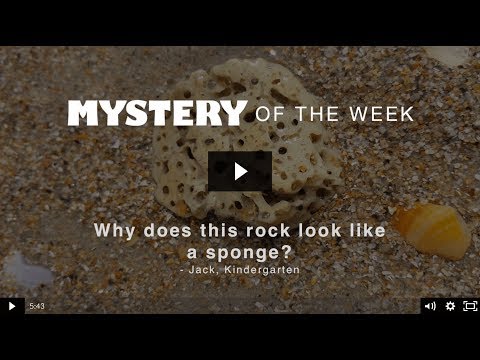
5 minK1st2nd3rd4th5thWhy does this rock look like a sponge
Mystery Doug
6 minK1st2nd3rd4th5thWhy are people making such a big deal about the eclipse?
Mystery Doug
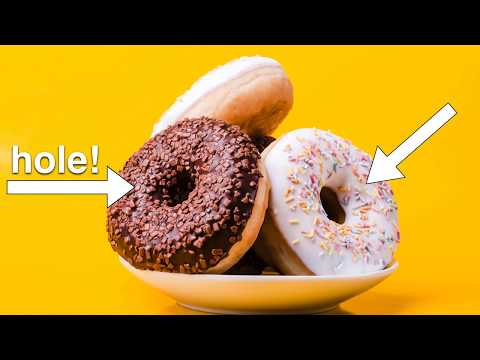
6 minK1st2nd3rd4th5thWhy do we call them donuts?
Mystery Doug
5 minK1st2nd3rd4th5thWhere does metal come from?
Mystery Doug
4 minK1st2nd3rd4th5thWhy is the sky blue?
Mystery Doug
6 minK1st2nd3rd4th5thWhy do zebras have stripes?
Mystery Doug
5 minK1st2nd3rd4th5thHow do they turn wood into paper?
Mystery Doug
5 minK1st2nd3rd4th5thWhy are hurricanes so dangerous?
Mystery Doug
5 minK1st2nd3rd4th5thWhy do different places have different times?
Mystery Doug
6 minK1st2nd3rd4th5thHow were emojis created?
Mystery Doug
6 minK1st2nd3rd4th5thWhy do our skeletons have so many bones?
Mystery Doug
4 minK1st2nd3rd4th5thDo bats really drink blood?
Mystery Doug
5 minK1st2nd3rd4th5thWhy do owls say hoo?
Mystery Doug
6 minK1st2nd3rd4th5thWhy are pumpkins so popular every fall?
Mystery Doug
6 minK1st2nd3rd4th5thWhat's that red thing on a turkey?
Mystery Doug
6 minK1st2nd3rd4th5thWhat is the moon made of?
Mystery Doug
6 minK1st2nd3rd4th5thWhere does chocolate come from?
Mystery Doug
6 minK1st2nd3rd4th5thWhy is snow white?
Mystery Doug
6 minK1st2nd3rd4th5thWhy is January the first month of the New Year?
Mystery Doug
5 minK1st2nd3rd4th5thWhy do penguins have wings if they can't fly?
Mystery Doug
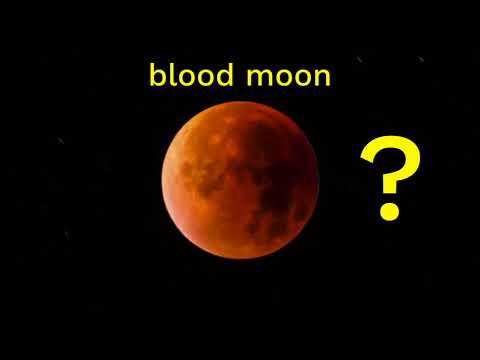
4 minK1st2nd3rd4th5thHow often does a blood moon happen?
Mystery Doug
6 minK1st2nd3rd4th5thHow does the heart pump blood?
Mystery Doug
6 minK1st2nd3rd4th5th






Or use the filters above to narrow this down.