Series
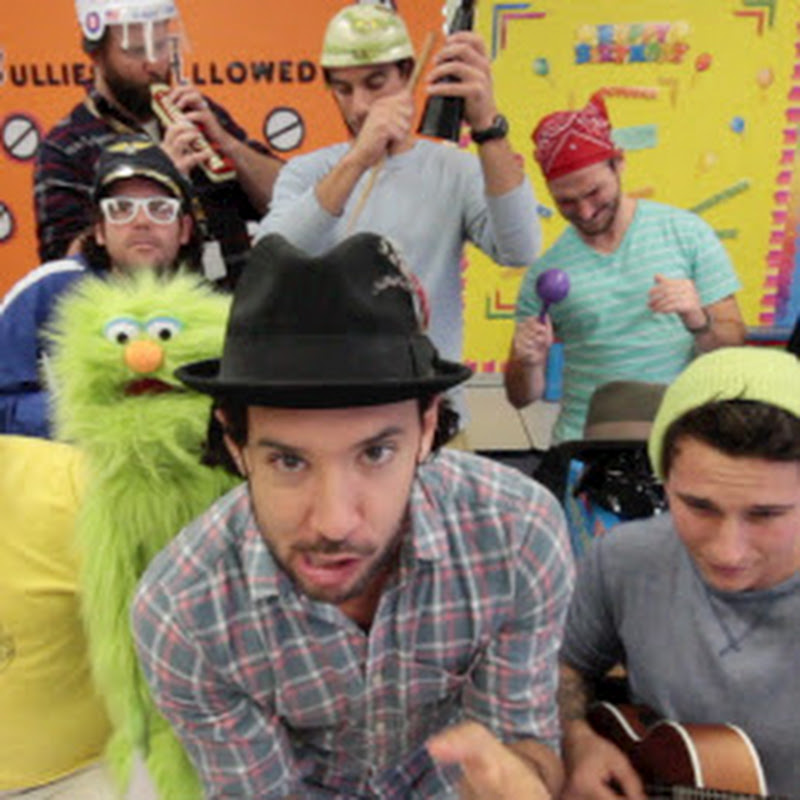
Mr. DeMaio
128 episodes
Fast, comic explainers from a teacher who took the format to YouTube, most landing between seven and twenty minutes. Two veins run through the catalog. Science curiosities hook a class immediately: tardigrades surviving the impossible, axolotls regrowing lost body parts, bats hunting by echolocation, black holes, avalanches, the Great Pacific Garbage Patch. Biography fills the longer end, with episodes on Abraham Lincoln, Albert Einstein, and Alexander Hamilton. A handful are songs, like the twelve months in order. The energy is loud and the jokes are constant, so these earn their keep as a hook or a review rather than quiet independent work.
What Mr. DeMaio covers
128 episodes in the library, tagged for Pre-K–6th. Heaviest coverage: Science, Social Studies and Math. Between them they line up with 44 distinct standards across 5 frameworks.
Episodes per grade
- Pre-K
- 3
- K
- 3
- 1st
- 4
- 2nd
- 35
- 3rd
- 99
- 4th
- 115
- 5th
- 85
- 6th
- 20
Episodes per subject
- Science
- 85
- Social Studies
- 35
- Math
- 16
- Music
- 16
- Health
- 1
NGSS (Science) 22
- 3-LS4-1Analyze and interpret data from fossils to provide evidence of the organisms and the environments in which they lived long ago.
- 3-LS4-3Construct an argument with evidence that in a particular habitat some organisms can survive well, some survive less well, and some cannot survive at all.
- 4-ESS3-2Generate and compare multiple solutions to reduce the impacts of natural Earth processes on humans.
- 4-LS1-1Construct an argument that plants and animals have internal and external structures that function to support survival, growth, behavior, and reproduction.
- 2-ESS1-1Use information from several sources to provide evidence that Earth events can occur quickly or slowly.
- 3-ESS3-1Make a claim about the merit of a design solution that reduces the impacts of a weather-related hazard.
+ 16 more
- 5-LS2-1Develop a model to describe the movement of matter among plants, animals, decomposers, and the environment.
- 2-ESS2-2Develop a model to represent the shapes and kinds of land and bodies of water in an area.
- 2-LS4-1Make observations of plants and animals to compare the diversity of life in different habitats.
- 3-ESS2-1Represent data in tables and graphical displays to describe typical weather conditions expected during a particular season.
- 3-ESS2-2Obtain and combine information to describe climates in different regions of the world.
- 5-ESS1-1Support an argument that differences in the apparent brightness of the sun compared to other stars is due to their relative distances from Earth.
- 5-ESS3-1Obtain and combine information about ways individual communities use science ideas to protect the Earth's resources and environment.
- 1-ESS1-1Use observations of the sun, moon, and stars to describe patterns that can be predicted.
- 2-ESS2-3Obtain information to identify where water is found on Earth and that it can be solid or liquid.
- 4-ESS1-1Identify evidence from patterns in rock formations and fossils in rock layers to support an explanation for changes in a landscape over time.
- 4-ESS2-1Make observations and/or measurements to provide evidence of the effects of weathering or the rate of erosion by water, ice, wind, or vegetation.
- 4-ESS2-2Analyze and interpret data from maps to describe patterns of Earth's features.
- 4-LS1-2Use a model to describe that animals receive different types of information through their senses, process the information in their brain, and respond to the information in different ways.
- 5-ESS1-2Represent data in graphical displays to reveal patterns of daily changes in length and direction of shadows, day and night, and the seasonal appearance of some stars in the night sky.
- 5-ESS2-1Develop a model using an example to describe ways the geosphere, biosphere, hydrosphere, and/or atmosphere interact.
- 5-PS3-1Use models to describe that energy in animals' food was once energy from the sun.
Common Core — Math 9
- 3.OA.C.7Fluently multiply and divide within 100. By the end of Grade 3, know from memory all products of two one-digit numbers.
- 1.G.A.1Distinguish between defining attributes versus non-defining attributes; build and draw shapes to possess defining attributes.
- 1.MD.B.3Tell and write time in hours and half-hours using analog and digital clocks.
- 2.MD.C.7Tell and write time from analog and digital clocks to the nearest five minutes, using a.m. and p.m.
- 2.NBT.B.7Add and subtract within 1000, using concrete models or drawings and strategies based on place value.
- 3.MD.A.1Tell and write time to the nearest minute and measure time intervals in minutes; solve word problems involving addition and subtraction of time intervals.
+ 3 more
- 3.NBT.A.1Use place value understanding to round whole numbers to the nearest 10 or 100.
- 4.NBT.A.3Use place value understanding to round multi-digit whole numbers to any place.
- K.G.A.2Correctly name shapes regardless of their orientations or overall size.
Social Studies (C3 / NCSS) 10
- D2.His.3.3-5Generate questions about individuals and groups who have shaped significant historical changes and continuities.
- D2.Geo.6.K-2Identify some cultural and environmental characteristics of specific places.
- D2.His.14.3-5Explain probable causes and effects of events and developments.
- D2.Geo.1.3-5Construct maps and other graphic representations of both familiar and unfamiliar places.
- D2.Geo.2.K-2Use maps, graphs, photographs, and other representations to describe places and the relationships and interactions that shape them.
- D2.Civ.1.3-5Distinguish the responsibilities and powers of government officials at various levels and branches of government and in different times and places.
+ 4 more
- D2.Geo.12.3-5Explain how natural and human-made catastrophic events in one place affect people living in other places.
- D2.Geo.2.3-5Use maps, satellite images, photographs, and other representations to explain relationships between the locations of places and regions and their environmental characteristics.
- D2.His.1.3-5Create and use a chronological sequence of related events to compare developments that happened at the same time.
- D2.His.2.3-5Compare life in specific historical time periods to life today.
National Health Education 2
- NHES.1.5.5Describe practices and behaviors that prevent or reduce health risks, such as eating vegetables and fruit daily.
- NHES.3.5.1Use reading, writing, and speaking skills to find valid and reliable information about health behaviors.
Common Core — Math Practices 1
- MP6Attend to precision.
Every episode is vetted and tagged before it goes in. Pick your state in the filters above to see your own state’s codes alongside these.
24 of 128 results
Saber-Toothed Tiger Facts!
Mr. DeMaio
9 min2nd3rd4th5th
Learning About the Planets in Our Solar System
Mr. DeMaio
18 min2nd3rd4th5thLearning About the Moon and Its Phases
Mr. DeMaio
7 min3rd4th5thLearning About the Dwarf Planet Pluto
Mr. DeMaio
6 min3rd4th5thSun Facts for Kids!
Mr. DeMaio
11 min2nd3rd4thMercury Facts!
Mr. DeMaio
14 min3rd4th5thVenus Facts for Kids!
Mr. DeMaio
13 min3rd4th5thEarth Facts!
Mr. DeMaio
19 min2nd3rd4thMars Facts for Kids!
Mr. DeMaio
10 min3rd4th5thJupiter Facts for Kids!
Mr. DeMaio
11 min3rd4th5thSaturn Facts for Kids!
Mr. DeMaio
10 min3rd4th5thUranus Facts!
Mr. DeMaio
15 min3rd4th5thNeptune Facts!
Mr. DeMaio
15 min3rd4th5thDwarf Planet Facts!
Mr. DeMaio
19 min3rd4th5thMeteor Facts for Kids!
Mr. DeMaio
10 min3rd4th5thBlack Holes Explained for Kids!
Mr. DeMaio
16 min4th5th6thTotal Solar Eclipse Explained for Kids!
Mr. DeMaio
4 min3rd4th5thJames Webb Telescope Explained
Mr. DeMaio
5 min4th5th6thWhat Are the Northern Lights?
Mr. DeMaio
11 min3rd4th5thIs There a Planet 9?
Mr. DeMaio
13 min4th5th6thEarth Was Hit by Another Planet
Mr. DeMaio
10 min4th5th6thThe Biggest Star in the Universe!
Mr. DeMaio
13 min4th5th6thThe Biggest Black Hole in the Universe!
Mr. DeMaio
13 min4th5th6thWhat Is a Quasar?
Mr. DeMaio
12 min5th6th






Or use the filters above to narrow this down.