
Series
MightyOwl
25 episodes
Standards-aligned animated lessons from the MightyOwl curriculum studio, each running five to nine minutes and built for a single K-5 skill. A cheerful narrator walks kids through one grammar rule, reading skill, science idea, or math concept at a time, with clear examples and a try-it prompt. The catalog spans early language arts (nouns and verbs, syllables, rhyming, shades of meaning, sentence types, commas), foundational science (sound, states of matter, habitats, weathering, inherited traits), and math (counting by tens, word problems, equivalent fractions, measuring angles). Because every video targets one grade-labeled objective, a teacher can pull exactly the clip that matches the day.
What MightyOwl covers
25 episodes in the library, tagged for Pre-K–5th. Heaviest coverage: Reading & Writing (ELA), Science and Math. Between them they line up with 23 distinct standards across 3 frameworks.
Episodes per grade
- Pre-K
- 3
- K
- 10
- 1st
- 13
- 2nd
- 9
- 3rd
- 6
- 4th
- 6
- 5th
- 5
Episodes per subject
- Reading & Writing (ELA)
- 13
- Science
- 8
- Math
- 4
NGSS (Science) 8
- 1-PS4-1Plan and conduct investigations to provide evidence that vibrating materials can make sound and that sound can make materials vibrate.
- 2-LS2-1Plan and conduct an investigation to determine if plants need sunlight and water to grow.
- 2-LS4-1Make observations of plants and animals to compare the diversity of life in different habitats.
- 2-PS1-1Plan and conduct an investigation to describe and classify different kinds of materials by their observable properties.
- 3-LS3-1Analyze and interpret data to provide evidence that plants and animals have traits inherited from parents and that variation of these traits exists in a group of similar organisms.
- 4-ESS2-1Make observations and/or measurements to provide evidence of the effects of weathering or the rate of erosion by water, ice, wind, or vegetation.
+ 2 more
- 4-PS4-2Develop a model to describe that light reflecting from objects and entering the eye allows objects to be seen.
- 5-LS1-1Support an argument that plants get the materials they need for growth chiefly from air and water.
Common Core — Math 5
- 1.OA.A.1Use addition and subtraction within 20 to solve word problems involving situations of adding to, taking from, putting together, taking apart, and comparing.
- 4.MD.C.6Measure angles in whole-number degrees using a protractor; sketch angles of specified measure.
- 4.NF.A.1Explain why a fraction a/b is equivalent to a fraction (n × a)/(n × b) by using visual fraction models; use this principle to recognize and generate equivalent fractions.
- K.CC.A.1Count to 100 by ones and by tens.
- K.NBT.A.1Compose and decompose numbers from 11 to 19 into ten ones and some further ones to understand that these numbers are composed of ten ones and one, two, three, … nine ones.
Common Core — ELA 10
- L.1.1Demonstrate command of the conventions of standard English grammar and usage when writing or speaking.
- L.K.1Demonstrate command of the conventions of standard English grammar and usage when writing or speaking.
- L.K.5With guidance and support from adults, explore word relationships and nuances in word meanings.
- RF.K.2Demonstrate understanding of spoken words, syllables, and sounds (phonemes).
- L.1.2Demonstrate command of the conventions of standard English capitalization, punctuation, and spelling when writing.
- L.2.1Demonstrate command of the conventions of standard English grammar and usage when writing or speaking.
+ 4 more
- L.2.2Demonstrate command of the conventions of standard English capitalization, punctuation, and spelling when writing.
- RF.K.1Demonstrate understanding of the organization and basic features of print.
- SL.K.3Ask and answer questions in order to seek help, get information, or clarify something that is not understood.
- W.K.2Use a combination of drawing, dictating, and writing to compose informative/explanatory texts that name and supply information about a topic.
Every episode is vetted and tagged before it goes in. Pick your state in the filters above to see your own state’s codes alongside these.
24 of 25 results
Addition and Subtraction Word Problems: Forest Field Trip (MightyOwl)
MightyOwl
7 min1st2nd
All About Syllables (MightyOwl)
MightyOwl
6 minPre-KK1stAntonyms: Opposites Attract (MightyOwl)
MightyOwl
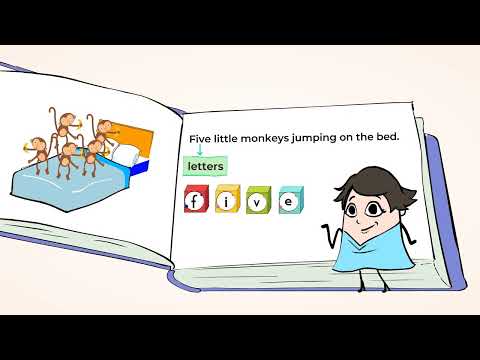
5 minK1stBasic Features of Print: Five Little Monkeys (MightyOwl)
MightyOwl
6 minPre-KKA Big Ask: All About Questions (MightyOwl)
MightyOwl
6 minK1stDo Plants Need Water and Sunlight to Grow? (MightyOwl)
MightyOwl
8 min1st2ndThe Effects of Weathering and Erosion (MightyOwl)
MightyOwl
7 min3rd4th5thEquivalent Fractions (MightyOwl)
MightyOwl
9 min4th5thA Friendly Comma Letter (MightyOwl)
MightyOwl
6 min2nd3rdThe Grass Is Greener with Air and Water: How Plants Grow (MightyOwl)
MightyOwl
6 min4th5thGroup 10s and Count by 10s: A Day at the Beach (MightyOwl)
MightyOwl
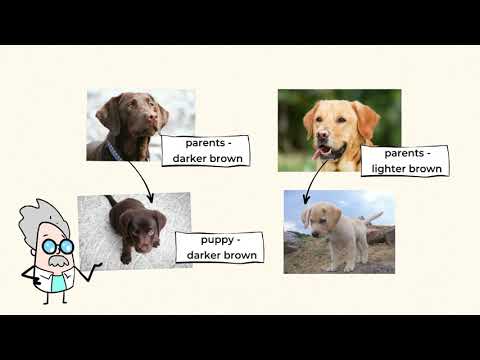
8 minK1stIt's All in the Genes: Inheritance and Variation of Traits (MightyOwl)
MightyOwl
6 min3rd4thA Letter Is Forever: Shared Writing (MightyOwl)
MightyOwl
7 minK1stMeasuring Angles (MightyOwl)
MightyOwl
6 min4th5thNouns and Verbs (MightyOwl)
MightyOwl
6 minK1stPreposition Pirates (MightyOwl)
MightyOwl
7 min1st2ndPrepositions of Place: Where Is Everybody? (MightyOwl)
MightyOwl
5 minK1stRhyming Words (MightyOwl)
MightyOwl
6 minPre-KKSound and Vibration: Do You Hear What I Hear? (MightyOwl)
MightyOwl
6 min1st2ndStates of Matter: Classifying Materials (MightyOwl)
MightyOwl
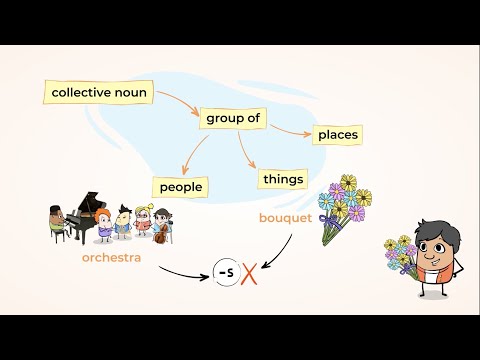
6 min2nd3rdTogether as One: Collective Nouns (MightyOwl)
MightyOwl
6 min2nd3rdTypes of Sentences: How Not to Read Like a Robot (MightyOwl)
MightyOwl
6 min1st2ndVision and Light Reflections: Catch the Speed of Light (MightyOwl)
MightyOwl
6 min4th5thVocabulary: Shades of Meaning (MightyOwl)
MightyOwl
6 minK1st










Or use the filters above to narrow this down.