Series
Jack Hartmann Kids
1827 episodes
Jack Hartmann has built a working library of learning songs, and well over a thousand of them are here, most two to four minutes long. The pattern rarely changes: a catchy tune, a beat kids can move to, and one skill drilled until it sticks. The skill might be counting and skip-counting, ten more and ten less, 2D and 3D shapes, states of matter, the five senses, rhyming and word families, or the months of the year. Others are pure sing-along, from nursery rhymes to five little monkeys to a line dance, with no skill attached. Teachers reach for these as warm-ups, transitions, and the stand-up-and-reset moment between blocks.
What Jack Hartmann Kids covers
1827 episodes in the library, tagged for Pre-K–4th. Heaviest coverage: Reading & Writing (ELA), Math and Brain Breaks. Between them they line up with 59 distinct standards across 8 frameworks.
Episodes per grade
- Pre-K
- 794
- K
- 1682
- 1st
- 1748
- 2nd
- 1286
- 3rd
- 331
- 4th
- 76
Episodes per subject
- Reading & Writing (ELA)
- 894
- Math
- 487
- Brain Breaks
- 277
- For Fun
- 130
- Science
- 88
- Social-Emotional Learning
- 44
- Health
- 19
- Social Studies
- 8
- Music
- 3
NGSS (Science) 9
- K-ESS2-1Use and share observations of local weather conditions to describe patterns over time.
- K-ESS3-3Communicate solutions that will reduce the impact of humans on the land, water, air, and/or other living things in the local environment.
- 1-LS1-1Use materials to design a solution to a human problem by mimicking how plants and/or animals use their external parts to help them survive, grow, and meet their needs.
- K-LS1-1Use observations to describe patterns of what plants and animals (including humans) need to survive.
- 2-PS1-1Plan and conduct an investigation to describe and classify different kinds of materials by their observable properties.
- K-PS2-1Plan and conduct an investigation to compare the effects of different strengths or different directions of pushes and pulls on the motion of an object.
+ 3 more
- 3-LS1-1Develop models to describe that organisms have unique and diverse life cycles but all have in common birth, growth, reproduction, and death.
- 1-ESS1-1Use observations of the sun, moon, and stars to describe patterns that can be predicted.
- 5-ESS1-2Represent data in graphical displays to reveal patterns of daily changes in length and direction of shadows, day and night, and the seasonal appearance of some stars in the night sky.
Common Core — Math 20
- K.CC.A.1Count to 100 by ones and by tens.
- 2.NBT.A.2Count within 1000; skip-count by 5s, 10s, and 100s.
- 1.OA.C.6Add and subtract within 20, demonstrating fluency for addition and subtraction within 10.
- K.CC.B.4Understand the relationship between numbers and quantities; connect counting to cardinality.
- K.CC.C.6Identify whether the number of objects in one group is greater than, less than, or equal to the number of objects in another group.
- K.OA.A.2Solve addition and subtraction word problems, and add and subtract within 10, using objects or drawings to represent the problem.
+ 14 more
- 3.OA.A.1Interpret products of whole numbers, e.g., interpret 5 × 7 as the total number of objects in 5 groups of 7 objects each.
- 3.OA.C.7Fluently multiply and divide within 100. By the end of Grade 3, know from memory all products of two one-digit numbers.
- 1.G.A.1Distinguish between defining attributes versus non-defining attributes; build and draw shapes to possess defining attributes.
- K.G.A.2Correctly name shapes regardless of their orientations or overall size.
- 2.OA.B.2Fluently add and subtract within 20 using mental strategies. Know from memory all sums of two one-digit numbers.
- 2.MD.C.8Solve word problems involving dollar bills, quarters, dimes, nickels, and pennies, using $ and ¢ symbols appropriately.
- 1.MD.B.3Tell and write time in hours and half-hours using analog and digital clocks.
- 1.NBT.B.2Understand that the two digits of a two-digit number represent amounts of tens and ones.
- 2.MD.C.7Tell and write time from analog and digital clocks to the nearest five minutes, using a.m. and p.m.
- 1.MD.A.2Express the length of an object as a whole number of length units, by laying multiple copies of a shorter object end to end.
- 2.MD.D.10Draw a picture graph and a bar graph to represent a data set with up to four categories; solve simple put-together, take-apart, and compare problems using the information.
- 2.NBT.A.1Understand that the three digits of a three-digit number represent amounts of hundreds, tens, and ones.
- 3.NF.A.1Understand a fraction 1/b as the quantity formed by 1 part when a whole is partitioned into b equal parts; understand a fraction a/b as the quantity formed by a parts of size 1/b.
- K.OA.A.1Represent addition and subtraction with objects, fingers, mental images, drawings, sounds, acting out situations, verbal explanations, expressions, or equations.
Common Core — ELA 11
- RF.K.3Know and apply grade-level phonics and word analysis skills in decoding words.
- RF.K.1Demonstrate understanding of the organization and basic features of print.
- RF.1.3Know and apply grade-level phonics and word analysis skills in decoding words.
- SL.K.1Participate in collaborative conversations with diverse partners about kindergarten topics and texts.
- RF.K.2Demonstrate understanding of spoken words, syllables, and sounds (phonemes).
- L.K.4Determine or clarify the meaning of unknown and multiple-meaning words and phrases based on kindergarten reading and content.
+ 5 more
- L.1.1Demonstrate command of the conventions of standard English grammar and usage when writing or speaking.
- L.2.4Determine or clarify the meaning of unknown and multiple-meaning words and phrases based on grade 2 reading and content.
- L.K.5With guidance and support from adults, explore word relationships and nuances in word meanings.
- RF.K.4Read emergent-reader texts with purpose and understanding.
- RL.K.2With prompting and support, retell familiar stories, including key details.
Social Studies (C3 / NCSS) 5
- D2.Civ.2.K-2Explain how all people, not just official leaders, play important roles in a community.
- D2.Civ.8.K-2Describe democratic principles such as equality, fairness, and respect for legitimate authority and rules.
- D2.Geo.2.K-2Use maps, graphs, photographs, and other representations to describe places and the relationships and interactions that shape them.
- D2.Civ.1.K-2Describe roles and responsibilities of people in authority.
- D2.Civ.14.K-2Describe how people have tried to improve their communities over time.
National Core Arts 2
- MU:Cr1.1.KaWith guidance, explore and experience music concepts such as beat and melodic contour.
- MU:Pr4.2.KaWith guidance, explore and demonstrate awareness of music contrasts (such as high/low, loud/soft, same/different) in a variety of music selected for performance.
CASEL (Social-Emotional) 9
- CASEL.SM.3Show self-discipline and self-motivation — keep working when a task gets hard or boring.
- CASEL.SA.6Hold a growth mindset: treat effort, practice, and mistakes as how ability grows.
- CASEL.RS.2Build and keep positive relationships and friendships.
- CASEL.SOA.2Demonstrate empathy and compassion for others.
- CASEL.SA.1Name your own feelings and notice how they change during the day.
- CASEL.SM.2Use calming and stress-management strategies (deep breaths, a break, asking for space).
+ 3 more
- CASEL.RS.3Practice teamwork and solve problems collaboratively.
- CASEL.RS.7Seek help when you need it and offer help when someone else does.
- CASEL.RS.9Show respect and cultural competency across differences in background, language, and ability.
National Health Education 2
- NHES.1.2.6List ways to take part in healthy practices, such as brushing teeth daily.
- NHES.7.2.1Demonstrate age-appropriate observable health and safety practices.
Common Core — Math Practices 1
- MP8Look for and express regularity in repeated reasoning.
Every episode is vetted and tagged before it goes in. Pick your state in the filters above to see your own state’s codes alongside these.
24 of 1827 results
"Brain Breaks"
Jack Hartmann Kids
2 minPre-KK1st2nd3rd
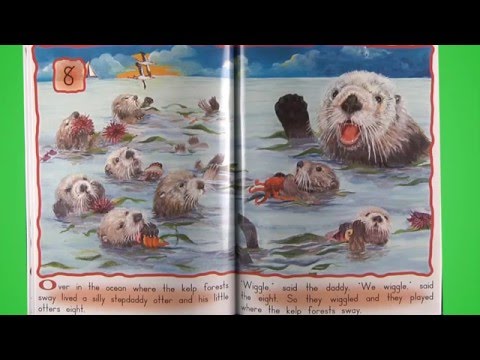
"Over In The Ocean" read by Jack Hartmann ("Over In The Ocean" written by Jack Hartmann)
Jack Hartmann Kids
4 minK1st2nd⚡ I've Got Letter Sound Power! ⚡
Jack Hartmann Kids
1 minPre-KK1st🎵 Count to 20 Sing-a-Long! 🎵
Jack Hartmann Kids
1 minK1st2nd1 to 30 and 30 to 1
Jack Hartmann Kids
3 minK1st2nd2D Shapes Are Everywhere
Jack Hartmann Kids
3 minK1st3 Cool Mice
Jack Hartmann Kids
2 minPre-KK1st2nd3 States of Matter
Jack Hartmann Kids
4 minK1st2nd3D Shapes
Jack Hartmann Kids
3 minK1st3D Shapes Song for Kids
Jack Hartmann Kids
4 minK1st5 Little Fish
Jack Hartmann Kids
2 minK1st2nd5 Little Ghosts
Jack Hartmann Kids
2 minK1st2nd5 Little Monkeys Jumping On The Bed (5 Little Monkeys)
Jack Hartmann Kids
3 minPre-KK1st5 Little Monkeys Swinging In A Tree (5 Little Monkeys)
Jack Hartmann Kids
3 minPre-KK1st5 Senses Song
Jack Hartmann Kids
3 minK1st2nd6 Questions
Jack Hartmann Kids
3 minK1st2nd6-7 CHANT
Jack Hartmann Kids
2 minPre-KK1st2nd7 Days In a Week
Jack Hartmann Kids
3 minK1st2nd7 Days of the Week in Spanish
Jack Hartmann Kids
2 minK1st2nd7 Days of the Week in Spanish (Siete Dias de la Semana)
Jack Hartmann Kids
2 minK1st2nd7 Days of the Week Song (Days of the Week Song)
Jack Hartmann Kids
2 minK1st2nd10 More, 10 Less
Jack Hartmann Kids
3 minK1st2nd12 Months of the Year
Jack Hartmann Kids
2 minPre-KK1st2nd3rd12 Months of the Year Line Dance
Jack Hartmann Kids
2 minPre-KK1st2nd3rd







Or use the filters above to narrow this down.