
Series
Homeschool Pop
66 episodes
Daniel narrates thorough single-topic overviews, generally longer than the usual explainer at seven to eighteen minutes, with clear visuals carrying most of the load. Math runs from addition and counting-on through 2D and 3D shapes, covering faces, edges, vertices, and how the flat ones become the faces of the solid ones. Area and reading an analog clock down to quarter past and quarter to are here too. Social studies covers ancient Egypt, Greece, and Rome, and a Lincoln biography that reaches the 13th Amendment. Language arts picks up antonyms and vocabulary. Enough depth to introduce a topic properly, not just review one.
What Homeschool Pop covers
66 episodes in the library, tagged for Pre-K–6th. Heaviest coverage: Math, Social Studies and Science. Between them they line up with 109 distinct standards across 5 frameworks.
Episodes per grade
- Pre-K
- 2
- K
- 10
- 1st
- 17
- 2nd
- 32
- 3rd
- 49
- 4th
- 50
- 5th
- 35
- 6th
- 7
Episodes per subject
- Math
- 21
- Social Studies
- 20
- Science
- 15
- Reading & Writing (ELA)
- 10
NGSS (Science) 29
- 1-ESS1-1Use observations of the sun, moon, and stars to describe patterns that can be predicted.
- 2-PS1-1Plan and conduct an investigation to describe and classify different kinds of materials by their observable properties.
- 2-PS1-4Construct an argument with evidence that some changes caused by heating or cooling can be reversed and some cannot.
- 3-LS4-3Construct an argument with evidence that in a particular habitat some organisms can survive well, some survive less well, and some cannot survive at all.
- 5-LS2-1Develop a model to describe the movement of matter among plants, animals, decomposers, and the environment.
- K-ESS2-1Use and share observations of local weather conditions to describe patterns over time.
+ 23 more
- MS-ESS1-1Develop and use a model of the Earth-sun-moon system to describe the cyclic patterns of lunar phases, eclipses of the sun and moon, and seasons.
- 1-ESS1-2Make observations at different times of year to relate the amount of daylight to the time of year.
- 1-LS1-1Use materials to design a solution to a human problem by mimicking how plants and/or animals use their external parts to help them survive, grow, and meet their needs.
- 2-ESS1-1Use information from several sources to provide evidence that Earth events can occur quickly or slowly.
- 2-ESS2-3Obtain information to identify where water is found on Earth and that it can be solid or liquid.
- 2-LS2-1Plan and conduct an investigation to determine if plants need sunlight and water to grow.
- 3-ESS2-1Represent data in tables and graphical displays to describe typical weather conditions expected during a particular season.
- 3-ESS2-2Obtain and combine information to describe climates in different regions of the world.
- 3-LS4-4Make a claim about the merit of a solution to a problem caused when the environment changes and the types of plants and animals that live there may change.
- 4-ESS1-1Identify evidence from patterns in rock formations and fossils in rock layers to support an explanation for changes in a landscape over time.
- 4-ESS3-2Generate and compare multiple solutions to reduce the impacts of natural Earth processes on humans.
- 4-LS1-1Construct an argument that plants and animals have internal and external structures that function to support survival, growth, behavior, and reproduction.
- 4-LS1-2Use a model to describe that animals receive different types of information through their senses, process the information in their brain, and respond to the information in different ways.
- 5-ESS1-1Support an argument that differences in the apparent brightness of the sun compared to other stars is due to their relative distances from Earth.
- 5-ESS1-2Represent data in graphical displays to reveal patterns of daily changes in length and direction of shadows, day and night, and the seasonal appearance of some stars in the night sky.
- 5-LS1-1Support an argument that plants get the materials they need for growth chiefly from air and water.
- 5-PS1-4Conduct an investigation to determine whether the mixing of two or more substances results in new substances.
- K-LS1-1Use observations to describe patterns of what plants and animals (including humans) need to survive.
- K-PS2-1Plan and conduct an investigation to compare the effects of different strengths or different directions of pushes and pulls on the motion of an object.
- K-PS2-2Analyze data to determine if a design solution works as intended to change the speed or direction of an object with a push or a pull.
- K-PS3-1Make observations to determine the effect of sunlight on Earth's surface.
- K-PS3-2Use tools and materials to design and build a structure that will reduce the warming effect of sunlight on an area.
- MS-LS1-3Use argument supported by evidence for how the body is a system of interacting subsystems composed of groups of cells.
Common Core — Math 45
- 1.G.A.1Distinguish between defining attributes versus non-defining attributes; build and draw shapes to possess defining attributes.
- 1.OA.A.1Use addition and subtraction within 20 to solve word problems involving situations of adding to, taking from, putting together, taking apart, and comparing.
- 2.G.A.1Recognize and draw shapes having specified attributes, such as a given number of angles or a given number of equal faces; identify triangles, quadrilaterals, pentagons, hexagons, and cubes.
- 3.NBT.A.1Use place value understanding to round whole numbers to the nearest 10 or 100.
- 3.OA.A.3Use multiplication and division within 100 to solve word problems in situations involving equal groups, arrays, and measurement quantities.
- 3.OA.C.7Fluently multiply and divide within 100. By the end of Grade 3, know from memory all products of two one-digit numbers.
+ 39 more
- 4.MD.A.3Apply the area and perimeter formulas for rectangles in real-world and mathematical problems.
- 4.NBT.A.2Read and write multi-digit whole numbers using base-ten numerals, number names, and expanded form; compare two multi-digit numbers using >, =, and < symbols.
- K.G.A.1Describe objects in the environment using names of shapes, and describe the relative positions of these objects using terms such as above, below, beside, in front of, behind, and next to.
- K.G.B.4Analyze and compare two- and three-dimensional shapes, in different sizes and orientations, using informal language to describe their similarities, differences, and parts.
- K.OA.A.1Represent addition and subtraction with objects, fingers, mental images, drawings, sounds, acting out situations, verbal explanations, expressions, or equations.
- 1.G.A.2Compose two-dimensional shapes or three-dimensional shapes to create a composite shape, and compose new shapes from the composite shape.
- 1.MD.B.3Tell and write time in hours and half-hours using analog and digital clocks.
- 1.OA.B.4Understand subtraction as an unknown-addend problem.
- 1.OA.C.6Add and subtract within 20, demonstrating fluency for addition and subtraction within 10.
- 2.MD.C.7Tell and write time from analog and digital clocks to the nearest five minutes, using a.m. and p.m.
- 2.MD.C.8Solve word problems involving dollar bills, quarters, dimes, nickels, and pennies, using $ and ¢ symbols appropriately.
- 2.NBT.A.1Understand that the three digits of a three-digit number represent amounts of hundreds, tens, and ones.
- 2.NBT.A.3Read and write numbers to 1000 using base-ten numerals, number names, and expanded form.
- 2.OA.A.1Use addition and subtraction within 100 to solve one- and two-step word problems involving situations of adding to, taking from, putting together, taking apart, and comparing.
- 2.OA.C.3Determine whether a group of objects (up to 20) has an odd or even number of members.
- 3.MD.A.1Tell and write time to the nearest minute and measure time intervals in minutes; solve word problems involving addition and subtraction of time intervals.
- 3.MD.C.5Recognize area as an attribute of plane figures and understand concepts of area measurement.
- 3.MD.C.6Measure areas by counting unit squares (square cm, square m, square in, square ft, and improvised units).
- 3.MD.C.7Relate area to the operations of multiplication and addition.
- 3.MD.D.8Solve real-world and mathematical problems involving perimeters of polygons, including finding an unknown side length.
- 3.NF.A.1Understand a fraction 1/b as the quantity formed by 1 part when a whole is partitioned into b equal parts; understand a fraction a/b as the quantity formed by a parts of size 1/b.
- 3.NF.A.2Understand a fraction as a number on the number line; represent fractions on a number line diagram.
- 3.NF.A.3Explain equivalence of fractions in special cases, and compare fractions by reasoning about their size.
- 3.OA.A.1Interpret products of whole numbers, e.g., interpret 5 × 7 as the total number of objects in 5 groups of 7 objects each.
- 3.OA.A.2Interpret whole-number quotients of whole numbers, e.g., interpret 56 ÷ 8 as the number of objects in each share when 56 objects are partitioned equally into 8 shares.
- 3.OA.B.5Apply properties of operations as strategies to multiply and divide (commutative, associative, and distributive properties).
- 3.OA.B.6Understand division as an unknown-factor problem.
- 4.G.A.3Recognize a line of symmetry for a two-dimensional figure; identify line-symmetric figures and draw lines of symmetry.
- 4.MD.A.1Know relative sizes of measurement units within one system of units; express measurements in a larger unit in terms of a smaller unit.
- 4.NBT.A.3Use place value understanding to round multi-digit whole numbers to any place.
- 4.NF.C.5Express a fraction with denominator 10 as an equivalent fraction with denominator 100, and use this technique to add two fractions with respective denominators 10 and 100.
- 4.NF.C.6Use decimal notation for fractions with denominators 10 or 100.
- 4.OA.C.5Generate a number or shape pattern that follows a given rule; identify apparent features of the pattern that were not explicit in the rule itself.
- 5.NBT.A.1Recognize that in a multi-digit number, a digit in one place represents 10 times as much as it represents in the place to its right and 1/10 of what it represents in the place to its left.
- 5.NBT.A.3Read, write, and compare decimals to thousandths using base-ten numerals, number names, expanded form, and >, =, < symbols.
- 6.NS.C.5Understand that positive and negative numbers are used together to describe quantities having opposite directions or values; use positive and negative numbers to represent quantities in real-world contexts.
- 6.NS.C.6Understand a rational number as a point on the number line; extend number line diagrams and coordinate axes to represent points with negative number coordinates.
- 6.SP.B.5Summarize numerical data sets in relation to their context, reporting the number of observations, measures of center, and measures of variability.
- K.OA.A.2Solve addition and subtraction word problems, and add and subtract within 10, using objects or drawings to represent the problem.
Common Core — ELA 17
- L.4.6Acquire and use accurately grade-appropriate general academic and domain-specific words and phrases.
- L.5.4Determine or clarify the meaning of unknown and multiple-meaning words and phrases based on grade 5 reading and content.
- L.3.4Determine or clarify the meaning of unknown and multiple-meaning words and phrases based on grade 3 reading and content.
- L.3.6Acquire and use accurately grade-appropriate conversational, general academic, and domain-specific words and phrases.
- L.2.6Use words and phrases acquired through conversations, reading and being read to, and responding to texts.
- L.3.1Demonstrate command of the conventions of standard English grammar and usage when writing or speaking.
+ 11 more
- L.4.1Demonstrate command of the conventions of standard English grammar and usage when writing or speaking.
- L.4.4Determine or clarify the meaning of unknown and multiple-meaning words and phrases based on grade 4 reading and content.
- RL.4.4Determine the meaning of words and phrases as they are used in a text, including those that allude to significant characters found in mythology.
- L.2.1Demonstrate command of the conventions of standard English grammar and usage when writing or speaking.
- L.2.4Determine or clarify the meaning of unknown and multiple-meaning words and phrases based on grade 2 reading and content.
- L.5.1Demonstrate command of the conventions of standard English grammar and usage when writing or speaking.
- RF.1.3Know and apply grade-level phonics and word analysis skills in decoding words.
- RF.K.1Demonstrate understanding of the organization and basic features of print.
- RF.K.2Demonstrate understanding of spoken words, syllables, and sounds (phonemes).
- RF.K.3Know and apply grade-level phonics and word analysis skills in decoding words.
- RL.5.4Determine the meaning of words and phrases as they are used in a text, including figurative language such as metaphors and similes.
Social Studies (C3 / NCSS) 17
- D2.His.1.3-5Create and use a chronological sequence of related events to compare developments that happened at the same time.
- D2.His.2.3-5Compare life in specific historical time periods to life today.
- D2.Civ.1.3-5Distinguish the responsibilities and powers of government officials at various levels and branches of government and in different times and places.
- D2.Civ.2.3-5Explain how a democracy relies on people's responsible participation, and draw implications for how individuals should participate.
- D2.His.3.3-5Generate questions about individuals and groups who have shaped significant historical changes and continuities.
- D2.Geo.1.3-5Construct maps and other graphic representations of both familiar and unfamiliar places.
+ 11 more
- D2.Geo.1.K-2Construct maps, graphs, and other representations of familiar places.
- D2.Geo.2.K-2Use maps, graphs, photographs, and other representations to describe places and the relationships and interactions that shape them.
- D2.Geo.4.3-5Explain how culture influences the way people modify and adapt to their environments.
- D2.His.1.K-2Create a chronological sequence of multiple events.
- D2.His.2.K-2Compare life in the past to life today.
- D2.Civ.6.3-5Describe ways in which people benefit from and are challenged by working together, including through families, workplaces, voluntary organizations, and government.
- D2.Eco.1.3-5Compare the benefits and costs of individual choices.
- D2.Eco.2.K-2Identify the benefits and costs of making various personal decisions.
- D2.Eco.6.3-5Explain the relationship between investment in human capital, productivity, and future incomes.
- D2.Geo.6.K-2Identify some cultural and environmental characteristics of specific places.
- D2.His.3.K-2Generate questions about individuals and groups who have shaped a significant historical change.
Common Core — Math Practices 1
- MP6Attend to precision.
Every episode is vetted and tagged before it goes in. Pick your state in the filters above to see your own state’s codes alongside these.
24 of 66 results
2D Shapes for Kids
Homeschool Pop · 2020
15 minK1st2nd
3D Shapes for Kids
Homeschool Pop · 2021
18 minK1st2ndAbraham Lincoln for Kids
Homeschool Pop · 2021
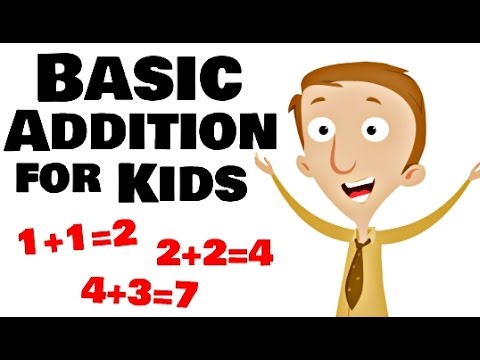
10 min3rd4th5thAddition for Kids
Homeschool Pop · 2019
7 minPre-KK1st2ndAnalog Clocks for Kids
Homeschool Pop · 2020
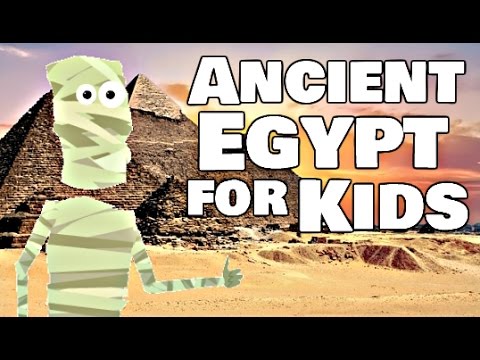
13 min1st2nd3rd4thAncient Egypt for Kids
Homeschool Pop · 2021
8 min3rd4th5thAncient Greece for Kids
Homeschool Pop · 2021
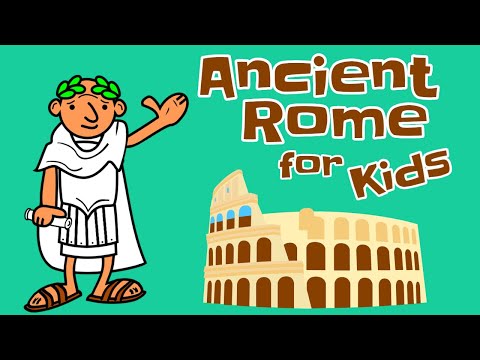
8 min3rd4th5thAncient Rome for Kids
Homeschool Pop · 2021
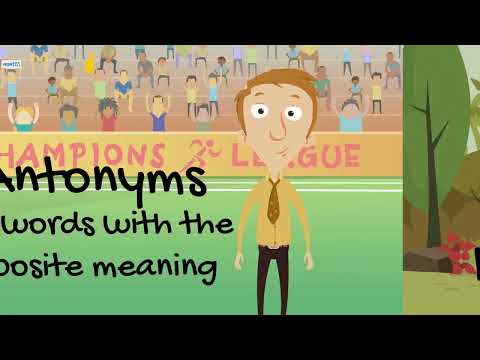
11 min3rd4th5thAntonyms for Kids
Homeschool Pop · 2020
5 min2nd3rd4thArea for Kids
Homeschool Pop · 2021
9 min3rd4th5thThe Bill of Rights for Kids
Homeschool Pop · 2021
11 min4th5th6thClouds for Kids
Homeschool Pop · 2020
10 min1st2nd3rdCoins for Kids
Homeschool Pop · 2020
13 minK1st2ndCompound Words for Kids
Homeschool Pop · 2020
7 min2nd3rd4thConstitution for Kids
Homeschool Pop · 2021
6 min4th5th6thContinents of the World for Kids
Homeschool Pop · 2020
14 min1st2nd3rdDecimals for Kids
Homeschool Pop · 2022
16 min4th5th6thDeclaration of Independence for Kids
Homeschool Pop · 2021
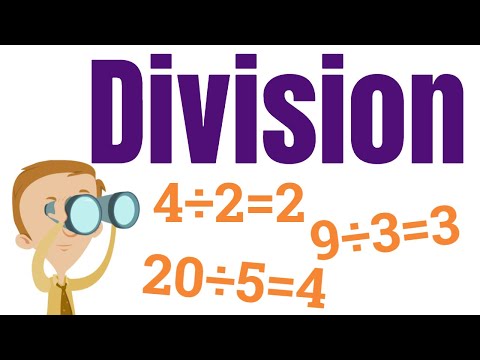
8 min4th5th6thDivision for Kids — Full Math Lesson
Homeschool Pop · 2021
14 min3rd4th5thEarthquakes for Kids
Homeschool Pop · 2021
6 min3rd4th5thEconomics for Kids
Homeschool Pop · 2021
18 min3rd4th5thEcosystems for Kids
Homeschool Pop · 2021
9 min3rd4th5thElection Day for Kids
Homeschool Pop · 2020
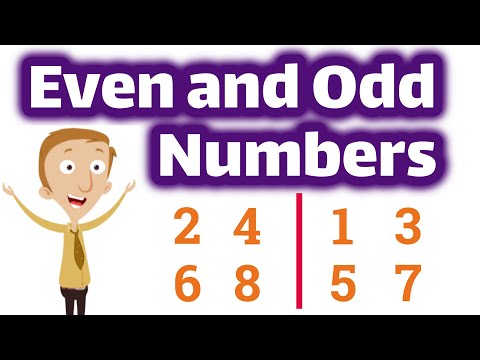
7 min3rd4th5thEven and Odd Numbers for Kids
Homeschool Pop · 2021
11 minK1st2nd











Or use the filters above to narrow this down.