Series
Happy Learning
138 episodes
Animated explainers, four to eleven minutes apiece, that take one topic at a time and stay plain about it. Three broad areas fill the catalog: elementary math such as addition and naming angles by size; life science sorted by animal group, with separate videos on amphibians, arachnids, and birds; and social studies moving between the continents and the ancient world, from Egypt's pharaohs and pyramids to Greece and Rome. Narration is calm and the visuals stay uncluttered. That makes these a comfortable fit at a center or as a short review closing a unit, rather than the main event.
What Happy Learning covers
138 episodes in the library, tagged for K–6th. Heaviest coverage: Science, Social Studies and Math. Between them they line up with 59 distinct standards across 5 frameworks.
Episodes per grade
- K
- 10
- 1st
- 25
- 2nd
- 50
- 3rd
- 95
- 4th
- 96
- 5th
- 81
- 6th
- 29
Episodes per subject
- Science
- 75
- Social Studies
- 37
- Math
- 22
- Health
- 4
NGSS (Science) 29
- 4-LS1-1Construct an argument that plants and animals have internal and external structures that function to support survival, growth, behavior, and reproduction.
- 2-LS4-1Make observations of plants and animals to compare the diversity of life in different habitats.
- 4-LS1-2Use a model to describe that animals receive different types of information through their senses, process the information in their brain, and respond to the information in different ways.
- 2-LS2-1Plan and conduct an investigation to determine if plants need sunlight and water to grow.
- 3-LS1-1Develop models to describe that organisms have unique and diverse life cycles but all have in common birth, growth, reproduction, and death.
- 5-LS2-1Develop a model to describe the movement of matter among plants, animals, decomposers, and the environment.
+ 23 more
- 1-ESS1-1Use observations of the sun, moon, and stars to describe patterns that can be predicted.
- 2-PS1-1Plan and conduct an investigation to describe and classify different kinds of materials by their observable properties.
- 3-LS4-1Analyze and interpret data from fossils to provide evidence of the organisms and the environments in which they lived long ago.
- 4-ESS2-2Analyze and interpret data from maps to describe patterns of Earth's features.
- 5-ESS1-1Support an argument that differences in the apparent brightness of the sun compared to other stars is due to their relative distances from Earth.
- 5-ESS1-2Represent data in graphical displays to reveal patterns of daily changes in length and direction of shadows, day and night, and the seasonal appearance of some stars in the night sky.
- 5-ESS2-1Develop a model using an example to describe ways the geosphere, biosphere, hydrosphere, and/or atmosphere interact.
- 5-ESS3-1Obtain and combine information about ways individual communities use science ideas to protect the Earth's resources and environment.
- 5-LS1-1Support an argument that plants get the materials they need for growth chiefly from air and water.
- 1-PS4-1Plan and conduct investigations to provide evidence that vibrating materials can make sound and that sound can make materials vibrate.
- 1-PS4-3Plan and conduct an investigation to determine the effect of placing objects made with different materials in the path of a beam of light.
- 2-ESS2-3Obtain information to identify where water is found on Earth and that it can be solid or liquid.
- 3-ESS3-1Make a claim about the merit of a design solution that reduces the impacts of a weather-related hazard.
- 3-LS4-3Construct an argument with evidence that in a particular habitat some organisms can survive well, some survive less well, and some cannot survive at all.
- 3-LS4-4Make a claim about the merit of a solution to a problem caused when the environment changes and the types of plants and animals that live there may change.
- 3-PS2-1Plan and conduct an investigation to provide evidence of the effects of balanced and unbalanced forces on the motion of an object.
- 3-PS2-3Ask questions to determine cause-and-effect relationships of electric or magnetic interactions between two objects not in contact with each other.
- 4-ESS3-1Obtain and combine information to describe that energy and fuels are derived from natural resources and their uses affect the environment.
- 4-PS3-2Make observations to provide evidence that energy can be transferred from place to place by sound, light, heat, and electric currents.
- 4-PS4-2Develop a model to describe that light reflecting from objects and entering the eye allows objects to be seen.
- 5-ESS2-2Describe and graph the amounts of salt water and fresh water in various reservoirs to provide evidence about the distribution of water on Earth.
- K-ESS2-1Use and share observations of local weather conditions to describe patterns over time.
- K-LS1-1Use observations to describe patterns of what plants and animals (including humans) need to survive.
Common Core — Math 12
- 3.OA.C.7Fluently multiply and divide within 100. By the end of Grade 3, know from memory all products of two one-digit numbers.
- 1.OA.C.6Add and subtract within 20, demonstrating fluency for addition and subtraction within 10.
- 2.MD.A.1Measure the length of an object by selecting and using appropriate tools such as rulers, yardsticks, meter sticks, and measuring tapes.
- 2.NBT.A.1Understand that the three digits of a three-digit number represent amounts of hundreds, tens, and ones.
- 2.NBT.B.5Fluently add and subtract within 100 using strategies based on place value, properties of operations, and/or the relationship between addition and subtraction.
- 3.MD.A.2Measure and estimate liquid volumes and masses of objects using standard units of grams, kilograms, and liters; solve one-step problems involving these quantities.
+ 6 more
- 3.NF.A.1Understand a fraction 1/b as the quantity formed by 1 part when a whole is partitioned into b equal parts; understand a fraction a/b as the quantity formed by a parts of size 1/b.
- 4.G.A.1Draw points, lines, line segments, rays, angles (right, acute, obtuse), and perpendicular and parallel lines; identify these in two-dimensional figures.
- 4.G.A.2Classify two-dimensional figures based on the presence or absence of parallel or perpendicular lines, or the presence or absence of angles of a specified size; recognize right triangles.
- 5.G.B.3Understand that attributes belonging to a category of two-dimensional figures also belong to all subcategories of that category.
- 5.MD.C.3Recognize volume as an attribute of solid figures and understand concepts of volume measurement using unit cubes.
- 6.G.A.4Represent three-dimensional figures using nets made up of rectangles and triangles, and use the nets to find the surface area of these figures.
Social Studies (C3 / NCSS) 11
- D2.His.2.3-5Compare life in specific historical time periods to life today.
- D2.Eco.1.3-5Compare the benefits and costs of individual choices.
- D2.Geo.4.3-5Explain how culture influences the way people modify and adapt to their environments.
- D2.His.3.3-5Generate questions about individuals and groups who have shaped significant historical changes and continuities.
- D2.Geo.1.3-5Construct maps and other graphic representations of both familiar and unfamiliar places.
- D2.Civ.2.3-5Explain how a democracy relies on people's responsible participation, and draw implications for how individuals should participate.
+ 5 more
- D2.Civ.6.3-5Describe ways in which people benefit from and are challenged by working together, including through families, workplaces, voluntary organizations, and government.
- D2.Civ.2.K-2Explain how all people, not just official leaders, play important roles in a community.
- D2.Eco.6.3-5Explain the relationship between investment in human capital, productivity, and future incomes.
- D2.His.1.3-5Create and use a chronological sequence of related events to compare developments that happened at the same time.
- D3.2.3-5Use distinctions among fact and opinion to determine the credibility of multiple sources.
National Health Education 5
- NHES.1.5.5Describe practices and behaviors that prevent or reduce health risks, such as eating vegetables and fruit daily.
- NHES.1.2.2Identify benefits of practicing health-promoting behaviors.
- NHES.1.2.6List ways to take part in healthy practices, such as brushing teeth daily.
- NHES.1.5.3Explain possible consequences of unhealthy behaviors.
- NHES.3.5.6Interpret graphs, figures, tables, and charts to understand a health product.
ITEEA STEL (Technology & Engineering) 2
- STEL-4DSelect ways to reduce, reuse, and recycle resources in daily life.
- STEL-4HClassify resources used to create technologies as either renewable or non-renewable.
Every episode is vetted and tagged before it goes in. Pick your state in the filters above to see your own state’s codes alongside these.
24 of 138 results
Eclipses: What Happens to the Sun and the Moon?
Happy Learning · 2026
23 min3rd4th5th
The Fascinating World of Reptiles
Happy Learning · 2026
20 min2nd3rd4th5thInvertebrates: They Look Like Alien Beings!
Happy Learning · 2026
20 min2nd3rd4th5thLiving and non-living things (Happy Learning)
Happy Learning
5 minK1st2nd3rdVital functions of living things
Happy Learning
6 min4th5thThe cell
Happy Learning
4 min5th6thUnicellular and multicellular beings
Happy Learning
3 min5th6thThe animal kingdom: vertebrates and invertebrates
Happy Learning
7 min2nd3rd4thInvertebrate animals
Happy Learning
5 min3rd4thMammals (Happy Learning)
Happy Learning
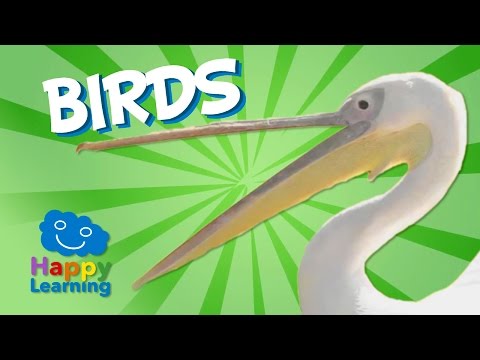
6 min2nd3rd4thBirds (Happy Learning)
Happy Learning
5 min2nd3rd4thFish (Happy Learning)
Happy Learning
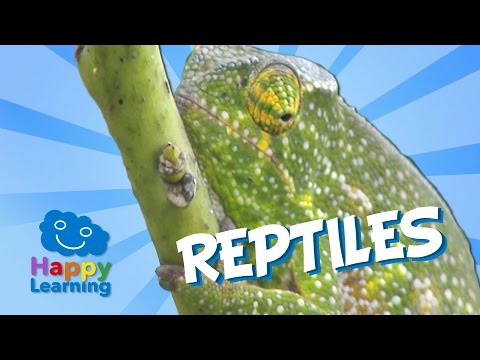
5 min2nd3rd4thReptiles (Happy Learning)
Happy Learning
4 min2nd3rd4thAmphibians (Happy Learning)
Happy Learning
5 min3rd4thThe arthropods
Happy Learning
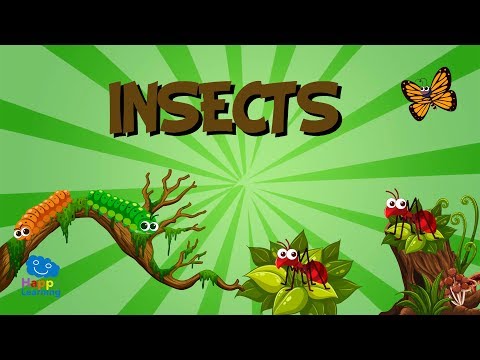
5 min3rd4th5thInsects (Happy Learning)
Happy Learning
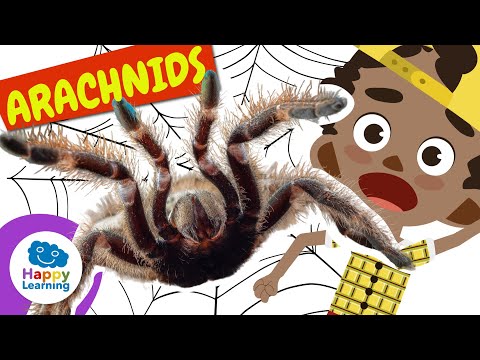
5 min2nd3rd4thArachnids: spiders, scorpions and more
Happy Learning
4 min3rd4thMolluscs
Happy Learning
8 min3rd4th5thThe chameleon and its amazing abilities
Happy Learning
4 min1st2nd3rdThe elephant
Happy Learning
4 minK1st2nd3rdThe bear
Happy Learning
4 minK1st2nd3rdThe dolphin
Happy Learning
4 min1st2nd3rdEagles
Happy Learning
4 min1st2nd3rdThe crocodile
Happy Learning
4 min1st2nd3rd










Or use the filters above to narrow this down.