
Series
FreeSchool
328 episodes
FreeSchool is a narrated-and-illustrated channel with an unusually broad shelf. Much of it is nonfiction survey: ten facts about penguins or polar bears, Creature Countdown rundowns of extinct animals and rare wild cats, and a two-minute tour of each of the fifty states covering where it sits on the map and what it is known for. Some is straight instruction instead, like two-digit addition with regrouping and the place value that makes carrying work. Calm narration over stills and simple animation, with no host on camera. That makes it easy to pause partway through and talk about, which is usually the point.
What FreeSchool covers
328 episodes in the library, tagged for Pre-K–6th. Heaviest coverage: Science, Social Studies and Reading & Writing (ELA). Between them they line up with 49 distinct standards across 5 frameworks.
Episodes per grade
- Pre-K
- 22
- K
- 32
- 1st
- 130
- 2nd
- 224
- 3rd
- 293
- 4th
- 294
- 5th
- 217
- 6th
- 54
Episodes per subject
- Science
- 156
- Social Studies
- 73
- Reading & Writing (ELA)
- 44
- Music
- 39
- Art
- 8
- Math
- 6
- For Fun
- 2
NGSS (Science) 14
- 1-LS1-1Use materials to design a solution to a human problem by mimicking how plants and/or animals use their external parts to help them survive, grow, and meet their needs.
- 4-LS1-1Construct an argument that plants and animals have internal and external structures that function to support survival, growth, behavior, and reproduction.
- 3-LS4-3Construct an argument with evidence that in a particular habitat some organisms can survive well, some survive less well, and some cannot survive at all.
- 3-ESS2-1Represent data in tables and graphical displays to describe typical weather conditions expected during a particular season.
- 4-ESS2-1Make observations and/or measurements to provide evidence of the effects of weathering or the rate of erosion by water, ice, wind, or vegetation.
- 2-LS2-1Plan and conduct an investigation to determine if plants need sunlight and water to grow.
+ 8 more
- 5-LS2-1Develop a model to describe the movement of matter among plants, animals, decomposers, and the environment.
- 5-PS1-1Develop a model to describe that matter is made of particles too small to be seen.
- 3-PS2-1Plan and conduct an investigation to provide evidence of the effects of balanced and unbalanced forces on the motion of an object.
- 5-ESS1-1Support an argument that differences in the apparent brightness of the sun compared to other stars is due to their relative distances from Earth.
- 3-LS1-1Develop models to describe that organisms have unique and diverse life cycles but all have in common birth, growth, reproduction, and death.
- 2-LS4-1Make observations of plants and animals to compare the diversity of life in different habitats.
- K-LS1-1Use observations to describe patterns of what plants and animals (including humans) need to survive.
- 2-LS2-2Develop a simple model that mimics the function of an animal in dispersing seeds or pollinating plants.
Common Core — Math 11
- 2.NBT.B.5Fluently add and subtract within 100 using strategies based on place value, properties of operations, and/or the relationship between addition and subtraction.
- 2.NBT.B.7Add and subtract within 1000, using concrete models or drawings and strategies based on place value.
- 2.NBT.B.9Explain why addition and subtraction strategies work, using place value and the properties of operations.
- 3.MD.D.8Solve real-world and mathematical problems involving perimeters of polygons, including finding an unknown side length.
- 3.NF.A.1Understand a fraction 1/b as the quantity formed by 1 part when a whole is partitioned into b equal parts; understand a fraction a/b as the quantity formed by a parts of size 1/b.
- 3.NF.A.2Understand a fraction as a number on the number line; represent fractions on a number line diagram.
+ 5 more
- 3.OA.A.2Interpret whole-number quotients of whole numbers, e.g., interpret 56 ÷ 8 as the number of objects in each share when 56 objects are partitioned equally into 8 shares.
- 3.OA.A.3Use multiplication and division within 100 to solve word problems in situations involving equal groups, arrays, and measurement quantities.
- 4.G.A.3Recognize a line of symmetry for a two-dimensional figure; identify line-symmetric figures and draw lines of symmetry.
- 4.MD.C.5Recognize angles as geometric shapes formed wherever two rays share a common endpoint, and understand concepts of angle measurement.
- 4.MD.C.6Measure angles in whole-number degrees using a protractor; sketch angles of specified measure.
Common Core — ELA 12
- RF.K.1Demonstrate understanding of the organization and basic features of print.
- RF.K.3Know and apply grade-level phonics and word analysis skills in decoding words.
- RL.2.2Recount stories, including fables and folktales from diverse cultures, and determine their central message, lesson, or moral.
- RL.3.2Recount stories, including fables, folktales, and myths from diverse cultures; determine the central message, lesson, or moral and explain how it is conveyed through key details.
- RL.4.4Determine the meaning of words and phrases as they are used in a text, including those that allude to significant characters found in mythology.
- RL.5.4Determine the meaning of words and phrases as they are used in a text, including figurative language such as metaphors and similes.
+ 6 more
- RF.1.4Read with sufficient accuracy and fluency to support comprehension.
- RF.K.4Read emergent-reader texts with purpose and understanding.
- L.2.1Demonstrate command of the conventions of standard English grammar and usage when writing or speaking.
- RL.2.1Ask and answer such questions as who, what, where, when, why, and how to demonstrate understanding of key details in a text.
- L.3.6Acquire and use accurately grade-appropriate conversational, general academic, and domain-specific words and phrases.
- RL.3.4Determine the meaning of words and phrases as they are used in a text, distinguishing literal from nonliteral language.
Social Studies (C3 / NCSS) 8
- D2.His.2.3-5Compare life in specific historical time periods to life today.
- D2.Geo.1.3-5Construct maps and other graphic representations of both familiar and unfamiliar places.
- D2.Geo.4.3-5Explain how culture influences the way people modify and adapt to their environments.
- D2.His.1.3-5Create and use a chronological sequence of related events to compare developments that happened at the same time.
- D2.His.3.3-5Generate questions about individuals and groups who have shaped significant historical changes and continuities.
- D2.Civ.1.3-5Distinguish the responsibilities and powers of government officials at various levels and branches of government and in different times and places.
+ 2 more
- D2.Civ.2.3-5Explain how a democracy relies on people's responsible participation, and draw implications for how individuals should participate.
- D2.Geo.6.K-2Identify some cultural and environmental characteristics of specific places.
National Core Arts 4
- MU:Re7.2.3aDemonstrate and describe how a response to music can be informed by the structure, the use of the elements of music, and context.
- MU:Re8.1.4aDemonstrate and explain how the expressive qualities are used in performers' interpretations to reflect expressive intent.
- VA:Re7.1.6Identify and interpret works of art or design that reveal how people live around the world and what they value.
- VA:Re7.2.3Determine messages communicated by an image.
Every episode is vetted and tagged before it goes in. Pick your state in the filters above to see your own state’s codes alongside these.
24 of 328 results
Presidential Pets: the History of Pets in the White House
FreeSchool
12 minK1st2nd3rd4th5th
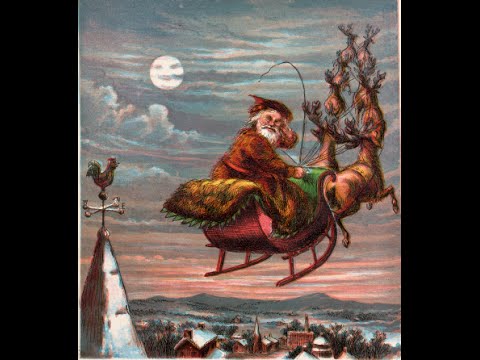
Twas the Night Before Christmas, A Visit from St Nicholas
FreeSchool
4 minK1st2nd3rd4th5th10 Interesting Facts About Polar Bears
FreeSchool
6 min1st2nd3rd4thAll About Reindeer or Caribou: Reindeer Facts and Information
FreeSchool
6 min1st2nd3rd4th10 Interesting Facts About Penguins
FreeSchool
6 min1st2nd3rd4thLions: Life in the Pride - the Social Structure of the Lion Family
FreeSchool
7 min1st2nd3rd4th5 Characteristics of Living Organisms: Qualities of Living Things
FreeSchool
5 min2nd3rd4th5thAll About Sea Lions: Sea Lion Facts and Information
FreeSchool
8 min1st2nd3rd4thHover Flies and Animal Mimicrya Closer Look at Hoverfly Mimicry
FreeSchool
3 min1st2nd3rd4thAll About Bees: Bee Facts and Information
FreeSchool
11 min1st2nd3rd4thAfrican Penguins: The Only Penguins Native to Africa
FreeSchool
1 min1st2nd3rd4thAll About Hummingbirds - Hummingbird Facts
FreeSchool
4 min1st2nd3rd4thParthenogenesis, Venom Glands and Morea Closer Look at Komodo Dragons
FreeSchool
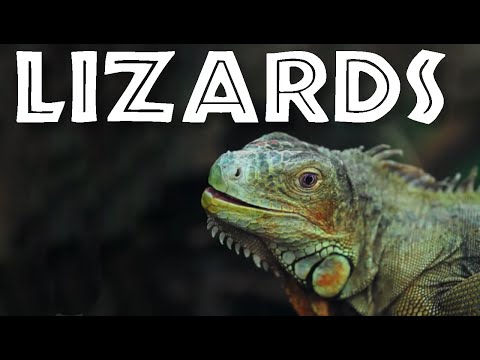
8 min1st2nd3rd4thAll About Lizards - Facts About Lizards
FreeSchool
10 min1st2nd3rd4thWhy Aren't There Penguins in the Arctic?a Closer Look at Arctic Penguins
FreeSchool
9 min1st2nd3rd4thPenguins: From Frozen Seas
FreeSchool
8 min1st2nd3rd4thHummingbird Taking a Bath!
FreeSchool
1 min1st2nd3rd4thPentapedal Locomotiona Closer Look at the Peculiar Motion of Kangaroos
FreeSchool
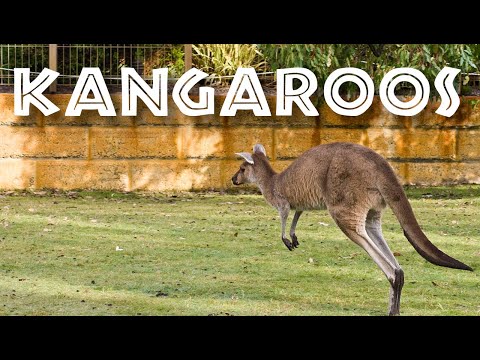
4 min1st2nd3rd4thAll About Kangaroos - Kangaroo Facts
FreeSchool
6 min1st2nd3rd4thWhat Sound Does a Giraffe Make?a closer look at Giraffe Sounds
FreeSchool
3 min1st2nd3rd4thAll About Giraffes: Giraffe Video
FreeSchool
7 min1st2nd3rd4thThe Life Cycle of a Frog: Metamorphosis from Tadpole to Frog
FreeSchool
4 min1st2nd3rdAll About Frogs - Facts About Frogs and Toads
FreeSchool
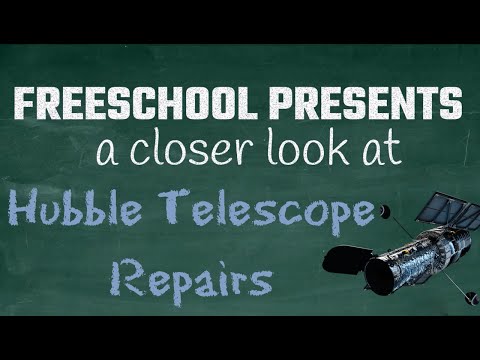
9 min1st2nd3rd4thFreeSchool Presents: Repairs to the Hubble Telescope
FreeSchool
4 min1st2nd3rd4th











Or use the filters above to narrow this down.