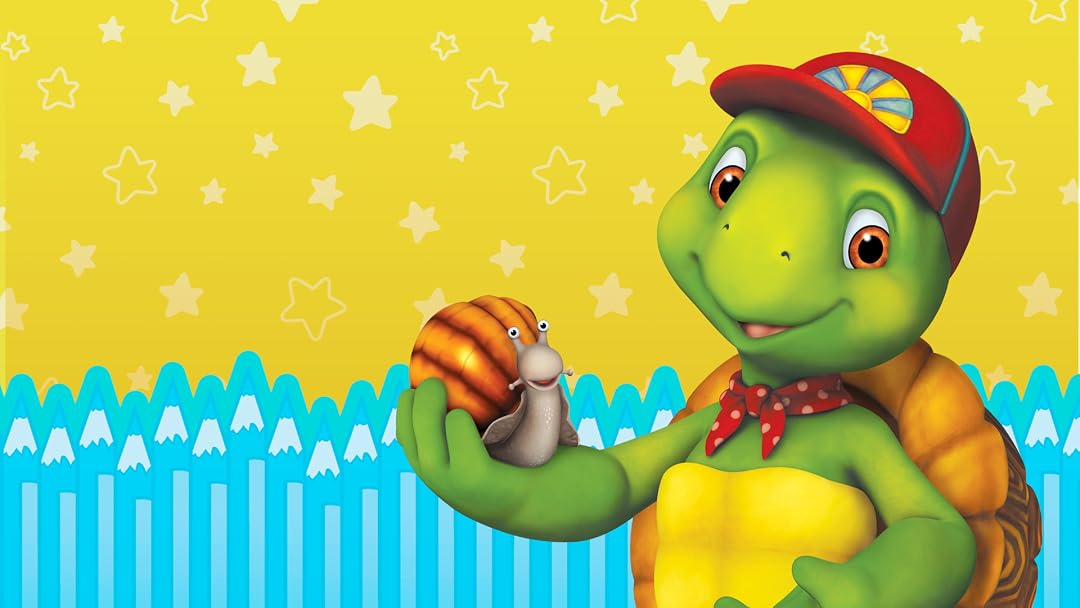
Series
Franklin and Friends
54 episodes
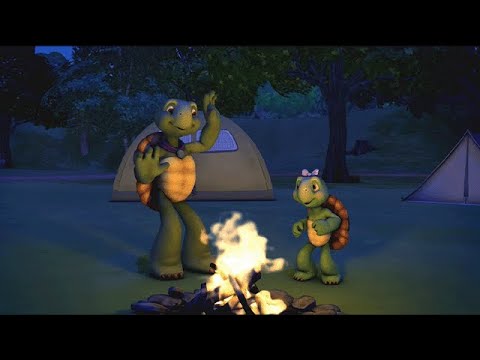
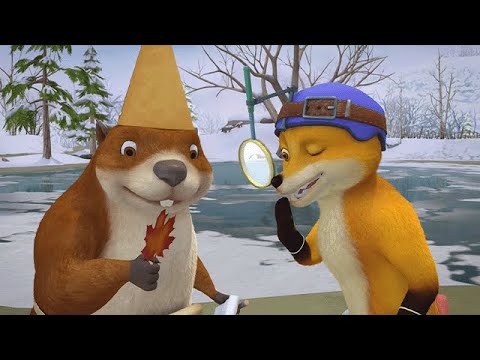
Half-hour episodes, most pairing two short stories, following Franklin the turtle and his Woodland friends through the ordinary business of being small: sharing a buggy, changing an unfair game rule, coaching a team without playing favorites, losing a tooth, sitting out a thunderstorm. Two 45-minute adventure specials take the group to the deep sea and the polar regions to meet the animals that live there, and one episode walks through the four seasons. The pull here is social-emotional (cooperation, patience, naming a fear), wrapped in stories PreK through second grade will sit still for.
What Franklin and Friends covers
54 episodes in the library, tagged for Pre-K–2nd. Heaviest coverage: Social-Emotional Learning, Science and Music. Between them they line up with 36 distinct standards across 3 frameworks.
Episodes per grade
- Pre-K
- 54
- K
- 54
- 1st
- 54
- 2nd
- 54
Episodes per subject
- Social-Emotional Learning
- 54
- Science
- 8
- Music
- 3
- Art
- 2
NGSS (Science) 6
- 2-LS4-1Make observations of plants and animals to compare the diversity of life in different habitats.
- K-2-ETS1-1Ask questions, make observations, and gather information about a situation people want to change to define a simple problem that can be solved through the development of a new or improved object or tool.
- K-ESS2-1Use and share observations of local weather conditions to describe patterns over time.
- 1-ESS1-1Use observations of the sun, moon, and stars to describe patterns that can be predicted.
- K-2-ETS1-2Develop a simple sketch, drawing, or physical model to illustrate how the shape of an object helps it function as needed to solve a given problem.
- K-ESS3-3Communicate solutions that will reduce the impact of humans on the land, water, air, and/or other living things in the local environment.
National Core Arts 4
- MU:Cr1.1.KaWith guidance, explore and experience music concepts such as beat and melodic contour.
- VA:Cr2.1.1Explore uses of materials and tools to create works of art or design.
- MU:Cr1.1.1aWith limited guidance, create musical ideas (such as answering a musical question) for a specific purpose.
- MU:Cr1.1.KbWith guidance, generate musical ideas (such as movements or motives).
CASEL (Social-Emotional) 26
- CASEL.RS.3Practice teamwork and solve problems collaboratively.
- CASEL.RDM.1Demonstrate curiosity and open-mindedness.
- CASEL.SM.2Use calming and stress-management strategies (deep breaths, a break, asking for space).
- CASEL.RS.2Build and keep positive relationships and friendships.
- CASEL.SM.3Show self-discipline and self-motivation — keep working when a task gets hard or boring.
- CASEL.SM.6Show the courage to take initiative — start something, try, or speak up first.
+ 20 more
- CASEL.RDM.3Make a reasoned judgment after looking at the information, facts, and evidence.
- CASEL.RDM.6Reflect on your role in the well-being of your family, classroom, and community.
- CASEL.SA.5Show self-confidence — believe you can do hard things and take on a challenge.
- CASEL.SOA.3Show concern for other people's feelings and respond to them with care.
- CASEL.RDM.4Anticipate and evaluate the consequences of your actions before you act.
- CASEL.RS.7Seek help when you need it and offer help when someone else does.
- CASEL.RS.4Resolve conflicts constructively — talk it out, repair, compromise.
- CASEL.SM.1Manage strong emotions and impulses instead of acting on them right away.
- CASEL.SOA.2Demonstrate empathy and compassion for others.
- CASEL.SOA.4Recognize strengths in others and say what you appreciate about them.
- CASEL.RS.6Show leadership in a group — organize, include, and share the work.
- CASEL.SA.6Hold a growth mindset: treat effort, practice, and mistakes as how ability grows.
- CASEL.SM.5Use planning and organizational skills to break a task into steps and manage time and materials.
- CASEL.SOA.5Understand and express gratitude.
- CASEL.RDM.2Identify solutions to personal and social problems.
- CASEL.SOA.6Identify the different rules and norms groups follow, including ones that are unfair.
- CASEL.RS.1Communicate clearly and listen actively.
- CASEL.SA.1Name your own feelings and notice how they change during the day.
- CASEL.SA.3Recognize your own strengths, interests, and the assets you bring from your family and culture.
- CASEL.SA.4Show honesty and integrity, including admitting mistakes.
Every episode is vetted and tagged before it goes in. Pick your state in the filters above to see your own state’s codes alongside these.
24 of 54 results
A Franklin and Friends Adventure: Deep Sea Voyage
Franklin and Friends · 2014
45 minPre-KK1st2nd
A Franklin and Friends Adventure: Polar Explorer
Franklin and Friends · 2014
45 minPre-KK1st2ndFranklin and the Gecko Games / Franklin's All Ears
Franklin and Friends · 2011
23 minPre-KK1st2ndFranklin and the Snow Princess / Franklin and the Firefly Festival
Franklin and Friends · 2011
23 minPre-KK1st2ndFranklin's Special Job / Franklin Needs a Reminder
Franklin and Friends · 2011
23 minPre-KK1st2ndFranklin Helps Out / Franklin's Partner
Franklin and Friends · 2011
23 minPre-KK1st2ndFranklin and the Pinecone Pass / Franklin and the Creepy Clock
Franklin and Friends · 2011
23 minPre-KK1st2ndFranklin and the Berry Bogie / Franklin Sees a Storm
Franklin and Friends · 2011
23 minPre-KK1st2ndFranklin and the Blue Begonia / Franklin, the Planner
Franklin and Friends · 2011
23 minPre-KK1st2ndFranklin's Ups and Downs / Franklin's New Teacher
Franklin and Friends · 2011
23 minPre-KK1st2ndFranklin and Snail Mail / Franklin the Moose-eratops
Franklin and Friends · 2011
23 minPre-KK1st2ndFranklin Finds the Treasure / Franklin and the Tunnel Team-Up
Franklin and Friends · 2011
23 minPre-KK1st2ndFranklin and the Snow Dragon / Franklin Gets Bugged
Franklin and Friends · 2011
23 minPre-KK1st2ndFranklin In the Stars / Franklin and Sam
Franklin and Friends · 2011
23 minPre-KK1st2ndFranklin and the Bumpy Buggy / It's Father's Day, Franklin!
Franklin and Friends · 2011
23 minPre-KK1st2ndFranklin and the Wonder / Franklin, the Little Bubble
Franklin and Friends · 2011
23 minPre-KK1st2ndTake Harriet with You / Franklin's New Hat
Franklin and Friends · 2011
23 minPre-KK1st2ndFranklin and the Shadow Show / Franklin's Fishing Trip
Franklin and Friends · 2011
23 minPre-KK1st2ndFranklin Flies His Kite / Franklin's Flying Lesson
Franklin and Friends · 2011
23 minPre-KK1st2ndFranklin and Harriet's Buggy / Franklin Changes the Rules
Franklin and Friends · 2011
23 minPre-KK1st2ndThe Super Cluepers Big Small Case / Franklin and the Mystery Muddle
Franklin and Friends · 2011
23 minPre-KK1st2ndIt's Halloween, Franklin! / Franklin the Adventurer
Franklin and Friends · 2011
23 minPre-KK1st2ndFranklin and the Super Sleepover / Franklin and the Snoring Situation
Franklin and Friends · 2011
23 minPre-KK1st2ndFranklin the Engineer / Franklin Needs to Notice
Franklin and Friends · 2011
23 minPre-KK1st2nd











Or use the filters above to narrow this down.