Series
eSpark
15 episodes
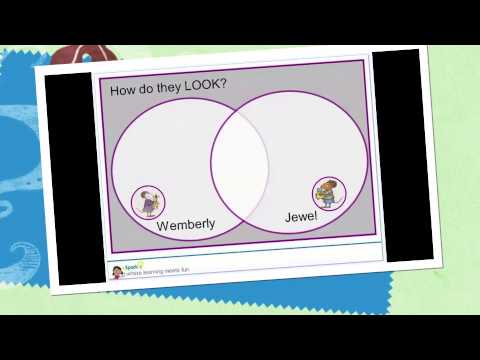
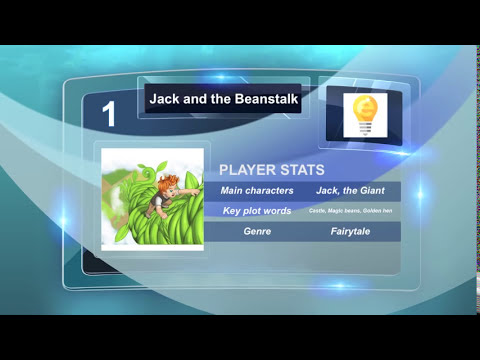
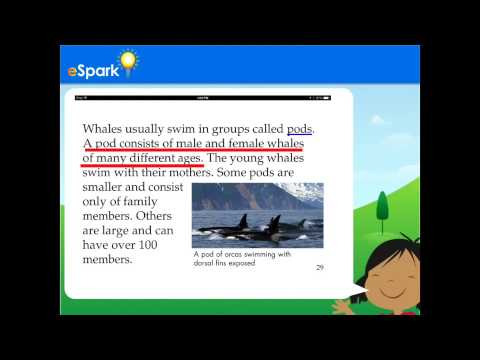
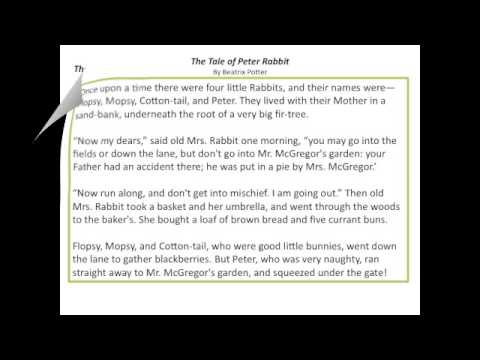
eSpark's instructional videos are short, single-skill reading lessons built around one Common Core standard at a time. A friendly animated teacher and a cast of young eSpark Readers walk a class through the skill right on screen: naming a book's author and illustrator, sorting what a photograph tells you from what the words tell you, and using a nonfiction book's pictures to find the key idea of a page. Each runs one to four minutes and reads real photo passages aloud as it goes, so the screen leads the practice instead of describing it. A plain, no-frills way to open or reinforce a foundational reading skill in kindergarten and first grade.
What eSpark covers
15 episodes in the library, tagged for Pre-K–6th. Heaviest coverage: Reading & Writing (ELA). Between them they line up with 15 distinct standards across 1 framework.
Episodes per grade
- Pre-K
- 4
- K
- 7
- 1st
- 4
- 2nd
- 1
- 3rd
- 2
- 4th
- 5
- 5th
- 5
- 6th
- 2
Episodes per subject
- Reading & Writing (ELA)
- 15
Common Core — ELA 15
- RI.1.6Distinguish between information provided by pictures or other illustrations and information provided by the words in a text.
- RI.1.7Use the illustrations and details in a text to describe its key ideas.
- RI.4.6Compare and contrast a firsthand and secondhand account of the same event or topic; describe the differences in focus and the information provided.
- RI.K.6Name the author and illustrator of a text and define the role of each in presenting the ideas or information in a text.
- RI.K.7With prompting and support, describe the relationship between illustrations and the text in which they appear.
- RL.1.9Compare and contrast the adventures and experiences of characters in stories.
+ 9 more
- RL.2.5Describe the overall structure of a story, including describing how the beginning introduces the story and the ending concludes the action.
- RL.3.5Refer to parts of stories, dramas, and poems when writing or speaking about a text, using terms such as chapter, scene, and stanza; describe how each successive part builds on earlier sections.
- RL.3.9Compare and contrast the themes, settings, and plots of stories written by the same author about the same or similar characters.
- RL.4.2Determine a theme of a story, drama, or poem from details in the text; summarize the text.
- RL.4.5Explain major differences between poems, drama, and prose, and refer to the structural elements of poems (e.g., verse, rhythm, meter) and drama (e.g., casts of characters, settings, descriptions, dialogue, stage directions) when writing or speaking about a text.
- RL.5.5Explain how a series of chapters, scenes, or stanzas fits together to provide the overall structure of a particular story, drama, or poem.
- RL.5.9Compare and contrast stories in the same genre on their approaches to similar themes and topics.
- RL.K.3With prompting and support, identify characters, settings, and major events in a story.
- RL.K.9With prompting and support, compare and contrast the adventures and experiences of characters in familiar stories.
Every episode is vetted and tagged before it goes in. Pick your state in the filters above to see your own state’s codes alongside these.
15 results
Beginning, Middle, and End: The Story Sandwich
eSpark · 2019
3 minPre-KK
Comparing and Contrasting Characters
eSpark · 2019
5 minK1stComparing Characters' Experiences
eSpark · 2019
4 minPre-KKComparing Stories in the Same Genre
eSpark · 2014
5 min5th6thDetermining the Theme of a Story
eSpark · 2019
6 min4th5thFirsthand and Secondhand Accounts
eSpark · 2019
3 min4th5thHow the Pictures Match the Words
eSpark · 2016
2 minPre-KKInformation from Pictures and Words
eSpark · 2015
2 minK1stThe Parts of a Story: Novels
eSpark · 2019
5 min3rd4thPoems, Drama, and Prose
eSpark · 2019
7 min4th5thReading the Pictures in a Nonfiction Book
eSpark · 2019
2 minK1stThe Role of Stanzas in a Poem
eSpark · 2019
3 min5th6thSame Character, Different Stories
eSpark · 2019
6 min3rd4thWhat's the Story? A Song About Story Structure
eSpark · 2019
3 min1st2ndWho Are the Author and Illustrator?
eSpark · 2019
4 minPre-KK