Series
Annedroids
38 episodes
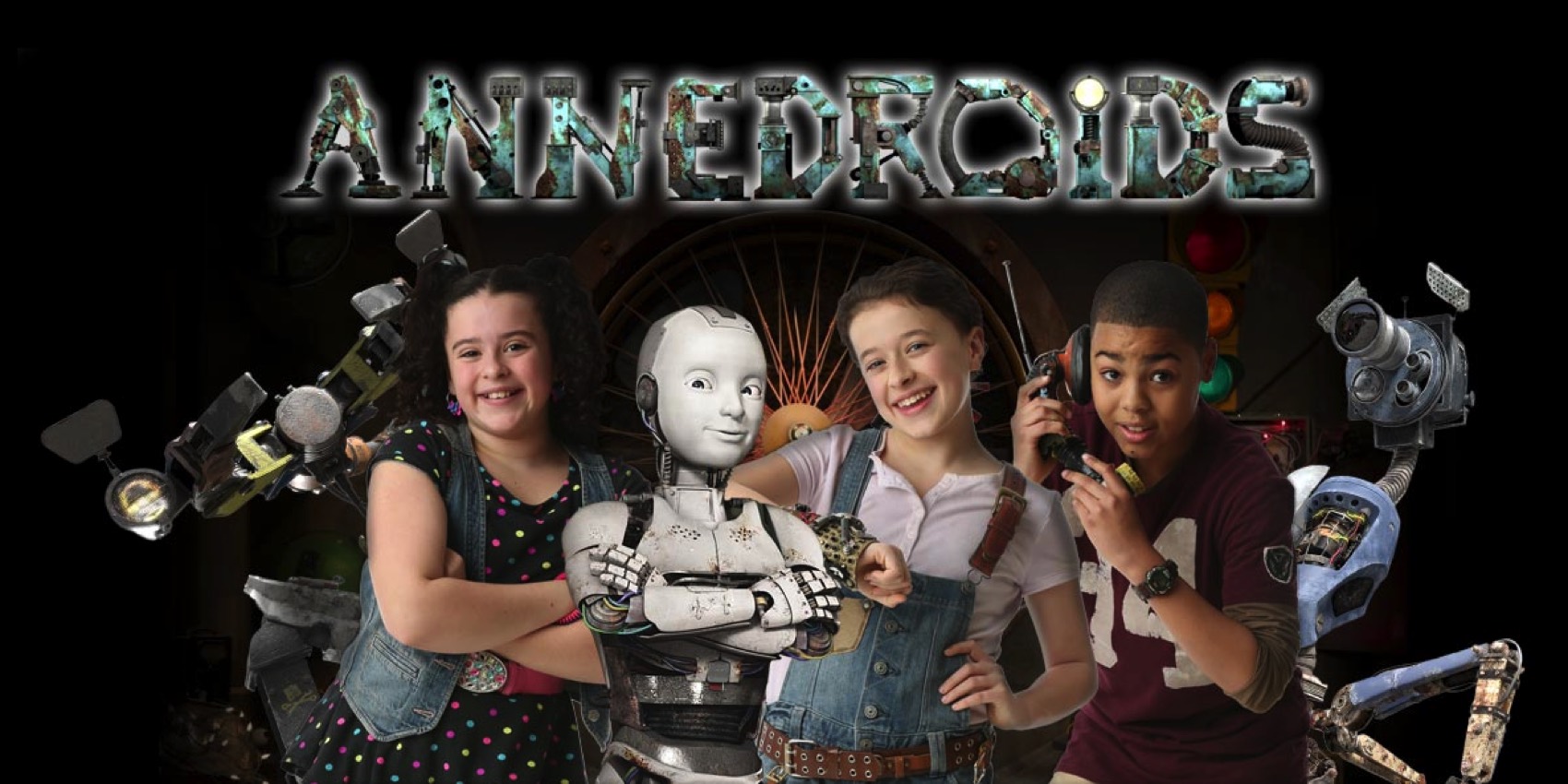
Annedroids is a live-action and CGI series in which eleven-year-old inventor Anne runs real experiments in a junkyard laboratory with her friends Nick and Shania and the thinking, feeling androids she has built. Each episode wraps one science, engineering, or friendship problem inside a comedy adventure: helium flight, magnetism, dry ice, electricity from sun and wind, or a guard-bot built by studying how animals defend themselves. Seasons one through three stream free as full episodes on the official channel. Reach for it in grades one through five when you want a STEM concept delivered as a story, with a clear hook before an experiment or design activity.
What Annedroids covers
38 episodes in the library, tagged for 1st–5th. Heaviest coverage: Science, Social-Emotional Learning and Technology. Between them they line up with 52 distinct standards across 4 frameworks.
Episodes per grade
- 1st
- 10
- 2nd
- 25
- 3rd
- 38
- 4th
- 38
- 5th
- 34
Episodes per subject
- Science
- 32
- Social-Emotional Learning
- 12
- Technology
- 10
NGSS (Science) 30
- 3-5-ETS1-1Define a simple design problem reflecting a need or a want that includes specified criteria for success and constraints on materials, time, or cost.
- 3-5-ETS1-3Plan and carry out fair tests in which variables are controlled and failure points are considered to identify aspects of a model or prototype that can be improved.
- 1-LS1-1Use materials to design a solution to a human problem by mimicking how plants and/or animals use their external parts to help them survive, grow, and meet their needs.
- 3-5-ETS1-2Generate and compare multiple possible solutions to a problem based on how well each is likely to meet the criteria and constraints of the problem.
- 4-LS1-1Construct an argument that plants and animals have internal and external structures that function to support survival, growth, behavior, and reproduction.
- K-2-ETS1-2Develop a simple sketch, drawing, or physical model to illustrate how the shape of an object helps it function as needed to solve a given problem.
+ 24 more
- 2-PS1-4Construct an argument with evidence that some changes caused by heating or cooling can be reversed and some cannot.
- 4-ESS3-1Obtain and combine information to describe that energy and fuels are derived from natural resources and their uses affect the environment.
- 4-PS3-4Apply scientific ideas to design, test, and refine a device that converts energy from one form to another.
- 4-PS4-3Generate and compare multiple solutions that use patterns to transfer information.
- 1-ESS1-1Use observations of the sun, moon, and stars to describe patterns that can be predicted.
- 1-LS1-2Read texts and use media to determine patterns in behavior of parents and offspring that help offspring survive.
- 1-PS4-1Plan and conduct investigations to provide evidence that vibrating materials can make sound and that sound can make materials vibrate.
- 1-PS4-3Plan and conduct an investigation to determine the effect of placing objects made with different materials in the path of a beam of light.
- 1-PS4-4Use tools and materials to design and build a device that uses light or sound to solve the problem of communicating over a distance.
- 2-ESS1-1Use information from several sources to provide evidence that Earth events can occur quickly or slowly.
- 2-LS2-1Plan and conduct an investigation to determine if plants need sunlight and water to grow.
- 3-LS3-1Analyze and interpret data to provide evidence that plants and animals have traits inherited from parents and that variation of these traits exists in a group of similar organisms.
- 3-LS3-2Use evidence to support the explanation that traits can be influenced by the environment.
- 3-PS2-1Plan and conduct an investigation to provide evidence of the effects of balanced and unbalanced forces on the motion of an object.
- 3-PS2-3Ask questions to determine cause-and-effect relationships of electric or magnetic interactions between two objects not in contact with each other.
- 3-PS2-4Define a simple design problem that can be solved by applying scientific ideas about magnets.
- 4-ESS1-1Identify evidence from patterns in rock formations and fossils in rock layers to support an explanation for changes in a landscape over time.
- 4-LS1-2Use a model to describe that animals receive different types of information through their senses, process the information in their brain, and respond to the information in different ways.
- 5-ESS1-2Represent data in graphical displays to reveal patterns of daily changes in length and direction of shadows, day and night, and the seasonal appearance of some stars in the night sky.
- 5-PS1-1Develop a model to describe that matter is made of particles too small to be seen.
- 5-PS2-1Support an argument that the gravitational force exerted by Earth on objects is directed down.
- K-2-ETS1-1Ask questions, make observations, and gather information about a situation people want to change to define a simple problem that can be solved through the development of a new or improved object or tool.
- K-2-ETS1-3Analyze data from tests of two objects designed to solve the same problem to compare the strengths and weaknesses of how each performs.
- K-LS1-1Use observations to describe patterns of what plants and animals (including humans) need to survive.
CASEL (Social-Emotional) 12
- CASEL.RS.2Build and keep positive relationships and friendships.
- CASEL.RDM.2Identify solutions to personal and social problems.
- CASEL.RDM.4Anticipate and evaluate the consequences of your actions before you act.
- CASEL.SM.1Manage strong emotions and impulses instead of acting on them right away.
- CASEL.SM.2Use calming and stress-management strategies (deep breaths, a break, asking for space).
- CASEL.RS.1Communicate clearly and listen actively.
+ 6 more
- CASEL.RS.3Practice teamwork and solve problems collaboratively.
- CASEL.RS.7Seek help when you need it and offer help when someone else does.
- CASEL.SA.3Recognize your own strengths, interests, and the assets you bring from your family and culture.
- CASEL.SOA.2Demonstrate empathy and compassion for others.
- CASEL.SOA.4Recognize strengths in others and say what you appreciate about them.
- CASEL.SOA.5Understand and express gratitude.
ISTE (Technology) 6
- ISTE.1.4.aDesign process: follow a deliberate design process to generate ideas and possible solutions.
- ISTE.1.1.dTechnology fundamentals: understand how the technology you use works, and try out new tools confidently.
- ISTE.1.5.cDecompose problems: break a complex system or task into smaller parts.
- ISTE.1.4.cPrototypes: build, test, and improve prototypes through cycles of revision.
- ISTE.1.5.aProblem definitions: state a problem in a way that data analysis or an algorithm could help solve.
- ISTE.1.5.dAlgorithmic thinking: put steps in order to solve a problem, and recognize what can be automated.
ITEEA STEL (Technology & Engineering) 4
- STEL-8FIdentify why a product of system is not working properly.
- STEL-1FDescribe the unique relationship between science and technology, and how the natural world can contribute to the human-made world to foster innovation.
- STEL-2GIllustrate how, when parts of a system are missing, it may not work as planned.
- STEL-4IExplain why responsible use of technology requires sustainable management of resources.
Every episode is vetted and tagged before it goes in. Pick your state in the filters above to see your own state’s codes alongside these.
24 of 38 results
New Pals
Annedroids · 2014
23 min1st2nd3rd4th5th
PAL n' Go Seek
Annedroids · 2014
23 min1st2nd3rd4th5thReduce, Reuse, Robocycle
Annedroids · 2014
23 min1st2nd3rd4th5thHelping Hand
Annedroids · 2014
23 min1st2nd3rd4th5thGarbage Band
Annedroids · 2014
23 min1st2nd3rd4thEyes Up
Annedroids · 2014
23 min2nd3rd4th5thJunkyard Sleepover
Annedroids · 2014
23 min1st2nd3rd4th5thPal in the Middle
Annedroids · 2014
23 min2nd3rd4th5thAndroid's Best Friend
Annedroids · 2014
23 min1st2nd3rd4thThe Power of Love
Annedroids · 2014
23 min3rd4th5thMagnetic Pal
Annedroids · 2014
23 min3rd4th5thOut of Hand
Annedroids · 2014
23 min3rd4th5thEyes on the Skies
Annedroids · 2014
23 min2nd3rd4th5thMessage in a Rocket
Annedroids · 2015
23 min2nd3rd4th5thUndercover Pigeon
Annedroids · 2015
23 min1st2nd3rd4thExperiments in Babysitting
Annedroids · 2015
23 min1st2nd3rd4thParent Swap
Annedroids · 2015
23 min3rd4th5thAn Android Space Odyssey
Annedroids · 2015
23 min3rd4th5thZack Bot
Annedroids · 2015
23 min2nd3rd4th5thJunkyard CSI
Annedroids · 2015
23 min3rd4th5thJurassic Junkyard!
Annedroids · 2015
23 min2nd3rd4th5thCostume Pal
Annedroids · 2015
23 min2nd3rd4th5thBroken Hand
Annedroids · 2015
23 min2nd3rd4th5thLights! Camera! Volcano!
Annedroids · 2015
23 min2nd3rd4th5th






Or use the filters above to narrow this down.